


 Francais
 Deutsch
 Italiano
Refine Your Search
Phu Cat Air Base Vietnam 1969 stock footage and images
- Showing 6991 to 6996 of 13375 results more
more Hide
Hide
General William C Westmoreland reviews troops at 32nd Air Defense headquarters in Kaiserslautern, Germany.
General William C Westmoreland visits 32nd Air Defense headquarters in Kaiserslautern, Germany. General Westmoreland and staff disembark from UH-1D helicopter. They are greeted by a French General. The officials walk to the parade field. General Westmoreland reviews troops. Band plays. The General enters the 32nd Air Defense Command Headquarters building. Flag with four stars. General comes out of the building and walks towards UH-1D helicopter. The helicopter takes off.
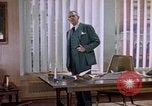
Animated map of Canada and the United States, illustrating North American Air Defense system.
Actor Raymond Massey introducing the subject of North American Air Defense, which is a joint enterprise of Canada and the United States. A map of the United States, Canada and the Arctic. Animation shows radar sites comprising the Dew Line, Mid Canada Line and Pine Tree Line in Canada, as well as coastal and ship borne sites around the United States. Internal U.S. sites tied to the automated SAGE system (Semi Automatic Ground Environment) are shown. SAGE is a computerized control system for tracking and intercepting enemy bombers. The headquarters of NORAD (North American Air Defense) is shown, at Cheyenne Mountain, Colorado. Mr. Massey points out models of new antiaircraft missiles displayed on his desk. Animation shows how these can be fired from the ships at sea.
U.S. Army 9th Air Force planes strafe German positions and The 104th Division enters Eschweiler and smaller villages in Germany.
Activities of American First Army during offensive into Germany in World War 2. U.S. Army Air Force 9th Air Force planes strafe German positions near the town of Stolberg, then U.S. Army troops attack with machine guns (view from machine gun being fired at houses), heavy guns like the self-propelled 155 mm Gun Motor Carriage M12; and massed American 3rd Armored Division tanks acting as artillery in attacking Stolberg. Civilian refugees seen removing their belongings out of the battered city. An American soldier guards a German POW who assists a civilian in moving a loaded cart down a street. View of collapsed building and wreckage after the attack as Stolberg is cleared by forces of the U.S. Army 104th Division, facing booby traps and mines. U.S. forces blast structures that could not be safely cleared. After two weeks of attack, the American flag raised in the city. The 104th Division enters Eschweiler and smaller villages; mined buildings are detonated as tanks move through the towns. Mop up operations last two days as German snipers are cleared. Captured German prisoners are led through the town under U.S. Army guard. U.S. Infantry troops ride on tanks on streets of city. Soldiers carrying bedding walk on street on way to a dry night's sleep. Roadblocks are cleared by U.S. Engineer battalions, including an overhead bridge blown-up by retreating Germans. Units of the 104th Infantry and 3rd Armored division continue eastward and are seen fighting German forces in Weisweiler.
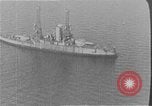
USS Alabama is hit by bombs during demonstration by Army Air Service DH4 bomber airplanes in the Chesapeake Bay.
Bombing demonstration by U.S. Army Air Service DH4 aircraft under command of Brigadier General Billy Mitchell. The target is Battleship USS Alabama, in September, 1921 in the Chesapeake Bay, United States. Army flier is seen checking security of a bomb under wing of aircraft. USS Alabama underway in the Chesapeake Bay. Aerial views from United States Army Air Service planes in flight over the battleship. USS Alabama is hit by a bomb. Later it is hit by a phosphorus poison gas bomb. Finally it is hit by 2000 pound bombs. The USS Alabama rolls over halfway, in shallow waters.
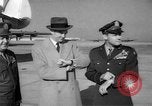
Ceremony at Boeing-Wichita plant, Kansas, marking delivery of the 1000th B-29 to the Army Air Force.
U.S. Army Air Force Major General Curtis Lemay, a civilian, and a four-star Air Force General (Barney McKinney Giles?) check their watches as they wait to formally accept the one thousandth B-29 aircraft from the Boeing Wichita, Kansas manufacturing plant during World War 2. Many persons from news media are seen with microphones set up at edge of ramp. Large crowd is gathered but only the edge of crowd is seen. The awaited B-29 taxis slowly toward the assembly after production completion and parks with engines running.
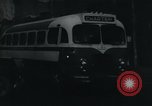
African American business interests in transportation. Bus line and air charter service.
A bus of the Bison bus lines, in Washington, DC, passes on the street. African American owner, John Nipson, poses in uniform. African American drivers for the company pose. Several chartered buses of the Bison Line drive on a street in Washington DC. Their destination signs read "Blossom Special." Merrill C. Meigs Field in Chicago, Illinois. African American pilot and two businessman passengers climb aboard a light airplane of the Lake Air Service. The passenger airplane taxis to a runway and takes off. African American, William Barnett, owner of Lake Air service, is seen, with one of his employees.
CRITICALPAST.COM: About Us | Contact Us | FAQs - How to Order | License Agreement | My Account | My Lightboxes | Shopping Cart | Advanced Search | Featured Collections | Website Terms & Conditions | Privacy Policy ©2026 CriticalPast LLC.
License Agreement |
Terms & Conditions |
Privacy Policy
©2026 CriticalPast LLC.