


 Francais
 Deutsch
 Italiano
Refine Your Search
Phu Cat Air Base Vietnam 1969 stock footage and images
- Showing 7087 to 7092 of 13375 results more
more Hide
Hide
A U.S. Army Air Service DH-4 Honeymoon Express takes off and in flight in the United States.
Early transport aircraft of the United States Army Air Service in the United States. U.S. Army Air Service DH-4 Honeymoon Express on a field as an engine starts and the propellers begin to rotate. A pilot in the cockpit. Passengers in the compartment wave. Specifications of the aircraft. The airplane taxis and takes off. The aircraft in flight. It flies at a speed of 118 miles per hour. The aircraft comes in for a landing and lands on a field.
U.S. Army Air service YIC-11 transport plane takes off from Wright airfield in Dayton, Ohio.
Early transport aircraft of United States Army Air Service in the United States. U.S. Army Air Service Consolidated Fleetster YIC-11 transport airplane. U.S. Assistant Secretary of War F. Trubee Davison and pilot Captain Ira Eaker pose in front of the plane at Wright airfield in Dayton, Ohio. Assistant Secretary and Pilot Eaker prepare to take off for Washington D.C. They board the flight. Engine of the plane starts and propellers rotate. Aircraft taxis to take off.
U.S. Army Air service Fokker YIC-15 ambulance plane takes of from a field in the United States.
Early cargo and transport aircraft of United States Army Air Service in the United States. U.S. Army Air Service Fokker YIC-15 Ambulance airplane on a field. Propellers of the aircraft rotate as the engine starts. Men carry a litter patient and place the litter into the plane. Interiors of the aircraft has a cabinet with medicines. Mounting litters and padding on the side to absorb shocks. Aircraft warms up. Aircraft taxis.
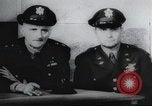
U.S. General Ira Eaker discusses the air raid after bombing Rouen, France during World War II.
Discussion of the first B-17 raid in the European theater (on Rouen, France) during World War II. Major General Carl Spaatz, Commander of the U.S. 8th Air Force, comments about this first such use of American heavy bombers against German targets in World War 2. He notes that this raid was led by Brigadier Ira Eaker, head of U.S. Bomber Command. He invites Eaker to comment on the raid. General Eaker reports that pilots maintained good formations and gunners caused German fighters to back away. He states that the main targets during the air raid were marshalling yards and a Locomotive repair facility. An intelligence officer debriefs two members of a flight crew, following a mission. They answer questions. One of the crew members points out their target on a map, and reports success at hitting their targets..
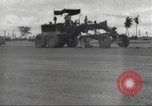
Damaged aircraft on a field as P-47s take off after Japanese air raid on Wakde Island, New Guinea during World War II.
Aftermath of Japanese air raid on Wakde Island, New Guinea during World War 2. Army engineers (or Seabees) operate a group of construction graders in formation, to level the field for aircraft operations. Some destroyed U.S. aircraft are still smoking on the field. Several U.S. Army Air Forces P-47 aircraft taxi out and take off from the newly leveled dirt field.
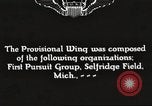
Various aircraft of U.S. Army Air Corps lined up on Rockwell field during training exercise of 1st Provisional Wing.
U.S. Army Air Corps 1st Provisional Wing at an annual training exercise at Rockwell field in California, United States. U.S. Army Air Corps P-12Bs of the 1st Pursuit Group and 95th Pursuit Squadron parked at Rockwell field in San Diego, California. LB-6s of the 2nd and 7th Bombardment Group parked on the field. A-3s of the 3rd Attack group lined up on field. A sign on a building in the background reads ' 3rd attack' Aircraft taxi as they prepare to take off. Commanders of the various groups Major Hugh J. Kenrr, Major Davenport, Major Carl Spaatz, Major Ralph Royce stand together.
CRITICALPAST.COM: About Us | Contact Us | FAQs - How to Order | License Agreement | My Account | My Lightboxes | Shopping Cart | Advanced Search | Featured Collections | Website Terms & Conditions | Privacy Policy ©2026 CriticalPast LLC.
License Agreement |
Terms & Conditions |
Privacy Policy
©2026 CriticalPast LLC.