


 Francais
 Deutsch
 Italiano
Refine Your Search
Phu Cat Air Base Vietnam 1969 stock footage and images
- Showing 10183 to 10188 of 13374 results more
more Hide
Hide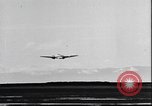
Amelia Earhart takes off from NAS Oakland, on first leg of her round-the-world flight.
Amelia Earhart and her crew take off from the U.S. Naval Air Station, Oakland, California, to begin their flight around the world. Views from another aircraft as their Lockheed Electra flies low over Western Span of the Bay Bridge and San Francisco, heading West toward the Pacific Ocean. Scene on the ground, several days earlier, Paul Mantz and Amelia Earhart Putnam converse, as he secures a dzuz fastener on the aircraft fuselage. Mechanic Bo McKneely helps Earhart step from the wing of the airplane. She talks with husband, George P. Putnam. Paul Mantz, talks with Earhart and George Putnam while Bo McKneely refuels the Lockheed Electra. In final scenes, ground crew pushes the Lockheed Electra into a Hangar at the Naval Air Station.
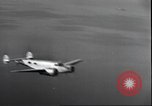
Amelia Earhart and Fred Noonan airborne in the Lockheed Electra checking navigation equipment and procedures
Preparations for Amelia Earhart's trip around the world in her Lockheed Electra airplane. Earhart and navigator Fred Noonan in flight, checking navigation equipment and procedures in the air. Aerial views from another aircraft of the Lockheed Electra over the Oakland Bridge and other landmarks. The aircraft is seen landing and taking off at the U.S. Naval Air Station, Oakland, California

United States Marines repair Japanese airfield in Iwo Jima Island during Iwo Jima operation of World War II.
United States Marine Corps in Iwo Jima Island during Iwo Jima operation of World War II. The Marines repair Japanese air strip on the island. A truck tows a Japanese steam roller on the air strip. The Marines walk along. Smoke in the background.

How turbo superchargers facilitate high altitude airplane flight. World War II warplanes equipped with superchargers
General Billy Mitchell wearing fur coat and western style hat. Animated illustration of U.S. Army Martin bomber operating at 15 thousand feet during the famous demonstrations of air power against battleships, in 1921. This was possible because the aircraft engines were supercharged, an outgrowth of Dr. Sanford Moss's developments at General Electric Company.World War 2 scenes of U.S. Army Air Forces aircraft that use supercharged engines: P-51s; P-47s; P-38s; B-24s; B-17s and B-29s. View of atomic bomb explosion.
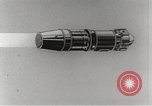
General Electric plant and operations at Lockland, Ohio. Advances in jet propulsion. Jet airplanes of the early 1950s.
Animated illustration of rapid improvements in GE jet engine designs. Views of the GE plant at Lockland, Ohio. Interior of a jet passenger liner airplane, as envisioned in 1951. View of flight attendant or stewardess in uniform, delivering tray of food to a passenger in the cabin of a passenger aircraft in flight. View of Dr. Sanford A. Moss, standing in front of the Collier Trophy, looking at his award certificate, in 1941. The trophy was awarded to him and the U.S. Army Air Corps for development of the aircraft engine supercharger. Discussion of Atomic Energy Commission, U.S. Air Force, General Electric and Convair ideas about building an atomic powered airplane. Views of the GE gas turbine laboratory. Montage of jet aircraft of the early 1950s. Among those seen are: Convair SF-92 delta wing fighter plane; The Chase XCG-20A 4-engine cargo plane; North American F-86 sabrejet; Grumman F9F panther; F-89 Scorpion; and B-36 bomber, plus several unidentified experimental aircraft. Several scenes of B-47s in rocket assisted takeoffs.
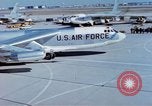
USAF B-52H in flight carrying GAM-77 cruise missile under its wing during a test flight in the United States.
Progress report of United States Air Force B-52G and B-52H in the United States. United States Air Force B-52H aircraft taxis and takes off from the runway. The aircraft carries GAM-77 cruise missile under its wing during flight. The GAM-77 cruise missile releases from the B-52H aircraft.
CRITICALPAST.COM: About Us | Contact Us | FAQs - How to Order | License Agreement | My Account | My Lightboxes | Shopping Cart | Advanced Search | Featured Collections | Website Terms & Conditions | Privacy Policy ©2026 CriticalPast LLC.
License Agreement |
Terms & Conditions |
Privacy Policy
©2026 CriticalPast LLC.