


 Francais
 Deutsch
 Italiano
Refine Your Search
Phu Cat Air Base Vietnam 1969 stock footage and images
- Showing 10339 to 10344 of 13374 results more
more Hide
Hide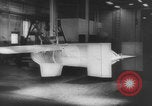
Flying bombs rocket launching with radar system (WW2)
A GB-4 glide bomb in a hanger, suspended from the ceiling. A robot bomb, possibly V-1, launching from a catapult ramp. A United States Air Force bomber drops GB-4 glide bomb during World War II. United States army air men use a television screen with radar system to direct the GB-4 glide bomb to its target. POV view target via GB-4 glide bomb camera. GB-4 glide bomb seen at ground level gliding to target and exploding. United States soldiers preparing a V-2 rocket for launch in the desert in the United States. Men working on radar system. V-2 firing room engineer gives the "go" signal for launch. V-2 rocket lift off in the desert. Scientists in radar control room at Fort Evans. Soldiers at controls of early field radar control system. Large radar console with circular CRT display. A United States soldier repairs radar console. Various types of radar antennas and dishes moving while in operation.
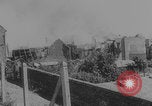
French wounded by allied bombings, German troops receive mail and award medals (WW2)
French casualties due to allied air raids during World War 2. Houses and storefronts on fire during an air raid. German troops respond to fires. Two men evacuate a girl. A French family hugging. German troops transport French casualties on stretchers. An upset French woman comforting her daughter. French men and women watch as German medics evacuate patients and casualties into trucks. A German soldier delivers mail to slit trenches. German troops reading mail. German troops sharing mail to each other. A young German soldier smokes a pipe. German SS soldier eating bread while smiling. A German SS soldier smoking a cigarette and smiling. A SS Division Hitlerjugend Commander shakes hands with officers after presenting decorations. Soldiers respond with a Nazi salute.
USAAF bombing oil refineries in Ploesti, Romania, Colonel Johnson receives Medal of Honor (WW2)
United States Army Eighth Air Force, Second Air Division B-24 Liberator bombers bomb oil refineries in Ploesti, Romania, during World War 2. A map depicting a flight path from North Africa to Ploesti and Germany. B-24 Liberator aircraft drop bombs over Ploesti. A group of B-24 Liberator bombers in flight. Aerial view of Ploesti. Machine gun aimed at Ploesti. Aerial view of an oil refinery on fire. A group of B-24 Liberator bombers flying low over Romania. An oil refinery on fire in Ploesti. Clouds of thick smoke covers the bombed oil refinery. Oil refinery tanks on fire. Firemen use hoses to put out fire in oil refinery. German and Romanian men rush to burning oil refinery. German soldier uses firehose to put out flames. B-24 Liberator bombers returning to North Africa. People watch a B-24 Liberator bomber land on airfield. B-24 Liberator bomber taxiing after landing. United States Army men gather in airfield. Colonel Leon W. Johnson of the 44th Bombardment Group being awarded the Medal of Honor for leading the attack on the Ploesti oil fields.
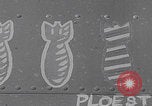
B-24D Liberator “Bomerang” Going-Away party in USAAF Hardwick, East Anglia, UK (WW2)
United States Army Eighth Air Force, Second Air Division celebrate a “Going Away” party for B-24D Liberator “Bomerang” (serial number: #41-23722) (Boomerang) in USAAF Hardwick, East Anglia, United Kingdom during World War 2. B-24 Liberator aircraft named “Bomerang” returns to the United States after completing 53 missions. Graffiti depicting bombs and the word “Ploesti” (referring to the Ploesti oil refinery raid). United States Army soldiers stand in front of a B-24 Liberator with nose art depicting a cartoon kangaroo carrying a bomb in both paws, one held overhead and one held in the kangaroo's pouch and the word “Bomerang”. United States and British pilots gather around a cake in front of B-24 Liberator “Bomerang”. Pilot holding a cake “Bomerang”. A pilot delivers a tribute to B-24 Liberator “Bomerang” in front of a crowd. Crowds cheer after pilot gives his tribute speech. Some pilots are wearing life vests. United States Major General James Pratt Hodges shake hands with pilots. B-24 Liberator “Bomerang” is now covered with written dedications from pilots, maintenance, and combat crews of the “Bomerang”. Men and women write their names, homages, and dedications on the body of B-24 “Bomerang”. B-24 Liberator engines are turned on. “Bomerang”’s pilot, Col. Walter Stewart, looks on. B-24 Liberator “Bomerang” taxiing on the runway on its flight to the United States.
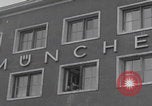
Refugees from the 1956 Hungarian Revolution fly out of Munich, Germany
View of Munich-Riem Airport building (now former Munich-Riem Airport 81829 Munich, Germany 81829 ) Building sign reads “München”. Four United States Army Douglas C–118 Liftmaster airplanes on the tarmac of Munich-Riem Airport. Hungarian refugees exit buses on the tarmac, including excited girls carrying dolls. Hungarian refugees wave at United States soldiers and journalists greeting them as they climb the airstair. A boy holding two “United States Escapee Program” bags. Airstair reads “München”. Airplane engine propeller starts up. A pilot waves from cockpit of aircraft (USAF BUAER- C 118A). A United States Army Douglas C–118 Liftmaster takes off from Munich-Riem airport. Hungarian refugees inside the flight to the United States. The Douglas C–118 Liftmaster interior refitted as a passenger plane. A woman and her daughter looking out a plane window. A United States Air Force flight stewardess kisses the cheeks of a sleeping child. A man talking to his granddaughter while in flight. A male United States Air Force flight attendant serves coffee. A man eating a meal served during flight. A girl dressing her doll. A sleeping elderly woman leans on adult son. A young boy asleep.
Chinese and Japanese soldiers fighting during the Marco Polo Bridge Incident.
Japanese propaganda during the Sino-Japanese War. The Marco Polo Bridge Incident battle between the Chinese Nationalist (Kuomintang) and the Imperial Japanese Army. “1937” flashes on the screen with explosion in the background. Graphics over newspaper reads, “Trouble started at Lukoukiao near Peking. When Chines troops fired on Japanese soldiers” A map depicting Beijing and neighboring cities and regions. “Lukowkiao (Marco Polo Bridge) is shown on the map. Sign reads “Lu Know Kiao”. Marco Polo Bridge (Fengtai District, China) near Beijing. The Lugou Xiaoyue monument (Wanping Bridge, Fengtai District, Beijing, China) with Chinese writings. A truck drives across Marco Polo Bridge. Aerial view of Marco Polo Bridge. Soldiers marching on a wooden bridge. Chinese women running on the street in Shanghai. Refugees loaded on a truck. A woman carrying a baby. Nationalist planes in flight, bombing Shanghai to drive out Japanese soldiers. “Chinese Warplanes rain bombs in Shanghai” reads one newspaper headline. “590 Killed..War At Shanghai’s Front Door” reads another headline. The Palace Hotel (Swatch Art Peace Hotel 23 East Nanjing Road (Bund 19), Shanghai 200002, China) in Shanghai. Debris and destroyed buildings from damage by Chinese Nationalist plane bombings. Large group of refugees leaving Shanghai. Chinese Nationalist plane in sky. Buildings on fire. “Nanyang Bros. Tob. Co. Ltd Godown No.3” building on fire. Japanese soldiers running in two straight lines. Japanese troops sit on moving truck. Japanese troops with fire hoses to put out flames. Another plane in the sky. A column of Japanese soldiers fire rifles in the air with Japanese flag behind them. Soldiers shooting anti-aircraft gun into the air.
CRITICALPAST.COM: About Us | Contact Us | FAQs - How to Order | License Agreement | My Account | My Lightboxes | Shopping Cart | Advanced Search | Featured Collections | Website Terms & Conditions | Privacy Policy ©2026 CriticalPast LLC.
License Agreement |
Terms & Conditions |
Privacy Policy
©2026 CriticalPast LLC.