


 Francais
 Deutsch
 Italiano
Refine Your Search
Phu Cat Air Base Vietnam 1969 stock footage and images
- Showing 10357 to 10362 of 13374 results more
more Hide
Hide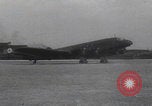
Luftwaffe Junkers plane refuels airplane in flight (WW2)
A captured World War II German film describing procedures of the Junkers in-flight refueling method. A Luftwaffe Junkers Ju-290 cargo-transport aircraft taxiing in an airfield. Animation depicts how a coupler hook and arresting device operate in the coupling of Ju-290 and Ju-88 bomber aircraft for air to air refueling. The diagram shows the flight direction (“Flugrichtung”). The coupler hook coupling assembly mounts in the tail of parked Ju-88 aircraft. Interior shots of the coupler coupling cable pulley assembly. View of the coupling arresting device mounted on nose section of Ju-290 aircraft. Junkers dual aircraft control coupler contact device mounted in center nose of Ju-290 aircraft. View of the Junkers dual aircraft control coupler contact device as it thrusts forward about 3 feet upon release by pilot from cockpit control board. A man adjusts the device. Animation showing the method by which refueling coupler device controls the movement of ailerons and flaps of second aircraft in tow. Interior scenes showing the various dual refueling coupling control devices inside both the leading and trailing aircraft moving. The camera pans to the various parts of aircraft which the above devices control in the process of coupling. Man pulls a lever. The steering wheel automatically moves inside the cockpit. Ailerons and flaps of a German aircraft moving. The Junkers dual aircraft control coupler contact device thrusts forward about 3 feet upon release by pilot from cockpit control board. Junkers Ju-290 cargo-transport aircraft taxiing on runway against the background of a hangar. The Ju-290 taking off and from airfield. View of an unidentified twin-engine, low-wing aircraft with the coupling device mounted on nose, taxiing, and taking off. The Ju-290 and low-wing aircraft both in flight. A pilot sitting in front of instrument panel of the Junkers Ju-290 transport plane. Pilot's hand pulls the lever, which in turn releases the coupler hook assembly from rear of aircraft. Rear view of the Ju-290 showing in detail how coupler hook assembly gets released and trails behind aircraft from cable. Cable-pulley assembly of the Ju-290 in operation. Refueling coupler of the Ju-290 trailing behind on cable. Rear view of the Ju-290 as seen from the unknown aircraft flying behind the transport plane. View of the nose of the second aircraft with the refueling coupling arresting device. The arresting device and coupler hook assembly become coupled in flight. Pilot in control cabin of the Ju-290 pulls lever making the coupling cable pull the trailing twin-engine aircraft toward his aircraft. The refueling cable-pulley assembly in operation. The Ju-290 transport plane a refuel process connection progresses. Pilot of the second aircraft pulls lever which thrusts forward from the nose of his aircraft the coupler contact control device. View of the refuel coupler device. View of the trailing aircraft taken from rear of Junkers Ju-290, as it is pulled closer to the rear of the Ju-290. The rigid refuel coupler control device contacts rear of Ju-290 aircraft. The coupler control device is locked into the arresting socket. The Ju-290 and the other twin-engine aircraft are coupled in flight. The pilot and co-pilot of the second aircraft waving their hands, as seen from the rear of the Junkers Ju-290. Pilot’s hands holding the steering wheel of aircraft. The pilot of the Ju-290 pulls lever and releases the second coupled aircraft. The coupled section of both aircraft separates. The second aircraft continues to fly.
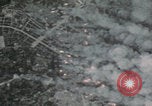
Aerial view of a village and surrounding fields from bomber in the Pacific Theater (WW2)
United States Army Air Force air operations in the Pacific Theater during World War II. Aerial view of a bombed town, aerodrome, and surrounding fields. Thick gray clouds of smoke rise from bomb sites. Very low flying views facing out rear of aircraft as it flies over rice fields, buildings, coconut trees and roads. The aircraft slightly tilts as it flies over a hill. The aircraft drops bombs over a small village.
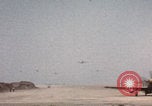
Boeing B-29 Superfortress landing and taxiing at an airfield (WW2)
United States Army Air Force aircraft flying over an airfield as seen from the ground during World War II. Groups of aircraft flies away. A Boeing B-29 Superfortress with “A” marking lands at the airfield. The Boeing B-29 Superfortress makes a landing near parked fighters. Jeeps drive near the B-29 Superfortress after its landing. Air Force personnel surround the B-29 Superfortress. A Boeing B-29 Superfortress taxiing from the runway.

Consolidated B-24 Liberator bombers in formation over Libyan coast (WW2)
United States Army Air Force Consolidated B-24 Liberator bombers fly in formation over Libya and the Mediterranean Sea during World War II. Aerial view of the Libyan coast. Consolidated B-24 Liberator bombers with the old United States Army Air Force insignia in flight. Aerial view of the Consolidated B-24 Liberator bombers in formation. Silhouettes of the Consolidated B-24 Liberator bombers against a picturesque blue sky.
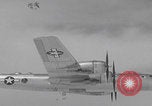
Modified Boeing B-29 Superfortress bomber in flight (WW2)
United States Army Air Force Boeing B-29 Superfortress bomber (Tail Number: 46-9770) in flight during World War II. The aircraft slightly tilts as it turns during flight. United States Army Air Force insignia or roundel is seen on the wings and body. The camera shows a closer side view of the wings, engines, propeller, nose, and gun turrets located above and below the fuselage. Clouds obscure the flying bomber. Aerial view of full side of the Boeing B-29 Superfortress bomber in flight. Close view of the upper portion of the aircraft showing the body, wings, and upper front gun turret. View of the B-29 Superfortress belly with wings, engines, bomb bays and modification that appears to be a radome or alternately sized bay door.
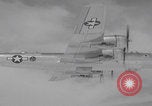
Side view of modified Boeing B-29 Superfortress bomber in flight (WW2)
A United States Army Air Force Boeing B-29 Superfortress bomber (Tail Number: 46-9770) flying during World War II. Camera shows the right-side view of the belly or fuselage of the B-29 Superfortress bomber. The camera focuses on the B-29 bomber radome of an AN/APQ-13 radar near the bomb bays. Clouds obscure the view of the B-29 Superfortress as it descends altitude. View of the upper front gun turret, engines, and cockpit nose. A crewman is seen briefly looking out from a window. Camera turns to show the belly of the aircraft, showing the United States Army Air Force insignia or roundel on the wings, and fly further away.
CRITICALPAST.COM: About Us | Contact Us | FAQs - How to Order | License Agreement | My Account | My Lightboxes | Shopping Cart | Advanced Search | Featured Collections | Website Terms & Conditions | Privacy Policy ©2026 CriticalPast LLC.
License Agreement |
Terms & Conditions |
Privacy Policy
©2026 CriticalPast LLC.