


 Francais
 Deutsch
 Italiano
Refine Your Search
Phu Cat Air Base Vietnam 1969 stock footage and images
- Showing 10543 to 10548 of 13374 results more
more Hide
Hide
Frido W. Kessler's rocket-propelled mail plane launches on frozen lake Greenwood, New York, United States, 1936
Frido W. Kessler and his rocket-propelled mail plane. (Allegedly, the first scheduled mail-delivery rocket flight) Kessler is seen in his workshop with his test stand and apparatus. Launch of Kessler's first winged liquid-fueled (liquid oxygen and Kerosene) mail rocket plane on frozen Greenwood Lake, New York, February 23,1936. Launch team opens the nose to insert mail into the rocket-propelled glider plane (reportedly designed by German rocket pioneer Dr. Willy Ley). Kessler poses with a little girl, Gloria Schleich Quackenbush, for whom the plane is named. She holds a silver cup of snow. They are surrounded by a cluster of men. Photographic equipment is set up next to them. The girl, Gloria, empties the cup of snow onto the tail of the rocket plane, to Christen it "Gloria (I)." Launch team fueling the rocket from containers. A technician in fireproof protective suit lights fuel at tail of the plane. It flares up in flames and then settles down with normal rocket burn, and leaves the launch stand. (A second rocket plane is seen sitting on the ice near the launch stand.) The rocket glider only goes about 20 feet before falling onto the ice. Team members look over the stand and prepare to try again with Kessler's second plane, the "Gloria (II)." They load the mail (6000 letters and postcards) into the nose and set the plane on the launch stand. It launches very nose high, and strikes the ice near the stand. But the rocket motor continues to propel it across the ice until it takes off again and continues, a way in the air until flipping over and crashing on the ice. View of people surrounding the broken plane on the ice. (Note: The second attempt carried the Gloria II and its mail, about 2000 feet, far enough to cross the border from New York into New Jersey, constituting an interstate mail delivery, and making the letters and post cards worthy mementos of the event.)
U.S. Paratroopers of 82nd and 101st Airborne divisions preparing to depart England the day before D-day in World War II
Film begins showing Brigadier General James M. Gavin, Commander of the Force A (parachute) contingent of the 82nd Airborne Division, standing on the hood of a jeep, at an airfield, to brief his paratroopers as they prepare for the D-Day invasion, during World War 2. A C-47 transport plane taxis behind the assembled group of troopers. Barbed wire is strung in the foreground. Paratroopers are issued French currency before departure. Some gamble with it using dice. Troops are seen playing volleyball on a field surrounded by trees. On an airfield, one trooper hits ground balls with a soft ball and several others field it. Some other troopers sit in grass next to the ramp, assembling wooden containers for airdrop. Two Army Air Forces mechanics fasten a tow bar on the nose wheel of a British-built Horsa Mk.II glider. They then tow it with a tug. View from above of Horsa gliders and C-47 tow airplanes, all in D-Day paint stripes, lined up on an airfield ramp. Paratrooper tent camp is viewed from above. Then, General Dwight D. Eisenhower and other senior officers are seen visiting paratroopers of the 101st Airborne Division, at the camp, on June 5, 1944, as they prepare to board their aircraft. Famous closeup of General Eisenhower speaking to a tall paratrooper who has his face camouflaged with grease paint.View looking down, as Eisenhower circulates among the troopers. Closeup of him conversing with another one directly.
Allied drive through Normandy to Saint Lo, France, in World War II
Battle-weary American soldiers attend an open air chuch service by a barn in Normandy. U.S. gunners commence a concerted artillery barrage before tanks and infantry advance toward Saint Lo, France, in World War 2. Various artillery and tanks are seen, including one M4 Sherman Crab Tank (Mine sweeper). P-47s, flying low altitude close support missions, bomb a critical target, and troops move ahead on the way to Saint Lo. Two German soldiers run to surrender. Saint Lo falls. Scenes of the devastation in the city.
Bomb damage in Nuremberg, Germany; views of Nazi party rally grounds and destroyed railyard.
Bomb damage in Nuremberg, Germany. Hitler stadium damaged by bomb. Truck lowering jeep onto the stadium grounds, swastika eagle in the background. Men repair truck motor. The destroyed railroad yard bombed by the 8 Army Air Force. Soldiers walk through the debris. (World War II period).
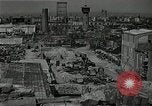
Bomb damage at Siemens Schuckert factory near Nuremberg, German people at raid shelters, Foreign refugees await trip home
Bomb damage to Siemens Schuckert factory in Nuremberg, Germany. Polish, Russian and French refugees in a camp await trip to home. Women cook, women with their children and belongings get down from a truck. German women live in air raid shelters, hang clothes on clotheslines to dry. Children play around the wall, flags on a building in Furth. Truck convoy passes by the streets. Bomb damage to Messerschmitt factory at Regensburg. (World War II period).
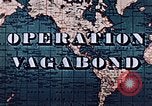
Segment of U.S. Information Agency film about its so-called "Operation Vagabond."
Film about USIA "Operation Vagabond," employing Coast Guard Cutter (USCGC Courier WAGR-410). View of the "Courier," at sea. It is bristling with antennas, and displaying numerous flags, permitting it to operate in many territorial waters. View from her deck to land on the Island of Rhodes in the Eastern Mediterranean Sea. View of sign over a ship's hatch, reading,"Relay Broadcast Receiving Room." Inside, two crew members are seen operating equipment that instantaneously re-transmits Voice of America broadcasts. A sign "On Air," is illuminated in the compartment. Operators seen adjusting various pieces of broadcast equipment. Back on deck, camera focuses on a helium-filled balloon, holding the ship's transmission antenna, aloft. View from another ship, of the "Courier," and the helium balloon, in the distance. Illustrated chart shows fractions of VOA listeners behind the "Iron Curtain," and in mainland China. Cartoon illustrating penalties for VOA listeners. Polish escapee, interpreter, Jan Hajdukiewicz, is seen broadcasting on VOA microphone. He fled the Communist delegation during Korean truce talks at Panmunjom.
CRITICALPAST.COM: About Us | Contact Us | FAQs - How to Order | License Agreement | My Account | My Lightboxes | Shopping Cart | Advanced Search | Featured Collections | Website Terms & Conditions | Privacy Policy ©2026 CriticalPast LLC.
License Agreement |
Terms & Conditions |
Privacy Policy
©2026 CriticalPast LLC.