


 Francais
 Deutsch
 Italiano
Refine Your Search
Phu Cat Air Base Vietnam 1969 stock footage and images
- Showing 11647 to 11652 of 13373 results more
more Hide
Hide
Passengers board a Larsen JL-6 transport aircraft and men load cargo in an early model aircraft in the United States.
Aircraft are used for different purposes in the United States. Passengers climb the stairs and into an early model bi winged, twin engined passenger airliner. Passengers exit an early model touring car and get into a U.S. Navy Larsen JL-6 transport aircraft. A pilot gets into the cockpit of the passenger aircraft. The aircraft taxis and takes off. Passengers getting in and out of the cabin of an early model seaplane. An Aeromarine West Indies Airways U.S. and Cuban mail service amphibian, which is a converted U.S. Navy TN-1O airship, in flight over water. Passengers looking out of the windows of the converted TN-1O airship. Men load cargo into the cockpit of a United States Army Air Service Curtiss JN-6 aircraft.
Men load a stretcher patient in a U.S. Navy model of a DH-4 Amb-1 ambulance airplane in the United States.
Aircraft are used for different purposes in the United States. Ambulance aircraft offer fastest means of transporting the injured. A United States Army Air Service Cox-Klemin XA-1 ambulance aircraft taxis. Men put a stretcher patient into a U.S. Navy model of a DH-4 Amb-1 ambulance airplane. The ambulance aircraft takes off and in flight.
A modified Airco DH-4 aircraft loaded with mail sacks in flight in the United States.
Aircraft are used for different purposes in the United States. The U.S. Air Mail Service makes use of commercial aviation. Workmen place mail sacks in the front cockpit of a U.S. mail service modified Airco DH-4 aircraft. A pilot in the back cockpit. The aircraft takes off. Animation shows a small aircraft going over a line on a map from New York across the United States. An early model U.S. mail service aircraft in flight. Animation of a small airplane traveling along a line on a map from New York to San Francisco. Chicago, Omaha and Cheyenne highlighted on the map.
Lt. Commander Byrd's Fokker tri-motor aircraft returns to Spitsbergen, Svalbard after a flight to the North Pole.
United States Navy Lieutenant Commander Richard Evelyn Byrd and aviator Floyd Bennett become the first to reach the North Pole by air. Byrd's streamer Chantler arrives at Kings Bay in Spitsbergen, Svalbard. Two ships in an ice clogged harbor. Lt. Commander Byrd is welcomed by his friendly rival Captain Roald Amundsen. Amundsen climbs from one ship to another and shakes hands with Byrd. Byrd and Amundsen walk around and look over Byrd's Fokker tri-motor aircraft 'Josephine Ford' which is equipped with skis and is parked in snow. Workmen push fuselage and wing section of the Fokker tri-motor across the snow. The airplane moves down a snow clad incline. The ski equipped Fokker tri-motor aircraft takes off from a snow covered field in Spitsbergen. The aircraft returns and lands on a snow covered field after a flight to the North Pole. A large hangar and snow covered mountains in the background. Capt. Amundsen congratulates Byrd and shakes hands with him. Many people, dressed in heavy clothing, shake hand with Lt. Commander Byrd.
Frederick Patterson presents a medal to Orville Wright to commemorate the twentieth anniversary of the first aircraft flight in the U.S.
Notable people in the field of aviation in the United States. Major General Mason M. Patrick, Chief of the Air Service, United States Army with Miss Katherine Wright, sister of the Wright Brothers on the porch steps of a house. Rear Admiral William Adger, Chief Bureau of Aeronautics, United States Navy seated at a desk writing on a notepad. Colonel B. F. Castle, Treasurer of the National Aeronautical Association, seated at a desk. He looks at a document. Porter Adams, President of National Aeronautical Association at a gathering. Army, navy and other officials in the background. Frederick B. Patterson, Past President of the NAA presents a medal to Orville Wright, commemorating the twentieth anniversary of the first flight. A close up of the medal.
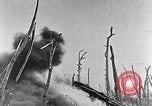
Extract from film "The Somme" depicts German troops in trench warfare against South African Brigade in Battle of the Somme, World War I.
Scenes from British feature film "The Somme" made in 1927, about the Battle of the Somme in World War 1. Part of it depicts events involving the South African Brigade in the battle. The extract opens with shells bursting all along No Man's Land among fragments of trees. Explosions and smoke everywhere. On July 18, 1916, Nine German Battalions deploy to drive the South African Brigade from the Delville Wood. Several soldiers of the Brigade seen entrenched in a sand-bagged position as a German shell explodes only yards from them. German soldiers advance through the broken trees and brush, while under fire by British gunners using Vickers machine guns. Some German soldiers falling and others seeking cover in abandoned trench. A line of South African troops firing their rifles from a trench, as several German soldiers reach them and are shot dead just feet away. A British soldier is shot while climbing out of a trench containing several fallen comrades. Other British (or South African) troops scrambling to find a safer place. One crawling across the ground. A British gunner firing a Lewis gun. German troops starting to go over-the-top, from their trench. British soldiers advancing. German gunner firing Maxim gun from fortified position, as shells burst in the distant background. A horizontal line of British troops advancing toward the German position. Some are cut down by the machine gun fire. German gunner firing a captured British Vickers machine gun. British soldiers hunkered down in a deep shell hole behind a ridge. They use their trenching tools to dig in deeper. Several German shells burst in the air. Two British soldiers watch as a tank approaches through the smoke. Large numbers of British troops attack downhill through smoke and haze. German soldiers preparing to defend an occupied structure, as more British troops charge forward. Post-battle view of the area, with fallen soldiers marked by rifles stuck in the ground with helmets on them. (Note: The tanks shown in this film are models Mark V which did not enter service until 1918.)
CRITICALPAST.COM: About Us | Contact Us | FAQs - How to Order | License Agreement | My Account | My Lightboxes | Shopping Cart | Advanced Search | Featured Collections | Website Terms & Conditions | Privacy Policy ©2026 CriticalPast LLC.
License Agreement |
Terms & Conditions |
Privacy Policy
©2026 CriticalPast LLC.