


 Francais
 Deutsch
 Italiano
Refine Your Search
Phu Cat Air Base Vietnam 1969 stock footage and images
- Showing 12997 to 13002 of 13411 results more
more Hide
Hide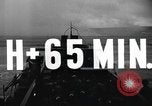
Allied soldiers make an amphibious landing at a beach in Normandy, France on D-Day during World War II.
D-Day operations during Allied invasion of Normandy, France during World War II. Allied troops disembark from an LCI ( Landing Craft Infantry) at Normandy beach. A man on a megaphone up on the bridge of a ship. Troops wade through surf to land at the beach. Bullets hit the water around the soldiers as they continue to unload from the LCI. LST ( Landing Ship Tank) -282 at the beach. Vehicles move along the beach. A U.S. Army 6X truck burns on the beach. The LCI ties up to the side of a transport. Allied troops disembark from the transport to the LCI along side. Vehicles off load from the LST to a smaller craft. A barge loaded with supplies heads towards the beach. The troops loaded in the LCU ( Landing Craft Utility) as it nears the beach. An officer talks over a phone next to a jeep. Vehicles leave the LCU into water with a beach in the background. The troops walk over the beach. Amphibious jeeps move through the surf. A 6X truck moves through the surf towards the beach. An amphibious jeep moves over a beach. German prisoners with their hands behind their heads. A barbed wire fence in the foreground. Prisoners duck downwards to escape an air raid.
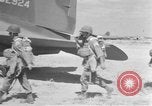
U.S.2/503rd Parachute Infantry Battalion (PIB) paratroopers load equipment in gliders in North Africa during World War II.
United States 2/503rd - Later the 509th Parachute Infantry Battalion in North Africa during World War II. Fully equipped 509th PIB paratroopers climb into United States Army Air Force C-47 transport airplanes to land in Italy. Soldiers lift the nose of a glider and load a 105 mm howitzer into the front end. The nose of the glider being lowered. The soldiers load a jeep into the front end of the glider. The nose of the glider being lowered.
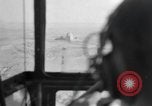
U.S. C-47 aircraft tow gliders while in flight over Italy during World War II.
United States Army Air Force C-47 aircraft in flight over Italy during World War II. The C-47 aircraft tow gliders while in flight. The aircraft in formation flight.
German prisoners being made to march by 82nd Division paratroopers in Normandy, France during World War II.
German prisoners in Normandy, France during World War II. German prisoners being made to march along a road in a wooded area under the guard of 82nd Air Borne Division paratroopers. An American soldier holds a gun and the prisoners stand with their hands behind their heads. American soldiers bring in German prisoners.
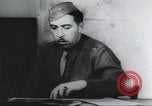
U.S. VIII Bomber Command, 97th Bomb Group, 342nd Bomb Squadron Commander is debriefed by a 97th Bomb Group Intelligence Officer (WW2)
Film opens showing a Captain, Intelligence officer with the U.S 8th Airforce 97th Bombardment Group, debriefing Captain William “Bill” Musselwhite, Commander of the 342nd Bombardment Squadron, about his unit's experience participating in the first Eighth Air Force heavy bomber mission in World War II, attacking the Rouen-Sotteville marshalling yards in France, on August 17, 1942. Referring to a map, he asks Captain Musselwhite where his Squadron dropped their bombs. Musselwhite points out the path of his units aircraft and that his first aircraft overshot the target, but those following dropped "on range," bracketing the target on left and right, with one "stick" of bombs going right down the middle. He mentions one ship straying over the town of Rouen, itself.
British Foreign Secretary Eden boards a C-47 aircraft and takes off from England during World War II.
British Foreign Secretary Anthony Eden at an airfield in England during World War II. A car arrives at the airfield and U.S. officers Lieutenant General Jacob L. Devers and Major General Ira C. Eaker get off the car. The two officers talk to each other. British Foreign Secretary arrives and talks to the officers. Secretary Eden and Lieutenant General Devers board a U.S. Army Air Forces C-47 aircraft. Aircraft taxis and takes off. Major General Eaker and other officers talk to each other.
CRITICALPAST.COM: About Us | Contact Us | FAQs - How to Order | License Agreement | My Account | My Lightboxes | Shopping Cart | Advanced Search | Featured Collections | Website Terms & Conditions | Privacy Policy ©2026 CriticalPast LLC.
License Agreement |
Terms & Conditions |
Privacy Policy
©2026 CriticalPast LLC.