


 Francais
 Deutsch
 Italiano

Refine Your Search
Phu Cat Air Base Vietnam 1969 stock footage and images
- Showing 3367 to 3372 of 13412 results more
 Hide
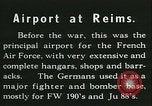
Wrecked aircraft and damaged hangars at the Reims airport after Allied bombings during World War II.
Results of air assaults by the British Royal and U.S. Eighth Air Forces over German-occupied France during Wolrd War II. The principal French airport at Reims, used by the Germans as a major fighter and bomber base mostly for FW 190s and Ju 88s. Wrecked aircraft on ground, in dispersal areas and under collapsing roofs of hangars and repair shops after the American aerial attack. Roads between installation filled with debris. Bomb smashed concrete runways and work areas lie in ruins. Allied soldiers and workers survey the rubble. Damaged hangars and equipment. Wrecked aircraft. Allied officers on a heap of debris. They inspect the damaged equipment and aircraft parts. Soldiers survey the damaged buildings.

Meeting of John L. Lewis from the United Mine Workers of America, and other U.S. labor leaders
John L. Lewis, head of the United Mine Workers of America (UMWA) and other labor leaders arrive at a U.S. Air Base aboard a U.S. Air Force C-118 (4-engine transport aircraft) number 53-3229, which is assigned to the Chairman of the Joint Chief's of Staff. They are greeted by an Army Major General., After posing for photographs, they board automobiles and visit a glass factory where workers are seen blowing glass. John L Lewis talks with the workers. Among the cars seen is a 1951 Cadillac
U.S. Army forces reclaiming and salvaging damaged aircraft for reuse during World War 2.
Damaged aircraft landing during World War 2. A B-24 Liberator with non-functioning landing gear comes in for a landing and slides on a runway. A B-25 aircraft comes in for a landing and landing gear partially fails. Pilot controls plane as it skids to a stop. A B-25 bomber aircraft on runway during takeoff suddenly pitches forward and nose crashes into ground. Air Force technicians at Davis-Monthan Air Base near Tucson Arizona cannibalize and reuse serviceable parts of various aircraft They assemble airplane tails, gas tanks, oil radiators and oxygen tanks. Technicians reclaim other parts from the aircraft that can be reused.

Man carrying 5 Gallon Can walks out of igloo and breaks ice in bucket at Sierra, Greenland.
View of Radar Antenna at Sierra, Greenland near Thule Air Base, Greenland. Sign board reads 'Sierra Greenland Army Weather, Upper Air Installation'. U.S. Army personnel carrying 5 Gallon Can walks out of igloo. He breaks ice in bucket using shovel.

P-47 Thunderbolt Aircraft demonstrates slow roll during training.
Diagram of P-47 Thunderbolt shows loop and slow roll. The aircraft in flight performs slow roll during training. View of Air Base on ground. From a U.S. Army Air Force training film on flying the P-47.
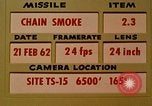
Missile Atlas 52D launches from ground coffin launcher and explodes during the flight.
Missile Atlas 52D Test code named Chain Smoke ready for launch by the Strategic Air Command (SAC) from pad 576 B-3 at Vandenberg Air Force Base, California The missile takes off and begins its flight upward. At TC:01:49 some white smoke emanates from the missile and it is seen to be burning. A moment later it explodes in a huge fireball with pieces ejected trailing white smoke. The camera tracks the largest piece as it falls and crashes behind a ridge at the shoreline (likely into the water). Various vehicles are seen along fence line at secure area set back from the shoreline. (Note: The booster gas generator experienced a leak which resulted in high thrust section temperatures and eventual propulsion system failure. The sustainer and verniers shut down 49 seconds into launch, followed by the booster engines at 68 seconds. The missile destroyed itself at 72 seconds.)
CRITICALPAST.COM: About Us | Contact Us | FAQs - How to Order | License Agreement | My Account | My Lightboxes | Shopping Cart | Advanced Search | Featured Collections | Website Terms & Conditions | Privacy Policy ©2026 CriticalPast LLC.
License Agreement |
Terms & Conditions |
Privacy Policy
©2026 CriticalPast LLC.