


 Francais
 Deutsch
 Italiano
Refine Your Search
Phu Cat Air Base Vietnam 1969 stock footage and images
- Showing 5977 to 5982 of 13375 results more
more Hide
Hide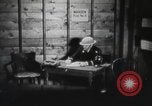
Duties of Air Raid Warden Sam Rankin and the operation of air raid drill in the United States in World War II.
American civilians prepare for an air raid drill in Arkansas, United States, during World War 2. Team members report to Air Raid Warden Sam Rankin. Sam receives the Yellow Alert message over phone. He dons his uniform with civil defense armband and goes to work on Blue Alert. Police cars help to get automobiles off the road. People get out of a bus and head to a nearby shelter. Family inside a blackout room listens to radio. Women switchboard operators seen connecting calls in a telephone switchboard room. Burners turned off on gas stove. Sam Rankin reports the Report and Control Center about the bombing. The message is passed to various departments including police and fire departments. Fire engines depart from fire station. Civilian defense nurse, trained by the Red Cross, is seen in a hospital preparing supplies. Her uniform includes on her left arm a civilian defense patch with a red cross in the middle. A man plots damaged areas on a large map. The alarm is sounded and a view of the alarm horn device is seen.
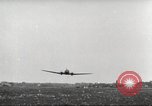
C-47 aircraft snag tow lines and pull U.S. Army Air Corps gliders off the ground into the air, in the United States
A C-47aircraft in flight in the United States. The C-47with a dangling cable and a hook trailing behind it flies low over a field. It snags a cable supported between standards. The cable is attached to an Army glider, sitting on the field, which the C-47 proceeds to pull off the ground and into the air. The C-47 continues in flight, towing the U.S. Army Air Corps glider.The action is repeated again by another aircraft and glider.
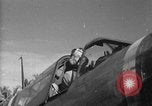
Royal New Zealand Air Force operations on Torokina Air Strip, Bougainville Island in World War II.
Flight operations at Torokina Air Strip on Bougainville Island during World War 2. Pilot of Royal New Zealand Air Force (RNZAF) Curtiss P-40 aircraft signals that he is going to start engine. He dons goggles and goes about starting engine. A group of RNZAF pilots conversing near one of their P-40s. Most of the pilots light up cigarettes. Camera focuses on New Zealand shoulder patch on one of the group. Scene shifts to active runway, where an RNZAF F4U Corsair aircraft takes off followed by an RNZAF Grumman TBF Avenger aircraft landing.
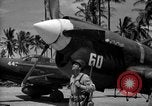
U.S. Army Air Forces refueling operations and Seabee construction at Torokina Air Strip, Bougainville, during World War II
Military policeman standing guard in front of a Royal New Zealand Air Force (RNZAF) P-40 aircraft, on the Torokina Air Strip, at Bougainville, in World War 2. A convoy of fuel trucks driving along edge of the airfield. A caterpillar tractor towing a large fuel tanker trailer. A fuel truck stops in front of a P-39 Airacobra and airmen begin to refuel its drop tank. Seabees unpack sections of pierced steel plank (Marsden Matting) and lay it down on the airstrip.
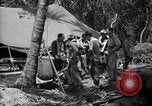
Royal New Zealand Air Force P-40 aircraft operating on Torokina Air Strip, Bougainville in World War II
Allied flight operations at Torokina Air Strip on Bougainville Island during World War 2. Pilots of the Royal New Zealand Air Force (RNZAF) gather near a tent on Bougainville, Papua, New Guinea, during World War 2. Two drink cups of water from a canvas Lister bag. View of control tower silhouetted against light sky background with tents clustered on ground below. A P-40, with RNZAF markings, taxis past the camera and is then seen on the active runway. A ground crewman waves on three more RNZAF P-40s as they taxi.
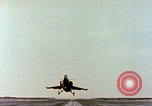
A United States Air Force aircraft loops in air and pilot in cockpit of aircraft in flight in the United States.
A United States Air Force Lockeed F-104 Starfighter aircraft takes off toward and over the camera, raising its landing gear as it passes. A slate reads: "High Flight." View from underneath as the F-104 flies above the camera. Next it is seen climbing into a clear blue sky. An aerial view as it performs a roll in flight. Views of earth below. Closeup show pilot in cockpit. During maneuvers the aircraft tail number "868" is seen. Closeup glimpse from inside the cockpit. The logo of the Tactical Air Command is seen on the 104's tail. The aircraft continues maneuvering, quietly, until TC: 00:45, when it's flight is accompanied by a voice reciting the sonnet, "High Flight," written by Royal Canadian pilot, John Gillespie Magee Jr., during World War 2.
CRITICALPAST.COM: About Us | Contact Us | FAQs - How to Order | License Agreement | My Account | My Lightboxes | Shopping Cart | Advanced Search | Featured Collections | Website Terms & Conditions | Privacy Policy ©2026 CriticalPast LLC.
License Agreement |
Terms & Conditions |
Privacy Policy
©2026 CriticalPast LLC.