


 Francais
 Deutsch
 Italiano
Refine Your Search
Pilsen Czechoslovakia 1945 stock footage and images
- Showing 1429 to 1434 of 6810 results more
more Hide
Hide
Guidelines to the United States occupation soldiers in Germany after the end of World War II.
This film contains numerous views of citizens in postwar Germany interposed with flashbacks of Nazi activities seen in Germany during the war. At start, film shows drawing of U.S. soldier superimposed on map of Germany. Armed U.S. troops, early in the occupation of Germany, proceed with caution along an alleyway, when an explosion occurs in a nearby building. German citizens going about their daily affairs in a village. Many patronize an outdoor market. Flashback to Germany during World War 2, with view from a high overlooking building, of troops marching along a street below. Closeup of German SS Guards marching in abbreviated goose step along a street. Glimpse of civilians in German city. German storm troopers marching at the Nazi Rally grounds in Nuremberg. More views of citizens on the streets of a city in postwar Germany. Glimpse of several German Nazi officials meeting together. A group of German civilian men relaxing in a courtyard. A town decorated with Nazi flags and banners. Views of ordinary Germans: a doctor, a technician, a clock maker, a postman, a farmer, a woman housekeeper, women toy makers, barbers, cooks, and dockworkers, all at work during the Nazi wartime era. A gathering of Hitler Youth at a rally. Closeups of young boys playing band instruments, then, marching through a gateway labeled: "Nordmarch Lager 1935," and parading through the streets of a town. A different group, dressed in black uniforms, and carrying backpacks, as they march in a town. Members of the Reich Labor Service marching with shovels on streets and during a rally at the Nazi grounds in Nuremberg. Several cartoon drawings accompany messages for U.S. troops on postwar occupation duty in Germany. They remind the soldiers that they are standing guard, but they must obey local laws, respect local customs and respect property rights. Also that they are not to ridicule or argue with local people. They are cautioned not to make friends with German citizens, but to be cautious and suspicious. Views of German people socializing, and gathering at outdoor markets. Views of German men, women and children in various activities, in their homes and outside. Narrator tells U.S. soldiers not to fraternize with the German people.
Review of the wars, destruction and atrocities brought by Germany to the countries of the world
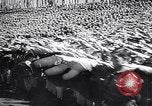
Propaganda aimed at American soldiers who will occupy Germany after World War II. . Opening scene shows stadium in Nuremberg, Germany, filled with youth rendering the Nazi salute in unison as a leader (unseen) chants "Sieg Heil." Several German Messerschmitt 110 fighter bombers flying in formation. View from inside bomb bay of German bomber aircraft as bombs are released. Bombs striking the city of Rotterdam, Netherlands, on 14 May 1940. Buildings burning and collapsing. Buildings destroyed the same month by German bombing in 1940. Buildings being bombed in Belgrade, Yugoslavia, by German aircraft in April 1941. Views of areas in the Soviet Union, wrecked by German bombing. Lone figure of a woman standing in the midst of the desolation and rubble of destroyed buildings. Civilians pressed into labor by German occupying forces, seen at work building defenses for them. A mother and two children in an occupied region. Variouu scene of dead civilians, in German occupied countries, including some hanging from gallows. Dead American soldiers. More views of Germans assembled in Nazi rallies and other gatherings. People marching with massed flags at a Nazi rally. German soldiers in formation. Unusual view of large group of German soldiers in formation from camera position shoulder-to-shoulder in ranks with the soldiers. Closeups of faces of three Nazi German soldiers in steel helmets. Illustration of an American soldier superimposed on background of German troops in formation. A Nazi leader (who looks like Ernst Röhm, Head of the Nazi Sturmabteilung- Storm Troopers) speaking in the 1930s. German workers shoveling materials into an open hearth steel furnace. Panzer III Ausf.F tanks in a German factory. More persons hung from gallows. Film reenactment of German cavalry attacking in 1870. German villagers dancing. A ship hit by a German torpedo, in 1914. More German villagers dancing. German bombing of Warsaw, Poland, in 1939. More German villagers dancing. Nazi Waffen SS soldiers, in black , goosestepping on parade.
History of Germany as a group of 300 medieval princely states with feudalistic rulers.
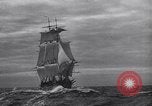
Mix of actor portrayals and actual footage: Church, homes and schools of America. Various United States soldiers. Views of German soldiers. German soldiers marching in a parade ground. Rulers and dictators of Germany: Adolf Hitler (World War II), Kaiser Wilhelm II, Otto Von Bismarck who laid identity of Germany as Nazi, Huns, and Prussians respectively. Historic overview of Germany. Princes and feudalistic rulers of the states. In contrast the US, French and British parliamentary system. King Frederick, the Great of Prussia with his cavalry and in his court. Prussian war against Austria, Russia, Sweden, France. German women wave for victorious troops. Portraits of Scharnhorst and Gneisenau. Dictums of Clausewitz, crushing of the 1848 revolt in Prussia. Germans emigrate to the U.S. Otto Von Bismarck addresses the ministry his policies of blood and iron.
Film juxtaposing German defeat in World War 1, with its defeat in World War II, and comparative postwar impacts.
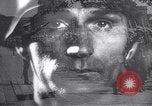
Film begins stressing the historic aggressive military traditions of Germany. A brief view of thousands of Adolf Hitler's Nazi troopers assembled in dramatic formation at the Nazi party rally grounds in Nuremberg, Germany. Explosion of the Nazi eagle, with swastika symbol, atop the Zeppelintribüne grandstand at Zeppelinfeld in Nuremberg, being blown up by U.S. Army soldiers at the end of World War 2 in Europe. Germans celebrating the armistice ending World War One. German soldiers captured, in unconditional surrender, ending World War Two. Huge open field filled with defeated German soldiers in the second world war. German armies parading through Berlin at the end of World War One. American troops occupying the entire country of Germany after the second world war. A Nazi eagle being destroyed on a German government building at end of the second world war. Old photograph of the German general staff, led by Helmuth von Moltke the Younger, that was still intact, after World War I. In contrast, after World War 2, the entire Nazi military was held and subject to trials at Nuremberg. Großadmiral Erich Raeder seen being taken in custody. Closeup of Field Marshal Wilhelm Keitel. German industry unimpaired by World War I, contrasted with utter destruction in the second world war. American officer coordinating resumed operation of of a postwar plant. View of German diplomats remaining in office after WWI. Proclamation barring Nazi party members from all offices after WWII. German Kaiser Wilhelm II in peaceful exile in Holland after the first world war. A Nazi officer war criminal, is taken in custody by American Military Policemen, and executed by a firing squad. World War 1 did not affect German schools and curriculums. After World War 2 all Nazi doctrines were destroyed. New text books and curriculums were prepared by the Allies for German use. Map shows small area of post World War 1 occupation, in contrast the the entire Germany after WWII. Weimar Republic government, post WWI is contrasted with post World War 2 government by the Allied military powers. British Marshal Bernard Montgomery, American General Dwight D. Eisenhower, Soviet Marshal Zhukov, and French General Charles de Gaulle, are shown. Views of American soldiers interacting with German citizens during their occupation of Germany. Images of Germans: Frederick the Great, Otto von Bismarck, and Kaiser Wilhelm. Views of German farmer sowing seed, postman delivering mail, policemen escorting children. Normal activities resumed in Germany, in areas of culture such as orchestral concerts, etc.
United States Air Force personnel attach the Azon Bomb with a GB-4 missile at a United States Air Force base.
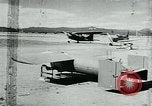
A GB-4 missile and an Azon Bomb kept at a USAF base. Airmen attach the Azon Bomb to a GB-4 missile. Various components of the GB-4 missile are assembled step by step. Airmen attach radio control, tail section, radar and stabilizer, electrical unit, camera system, generator. Airmen put the warhead, fins and radar antenna to complete the assembly. (World War II period).
Missile GB-4 carrying an Azon Bomb attached to an B-17 Bomber of the U.S. Air Force
A jeep towing missile GB-4 to a B-17 Bomber of the U.S. Air Force at a base. Air force men installing the missile beneath a wing on a wing rack of the plane. They attach the missile with the rack. Radar antenna of the missile. Airmen checks the control unit of the missile. (World War II period).
CRITICALPAST.COM: About Us | Contact Us | FAQs - How to Order | License Agreement | My Account | My Lightboxes | Shopping Cart | Advanced Search | Featured Collections | Website Terms & Conditions | Privacy Policy ©2026 CriticalPast LLC.
License Agreement |
Terms & Conditions |
Privacy Policy
©2026 CriticalPast LLC.