


 Francais
 Deutsch
 Italiano
Refine Your Search
Pilsen Czechoslovakia 1945 stock footage and images
- Showing 1567 to 1572 of 6810 results more
more Hide
Hide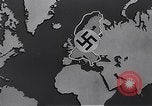
German and Japanese positions destroyed by bombing from Allied bombers, during World War II.
Allied air war over Germany and Japan in World War II. A map showing the Germany occupied areas in Europe and Japan occupied region in South Asia. Aerial views of Allied bomber aircraft flying over the city of Berlin, Germany. The target, Messerschmitt AG, a German aircraft manufacturer company, is bombed by the bombers. Bombs strike the target and huge explosion destroys the factory. Allied bombers drop bombs over targets in Tokyo, Japan. Bombs hit the ground and explosion smoke can be seen from the plane during saturation bombing of Tokyo, Japan.
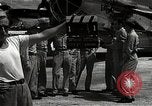
U.S. Military officers at North Field base on Tinian , Marianas Islands, pose in front of the B-29, Enola Gay
Atomic bombing mission in Japan by the United States Army Air Force, during World War II. A U.S. military base in North Field, Tinian Island in Mariana Islands, South Pacific. A group of U.S. Navy and Army Air Force officers stand in front of a B-29 bomber and talk to each other. The name of the B-29 bomber 'Enola Gay' painted on the nose of the bomber.

General Thomas Farrell, Deputy Commander, Atom Bomb Project expresses his views at North Field base in Tinian Island, in WW II.
Atomic bombing mission in Japan by the United States Army Air Force, during World War II. U.S. military base in North Field, Tinian Island in Mariana Islands, South Pacific. Brigadier General Thomas F. Farrell, Deputy Commander, Atom Bomb Project thanks all people who contributed in the manufacturing of the bomb. He hopes that future use of the atomic power will be for peaceful purposes only.
Colonel Paul Tibbets, Pilot of the Enola Gay, describes his mission dropping the atomic bomb on Hiroshima Japan.
Crew members of the B-29 Enola Gay are interviewed about their atomic bombing mission over Hiroshima Japan by the United States Army Air Force, during World War II. In this interview at North Field, Tinian Island in Marianas Islands, Public Relations Officer, Major John F. Moynahan (not seen) interviews Colonel Paul W. Tibbets, Jr., Pilot of the Enola Gay Among things Colonel Tibbets mentions, he recounts that he took a steep turn to avoid radiation from the explosion. When he saw the explosion he was surprised about its intensity. The cloud from explosion covered the whole city of Hiroshima.
U.S. Navy Commander Ashworth, crew member on B-29 that dropped atomic bomb on Nagasaki, interviewed at Tinian, Marianas Islands
Setting: North Field, Tinian,in Mariana Islands. Public Affairs Officer Major John F. Moynahan interviews Commander Frederick L. Ashworth of the U.S. Navy, who was the weaponeer on the B-29 called Bockscar (sometimes "Bock's Car") that dropped the atomic bomb on Nagasaki, Japan during World War II. He expressed initial concerns about not being able to bomb their primary target and having, instead, to proceed to their secondary target, Nagasaki.
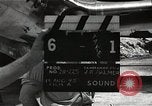
Major Thomas Ferebee, the bombardier aboard Enola Gay shares his experience of the Hiroshima atomic bombing mission
Setting: North Field, Tinian Island, Marianas Islands. Major Thomas Ferebee, the bombardier aboard Enola Gay (B-29 that bombed Hiroshima) is asked about his experiences, by Public Relations Officer John F. Moynahan (not seen). He recalls - His navigator aligned him correctly with the target. Hiroshima was clearly visible to him and so he was able to deliver the bomb. (World War II period).
CRITICALPAST.COM: About Us | Contact Us | FAQs - How to Order | License Agreement | My Account | My Lightboxes | Shopping Cart | Advanced Search | Featured Collections | Website Terms & Conditions | Privacy Policy ©2026 CriticalPast LLC.
License Agreement |
Terms & Conditions |
Privacy Policy
©2026 CriticalPast LLC.