


 Francais
 Deutsch
 Italiano
Refine Your Search
Pilsen Czechoslovakia 1945 stock footage and images
- Showing 247 to 252 of 6810 results more
more Hide
Hide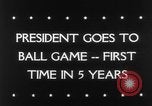
President Harry Truman attends baseball game between St. Louis Browns and Washington Senators in September 1945
U.S. President Harry Truman arrives at Washington's Griffith Stadium in a car flanked by several Secret Service agents. Announcer notes this is the first time a president has attended a baseball game since the start of World War Two. President Truman and first lady Bess Truman take seats. Truman signs an autograph. Truman, a lefty, receives baseball from Washington Senators' manager Ossie Bluege and throws out the ceremonial first pitch. Also in attendance is the commissioner of baseball, Albert "Happy" Chandler. Game begins as visiting St. Louis Browns take the field. The Senators' second baseman George Myatt gets a hit to advance George Case. Washington star Cecil Travis (playing in his very first game since returning from 3+ years military service) makes an infield out but drives in the Senators' first run. Washington goes on to win the game 4-1.
Four Power Allied Control Council meeting after defeat of Germany 1945
Allied Control Council meeting in Berlin-Schoneberg, attended by Field Marshal Bernard Montgomery, of United Kingdom; Marshal Georgy Zhukov, of Soviet Union; General Lucius D. Clay, of the United States, and General Jean se Lattre de Tassigny, of France. (World War II period).
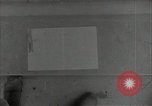
Filipino Luzon Guerilla Forces (LGAF) in Cagayan Province, 1945
Enrile Elementary School in Cagayan Province, Philippines, being used as a headquarters for Filipino Luzon Guerilla Forces (LGAF). A sign on blackboard read: "Silence, Guardhouse." A guard at the entrance gate. A Filipino guerilla, with a package in hand, walks in through the gate and reports to an LGAF officer at a desk on the porch . He points out intelligence information on a map spread on the desk. The officer seated at the desk places the intelligence information in an envelope and gives it to another LGAF guerrilla, who leaves on horseback to deliver the information to friendly forces. A field in view. A wooded region. Smoke rises from areas in the wooded region. A water buffalo in the field.
Scenes in a German city as World War II in Europe ends on VE-Day, May 8, 1945
Opening scene shows local German citizens chatting in small groups near a city street on the day World War 2, in Europe, ends. Next, American soldiers are seen standing beside a road as a German soldier on a motorcycle leads a truck filled with unarmed German soldiers. Another truck drives behind. Scene shifts to a long line of such trucks carrying German soldiers. Several open trucks, filled with German soldiers, ride past the camera. A Sd.Kfz. 8 halftrack filled with German soldiers pauses a while in front of the camera. Several other vehicles pass, followed a pair of German soldiers driving by a horse-drawn covered wagon. German soldiers assembled in loose formation on the edge of a large lawn. Discarded military equipment is on the ground nearby. Two German officers stand in front of the formation. One is giving instructions. Meanwhile, American soldiers begin to examine the arms and equipment on the ground nearby. Closeup of the German officers as the one is giving instructions to the formation of troops.
"By Request Department" shows scenes of soldiers' home towns for soldiers deployed overseas in World War 2; views of several American towns circa 1945.
Busy streets of the cities in the United States. A woman officer at a desk of Army-Navy Screen Magazine's "By Request Department" addresses U.S. soldiers overseas during World War 2, and says they will show views of various American home towns by request. Busy intersection along Capitol Street in Charleston, West Virginia. 1930s automobiles on roads and American citizens walking on city streets. Next scene shows the main street of Wytheville, Virginia with cars, pedestrians, and shops. Next scene is of main street area in Fall River, Massachusetts. Buildings seen on either sides of the streets and buses at bus station depot. Next view is of Springfield Street, looking toward Market Street in the center of Newark, New Jersey. Main streets of Winslow Arizona, with citizens dressed in Western wear, and then a main intersection in Tucson, Arizona, where a paper boy sells newspapers on a street corner.
Part of a newsreel restrospective about U.S. President Franklin D. Roosevelt, made after his death in 1945
Film opens showing forward port section of the British Battleship HMS Prince of Wales in Placentia Bay, Argentia, Newfoundland. Next, Winston Churchill is seen greeting President Franklin D. Roosevelt as he arrives to meet with him during their Atlantic Conference in 1941. The President is assisted by his son, Army Captain James Roosevelt. The entire ship's company is seen assembled on deck for a church service. Closeup of President Roosevelt, Prime Minister Churchill and their principal advisors. all singing "Onward Christian Soldiers" during the service. Scene shifts to December 7, 1941, showing the American battleship USS Arizona and other battleships being bombed by Japanese aircraft. View shifts to the White House in Washington, DC. on July 19, 1940, President Roosevelt is broadcasting his speech to the Democratic National Convention, accepting nomination for an unprescedented 4th term as President. Views of ordinary Americans in various settings. Legislators congratulating the new Vice President, Harry S. Truman, after inauguration in January 1941. Truman seated and surrounded by staff and well-wishers. View of Truman, his wife, Bess and daughter Margaret, walking across the lawn at their home in Independence, Missouri. View of the three of them, inside their home, opening and sharing congratulatory messages received by the new Vice President. Immediately following FDR's death, now, President Truman is seen assuring the public that he will continue the course set by his predecessor. Glimpses of President Roosevelt seated in front of the White House and at his desk. In Yalta for the Big Three Conference, Roosevelt rides in a jeep as Prime Minister Churchill walks beside. Closeup of Roosevelt and Churchill. Participants gathering for the Yalta conference. Closeup of Roosevelt and Stalin. Churchill arriving and taking his seat. Closeup of the Big Three, Winston Churchill, Franklin D. Roosevelt, and Joseph Stalin. (World War II period).
CRITICALPAST.COM: About Us | Contact Us | FAQs - How to Order | License Agreement | My Account | My Lightboxes | Shopping Cart | Advanced Search | Featured Collections | Website Terms & Conditions | Privacy Policy ©2026 CriticalPast LLC.
License Agreement |
Terms & Conditions |
Privacy Policy
©2026 CriticalPast LLC.