


 Francais
 Deutsch
 Italiano
Refine Your Search
Pilsen Czechoslovakia 1945 stock footage and images
- Showing 325 to 330 of 6810 results more
more Hide
Hide
Lord of Admiralty Churchill speaks to Britain's stronger position during World War II, during a speech in London.
A speech by British Lord of the Admiralty Winston Churchill in London, England during World War 2. He states that Britain is in stronger position than it was at the start of the war. He says that fate of Holland, Belgium, Czechoslovakia, Poland and Austria will be decided by the victory of Britain and French Republic.
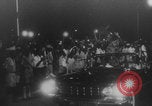
Sylvanus Olympio celebrates the independence of Togo
Togolese Prime Minister and President Sylvanus Olympio raises his fists during a celebratory motorcade in 1961. Newly independent countries in Africa and Asia celebrate their independence. Sign reads “Proclamation de L’Independence du Togo 27 Avril 1960”. Sylvanus Olympio speaks to the Togolese people after his election as president. The flag of Togo is raised. Togolese women raising their hands. The United Nations seal. An African delegate speaks to the United Nations (U.N.). The host and narrator shows a map of Europe to the audience. He points to Lithuania, Latvia, and Estonia on the map. He also points to other Eastern European countries such as East Germany, Czechoslovakia, and Hungary that fell under Soviet influence after World War II.
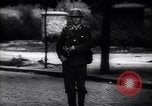
History of Berlin before and after World War II showing zones of occupation and poor living conditions post-war.
Nazi soldiers at attention with guns drawn in Berlin during World War 2. U.S. soldiers on watch from damaged Berlin building. Man watching the Brandenburger Tor with binoculars while sitting in car. Pan American passenger airplane in flight after the war. Pan American passenger reading Time and other magazines onboard. Aerial view of Berlin early 1960s. Pan American plane landing at Tempelhof Airport. Pan American passengers descending to tarmac under sign that reads, "Today Pan American has completed 93153 Transatlantic Crossings". West German immigration officer inspects passport of tourist in Tempelhof Airport’s passport control. Brandenburg Gate from West Berlin during the early 1960s. A man observing the Brandenburger Tor from the Straße des 17. Juni street in West Berlin. Sign saying “Achtung! Sie verlassen jetzt West-Berlin” (“Warning! You are now leaving West-Berlin” in German). View of Berlin in 1920s and 1930 decades. Drive through Brandenburg Gate in the 1920s. Point of view shot driving through Berlin in the 1920s. Various street signs in Berlin showing “Unter Den Linden” and “Friedrichstraße”. Tourist bus flying American flag departs in Berlin 1920s. Humboldt University of Berlin (Humboldt-Universität zu Berlin) along the Unter den Linden boulevard during the 1920s. View of the Berlin Cathedral dome. View of the Gendarmenmarkt square showing the Konzerthaus and the French Church. Pedestrians in Friedrichstraße. Berliners in Lustgarten park on Museum Island. Early Nazis driving in Berlin streets in 1930s. Hitler saluting parade. Hitler addressing Germans. Berlin in ruins in Spring 1945 as occupying Allied tanks pass in front of Brandenburg Gate. Old starving woman walks on streets of Berlin amid ruins in 1945. Ruins of Berlin include Reichstag Building during 1945 Battle of Berlin. Women and children emerging from underground Berlin bunker in 1945, to a scene of devastation and rubble in the city. Ground view of the Kaiser Wilhelm Memorial Church (Kaiser-Wilhelm-Gedächtniskirche) after being bombed. Interior of ruined Reichstag Building. Potsdam Conference 1945, Map of WWII Europe. Berlin map, including official Berlin map with signatures showing Zones of Occupation. Germany allied control authority gathering including American, British, and Soviet representatives. French, American, Soviet flags in Germany. Rebuilding of Berlin mostly by women clearing rubble, using shovels, buckets, wheelbarrows and cleaning old bricks for reuse. Over-crowded train in Germany post-WWII filled with German civilian refugees abandoning the cities and heading to the countryside of Germany to resettle.
The end of WWII and U.S. President Harry Truman's role in immediate postwar actions
Opening scene shows some German infantry surrendering with hands raised. Next scene shows people thronging Times Square in Manhattan, New York City, celebrating VE Day, or Victory in Europe Day, on May 8, 1945, when Germany surrendered to end World War II, in Europe. Image of the first atomic explosion (Trinity) on July 16, 1945, in New Mexico, United States. Scene shifts to deck of the U.S. Battleship, USS Missouri, where Japanese foreign minister, Mamoru Shigemitsu, is seated and signing the instrument of surrender., on September 2, 1945. Closeup profile of General Douglas MacArthur. Another glimpse of Mamoru Shigemitsu signing. Next, MacArthur is seen signing the document. He turns and presents the pen to Lieutenant General Jonathan M. Wainwright , who is standing behind him alongside British Lieutenant-General Arthur Ernest Percival. Brief glimpse of the San Francisco War Memorial and Performing Arts Center with flag appearing to be at half staff and a long awning extending from its entrance to the sidewalk. View of representatives at the first United Nations meeting there . Views of audience in auditorium shows many notables. Closeups of Soviet Ambassador, Andrey Gromyko and Soviet Foreign Minister, Vyacheslav Molotov.. Next, President Harry S. Truman is seen broadcasting a greeting to the delegates, from the Capitol, Washington, DC, on April 25, 1945. The delegates are seen listening to the broadcast and then applauding.
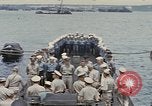
Admiral Nimitz decorates officers and sailors aboard the submarine, USS Bowfin, in Guam, during World War II
View from conning tower of the submarine, USS Bowfin, in Apra Harbor, Guam, during World War 2. Officers and crew of the USS Bowfin stand in formation on the foredeck. With his back to the camera, Fleet Admiral Chester W. Nimitz, stands at a microphone, reading a citation. He then steps forward to decorate Commander Alexander Kelly Tyree with the Navy Cross for extraordinary heroism in the line of his profession as Commanding Officer of the U.S.S. Bowfin (SS-287), on the Seventh War Patrol of that submarine during the period 25 January 1945 to 25 March 1945. Admiral Nimitz then proceeds to decorate other officers and sailors of the Bowfin, as Navy photographers take photographs. The Admiral with two officers and a sailor hold hand salutes a while as the ceremony is finishing. Admiral Nimitz then steps from the Bowfin, across another submarine docked next to it, and down to his launch. He salutes, as the launch pulls away. (Another view of Nimitz stepping into his launch is inserted here, as well.) Glimpse of the officers back on the Bowfin. (Note: Commander Tyree subsequently received a Gold Star in lieu of a Second Navy Cross, following the War Patrol of the Bowfin from 29 May 1945 to 4 July 1945.)
Allies demand the unconditional surrender of Japan in World War II. Entry of Soviets and use of atomic bomb ends the war.
Representatives of three nations, seated around table at Potsdam Conference held at Cecilienhof in Potsdam, Germany. British prime minister, Clement Attlee; President of United States, Harry Truman; and representative of Soviet Union, Joseph Stalin at the Potsdam Conference, July 1945. They deliver an ultimatum of unconditional surrender to Japan. Swarms of B-29 bombers and Aircraft Carrier Task Forces destroy Japanese homeland. Planes on carrier decks.Navy Grumman carrier-based TBF aircraft dropping bombs.. Destruction of ships at sea. Mushroom cloud due to atomic bombing. Chart depicts the power of one atomic bomb. Britain's 'grand slam' bomb, most destructive conventional bomb ever produced. Doctor Ernest Orlando Lawrence, inventor of the cyclotron (atom smashing machine). A man works at the Cyclotron at the University of California, Berkeley. General Leslie Groves, head of the project speaks. He is seated with Dr Vannevar Bush, government director of science and research, and Dr Richard Tolman, technical expert. Quantities of uranium shipped from Alberta, Canada are used in bombs. The atomic bomb process (Manhattan Project) is developed in widely separated areas; scenes from Hanford Project plant in Richmond, Washington. Project personnel exit cars and enter into the search area before starting their work day. Lieutenant colonel Franklin T Matthias with the army corps of engineers, appointed to the Hanford Project. Sign of 'Oak Ridge' in Tennessee. Largest of the three atomic bomb plants located near the Tennessee Valley Authority (TVA) dam. Employed personnel in atomic bomb plants are seen going to work. Man and woman employees at the plan read and smile at a Knoxville Journal newspaper in August 1945 with news headline "Power of Oak Ridge Atomic Bomb hits Japs" after the atomic bomb was dropped in Hiroshima. View of dense prefabricated home communities to house large number of Oak Ridge plant workers. View of families setting up their houses in trailer towns after the prefabricated homes were full. People come out from the Henebry's Jewelers and supermarket, among stores setup to meet the needs of the quickly built city. Scenes changes to show view of Soviet leader Joseph Stalin at conference. Russian artillery and troops in a parade at Red Square in Moscow, Russia (these parade scenes are from the May 1, 1945 May Day parade, just days before Germany's surrender). President Harry Truman reports on the latest developments regarding the war with Japan. He states that the United States is prepared to destroy every productive enterprise in Japan and the U.S. shall completely destroy its power to make war. He warns of an attack by the U.S. due to the rejection of the July 26th ultimatum at Potsdam. He warns that Japan "should expect a rain of ruin from the air; the like of which has never been seen on this earth." Truman notes that it will be followed by an unprecedented sea and land invasion of Japan.
CRITICALPAST.COM: About Us | Contact Us | FAQs - How to Order | License Agreement | My Account | My Lightboxes | Shopping Cart | Advanced Search | Featured Collections | Website Terms & Conditions | Privacy Policy ©2026 CriticalPast LLC.
License Agreement |
Terms & Conditions |
Privacy Policy
©2026 CriticalPast LLC.