


 Francais
 Deutsch
 Italiano
Refine Your Search
Pleiku South Vietnam 1966 stock footage and images
- Showing 1597 to 1602 of 5965 results more
more Hide
Hide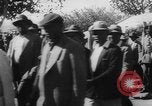
African unrest in 1960: Anti-apartheid demonstrations, assassination attempt on Verwoerd, and riots and arrest of Lumumba in Congo.
Riots and uneasy conditions in South Africa and Congo during the year 1960. South African natives demonstrate against apartheid racial discrimination and passbook requirements. Protestors at Sharpeville shown burning passbooks. Policemen fire at peaceful demonstrators in what became the Sharpeville massacre of May 31, 1960. Next scene shows attempted assassination of Premier Verwoerd by a white farmer. A photographer takes photos as an aide holds Verwoerd after he is shot. Next scene shows riots in Congo, Africa after elections. Rioters dispersed by local police forces. The United Nations peace keeping forces arrive in Congo. Premiere Patrice Lumumba arrested and policeman ties his hands with ropes. View of Colonel Mobutu Sese Seko in military uniform.
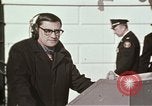
A Marine Number One helicopter brings U.S. President Richard Nixon from Camp David to the White House, Washington DC.
U.S. President Richard M. Nixon returns from Camp David at Andrew's Air Force Base to the White House, Washington DC. Ground controller standing below South Portico of White House speaks into a microphone as the presidential helicopter prepares for landing. The helicopter lands in the South Lawn of the White House. President Nixon debarks from the plane and walks inside the White House. Pilots in the cockpit of the helicopter as it takes off and flies in the air. An assistant arranges the landing pads of the helicopter.
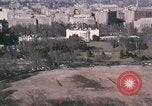
Aerial views of the White House, the U.S. Capitol building and the Washington Monument in Washington DC.
The White House, the residence of the President of the United States, and area near it in Washington DC. An aerial view of the south side of the White House. Other Federal Buildings near it. The Washington Monument near the White House. The U.S. Capitol building seen at a distance. A helicopter takes off from the South Lawn of the White House.
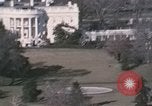
U.S. Marine Number One helicopter flies from White House past the Washington Monument to cross Potomac river, Washington DC.
The White House, the residence of the President of the United States, and area near it in Washington DC. The South Lawn of the White House. A U.S. Marine Number One helicopter takes off from the South Lawn and flies past the Washington Monument to cross the Potomac river.
Various trees in the garden and fruits on them during autumn season at the Oval Office in the White House, Washington DC.
The U.S. President Richard Nixon signs S-1081 Trans-Alaska Pipeline Bill at the Oval Office in the White House, Washington DC. The Oval Office and the South Lawn in White House. Various trees in the garden and fruits on them during autumn season. Leaves fall from trees in the South Lawn.
Consultant to the U.S. Secretary of State John Foster Dulles visits front areas in Korea with the start of the Korean War.
The beginning of the Korean War with the invasion of South Korea by North Korean troops. ROK (Republic of Korea) troops in trenches and at sandbagged positions on the 38th Parallel. John Foster Dulles, Consultant to the U.S. Secretary of State, visits the front areas and converses with an officer at a map. Dulles standing with ROK (Republic of Korea) troops. South Korean refugees fleeing. United Nations Security Council's meeting in progress. The empty chair of the delegate from the Soviet Union. Secretary General of the United Nations Trygve Lie speaks. The Security Council passes a resolution calling for cease fire.
CRITICALPAST.COM: About Us | Contact Us | FAQs - How to Order | License Agreement | My Account | My Lightboxes | Shopping Cart | Advanced Search | Featured Collections | Website Terms & Conditions | Privacy Policy ©2026 CriticalPast LLC.
License Agreement |
Terms & Conditions |
Privacy Policy
©2026 CriticalPast LLC.