


 Francais
 Deutsch
 Italiano
Refine Your Search
Pleiku South Vietnam 1966 stock footage and images
- Showing 1789 to 1794 of 5965 results more
more Hide
Hide
Derby events being held in New York and California.
Shows the Suburban Handicap derby event being held in New York City. Spectators cheer from their stands. Seven year old horse Kalso loses to Iron Peg by inches. Shows another derby event at Hollywood park in California. South African horse Colorado King wins the event.

Golfer Dave Marr wins the Professional Golfers' Association (PGA) tournament.
Golfer Dave Marr wins the Professional Golfers' Association (PGA) Tour Championship in Pennsylvania, United States. South African golfer Gary Player swings his club during the competition. Spectators watch in the golf course. American Arnold Palmer competing in the tournament. Top money winner Jack Nicklaus, nicknamed The Golden Bear, swings his club. Dave Marr competes and wins the PGA tournament. Billy Casper finishes with a 282. Crowds rush to find the golf ball landing a few feet from the hole. Dave Marr voted the PGA Player of the Year, with his PGA Championship trophy.
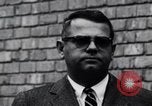
Man speaks on 'Immorality of racial segregation' in Little Rock, Arkansas.
Man says he is an "integrationist'" concerned more about the "Immorality" of segregation than he is about its "Illegality". He criticizes the Court Orders during Civil Rights movement that require the school board to allow only a token number of African American students into previously all white schools. He criticizes Southern politics. High school students leaving Little Rock Central High School at end of day. Many board school buses.
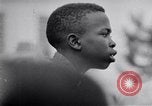
Civil rights demonstrations, racial tensions, and school integration in America in the early 1960's.
African American men and women carry signs and demonstrate for equal rights outside a restaurant or store in the United States for civil rights. Jesse Jackson leads crowd in his "I am somebody" chant. A sign in the gathered crowd reads, "Jesse Jackson Black Jesus". Views of the March on Washington for Jobs and Freedom on August 28 1963, highlighting civil rights issues for African Americans. Next scene is during the Selma to Montgomery march and shows Martin Luther King Jr. and his wife Coretta Scott King marching next to James Michael Letherer (Jim Letherer) of Saginaw, Michigan. (Letherer, who lost his right leg to cancer as a child, did the entire march on crutches.) Next scene shows African American people as they riot and flip over a car during racial riots. A building burns during race riots. Ernest Green talks to others at the headquarters for the Apprenticeship Program of the Workers Defense League, funded by the A. Philip Randolph Education Fund. A white man enters a voting booth. White and black people at a polling place. Narrator says that African American voting is increasing in America. Images of of Mayor Carl Stokes,a black political leader in Cleveland, Ohio; Jesse Jackson, Preacher; and Ernest Green (Ernie Green), Youth Organizer and Executive. View of grounds of the Washington and Lincoln Memorial teeming with protestors against inequality and segregation during the March on Washington for Jobs and Freedom in 1963. View of United States Supreme Court building and point of view shot as camera approaches interior chamber of the Supreme Court. Black students outside a school. Exterior view of John Philip Sousa Junior High School in Washington DC shows integrated student body. View of white students demonstrating against integration at Little Rock. Interior view of integrated elementary school classroom with both white and black children. Curb side sit-in demonstration in a southern city. Picketing demonstrators outside the S&W Cafeteria hold signs that read, "Christian Morality Condemns Segregation" and "All Men are Created Equal." African American demonstrators at the lunch counter of the S&W Cafeteria are served a meal by the waitress, along side white patrons at the lunch counter. View of a swimming pool that has been closed by a municipality rather than allow integration.
Geography, people and way of life of Netherlands immediately before World War 2.
Excerpt from "The Netherlands -- A Country Claimed from the Sea." Map of Europe outlines the Netherlands including North and South Holland. Windmill near a water canal. Dutch man and children in native costumes. A busy city street. Dutch men, women, and teenagers on bicycles along with various cars and road traffic passing by. Vehicular traffic. View of a canal. A large steam ship passes under a canal bridge and after passing under, it erects its main smoke stack that had been pulled down or retracted to clear under the bridge.
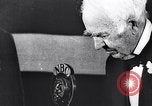
At a recognition ceremony in 1928, Thomas Edison operates the first tinfoil phonograph he invented.
Thomas Edison with his original tin foil phonograph (recording and playing device), that was produced in December 1877. Edison stands near a NBC microphone and shows operation of his tinfoil phonograph, also referred to in press of the late 1800s as a Talking Machine. This footage was shot on the occasion of a recognition ceremony for Edison on October 20, 1928, where he was also presented the Congressional Gold Medal by President Calvin Coolidge. This original tinfoil phonograph had been given by Edison in 1880 to a representative of the English Patent Office who visited the Menlo Park lab. The machine had been exhibited in England. It was repatriated for this 1928 event by the South Kensington Museum in London. British diplomat Ronald Ian Campbell, partially visible on the left in this footage, presented the phonograph back to Edison. Today it is on display at the Edison National Historic Site in West Orange, New Jersey.
CRITICALPAST.COM: About Us | Contact Us | FAQs - How to Order | License Agreement | My Account | My Lightboxes | Shopping Cart | Advanced Search | Featured Collections | Website Terms & Conditions | Privacy Policy ©2026 CriticalPast LLC.
License Agreement |
Terms & Conditions |
Privacy Policy
©2026 CriticalPast LLC.