


 Francais
 Deutsch
 Italiano
Refine Your Search
Pleiku South Vietnam 1966 stock footage and images
- Showing 2005 to 2010 of 5965 results more
more Hide
Hide
A French oil field is opened and American drilling techniques are employed with U.S. aid in France.
A French oil field is opened with U.S. aid in France. Cattle and cow carts on an oil field. Oil drilling equipment on the field. An oil drilling operation in southern France with the aid of Marshall Plan funds. The newest American drilling techniques are employed. Workers work to process the oil. The refined oil is transported via railroads.
Dwight D. Eisenhower delivers the news about victory of Allies over Normandy to the French people in France.
Activities of Allied troops during the invasion of Normandy, France during World War II. A swastika sign on an animated map shows German occupied area in France and as a target for Allied troops to invade. American, Canadian and British troops prepare for the invasion. French soldiers of democracy board boats and leave the shore of England. British Prime Minister Winston Churchill and South African Prime Minister Jan Christian Smuts wish luck to Allied troops boarding a landing craft. A map shows Allied landing on Normandy coast. Supreme Allied Commander Dwight D. Eisenhower delivers the news about the victory of Allies over Normandy which is broadcast to the French people. A radio operator and towers shown. French people listen to Eisenhower's speech. A man gives the news of Normandy invasion by Allied troops on a microphone. People applaud. Streets in London. People of London read newspapers stating 'Allied invaded in France'. Aircraft on the ground. Airborne paratroops board the aircraft. A general talks to the troops during the airborne operation. The aircraft in flight. Ships underway at sea. The navy and the air force blast Normandy shore positions.
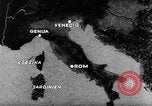
German view of the Battle of Monte Cassino, in Italy, during World War 2
The Italian Campaign and battle of Monte Cassino in World War Two. A map shows Italy and surrounding areas. A German soldier reads a local military newspaper called The Southern Front. View of the town of Monte Cassino, with German troops moving cautiously through the rubble. Other German troops under cover in wooded area. They observe American aircraft bombing Monte Cassino. A German officer, in a glen, makes plans with his staff. German troops move along and across a stream and take up positions behind a hill. They fire at Allied troops. Several of them fire grenades from their rifles. Advancing, they come across body of fallen American soldier. An American soldier is taken prisoner. Shoulder patch of the 34th 'Red Bull' Division is seen on his uniform. His captors smoke cigarettes with him, and examine his helmet. Several American soldiers are taken prisoner and escorted to an area where they are questioned.
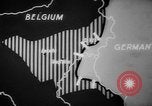
British and American troops join together for attack during Battle of the Bulge, scenes from Malmedy massacre and Houffalize (WW2)
Map points to Allied positions during Battle of the Bulge in World War II. British soldiers walk in a trench on the prong of the attack south of La Roche en Ardenne (La Roche-en-Ardenne or sometimes just Laroche). Trench in the snow covered area. British soldiers wear warm clothes and try to stay warm in the trench. British soldier knocks hole in ice and draws water into a bucket. British soldiers wash and shave with the freezing water. They heat water and use it to make cups of tea. They move on tanks to location where British and American forces meet and greet. The soldiers talk amongst themselves. On 14 January 1945 armored recce cars of the 2nd Derbyshire Yeomanry, 51st Highland Division, meet GI's of the 347th Infantry, 87th U.S. Infantry Division, near Ortheuville. The first link up between troops of VIII Corps and British 30 Corps. Another encounter between British soldiers, dressed in white camouflage smocks, with Americans of the 87th U.S. Infantry Division at Champlon. Later that same day. Field Marshal Montgomery wearing a new beret, commands the northern forces. British soldiers advance on a roadway and supplies move on vehicles. Houses in the background. U.S. 3rd Army soldiers shovel snow during a blizzard, clearing the way for trucks with supplies and mail to pass. Large tractors with snow plow attachments clear snow. On January 14, 1945, American forces gently sweep snow from the bodies of American soldiers at Malmedy who had surrendered to the Germans a month prior but were then massacred. (These were mostly U.S. forces of the American 285th Field Artillery Observation Battalion) German prisoners of war look on apprehensively as the Americans uncover the victims of the Malmedy Massacre. American soldiers look at from a snow covered hillside into the village of Houffalize in Belgium. A twisted sign for Houffalize is seen, and wreckage and destruction in the town. Close views of wrecked and burned homes in Houffalize. Destroyed tanks with one tipped in a river
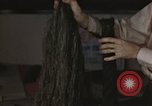
Farm production for war effort in World War 2 with farming and processing of hemp, dried milk and dried eggs in United States
Agricultural progress motivated by the demands of World War II production in the United States. American farmer holding raw hemp for making rope. Farmers in Kentucky or Tennessee harvesting hemp to replace sources lost in the Philippines due to war in the Pacific. Hemp seed harvesting in southern states. A bag of hemp seed. Thick planting of the seeds yields straight, long fiber hemp plants. A boy on a farm stands next to tall hemp plants. A tall harvester attachment is seen cutting the hemp plants at harvest. Workers tie hemp plants in bundles and stack them for breaking. Hands of a man shown tearing and testing strong hemp fibers on a dried hemp plant stalk. Butter and milk bottles stacked closely in a cooler. Large metal bins of eggs are shown. Exterior view of a factory for egg drying. A tank truck parked outside the plant containing broken raw eggs to save space. Large dryers are shown producing a dried golden yellow powder from the eggs. Factory worker sits at a vibrating table that shakes and sifts the dried egg powder and loads it into bags. Scrambled eggs cooked in a pan over a stove. View of raw dozen eggs and packaged box of dried eggs side by side. The small box of one dozen eggs weighs only 5 ounces. View of a wooden barrel that holds the dried equivalent of 5000 eggs. Cows graze on a field. A milk tank truck parked at a drying factory. Cans of dried milk move on a factory assembly line. A machine applies a lid to each can. A wall of 15 gallon barrels of dried milk are shown, each containing the equivalent of 150 gallons of raw milk. Blocks of cheese shown in a dairy case display.
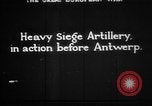
German soldiers fire artillery on the front in Mechelen, Belgium during World War I
Teams of horses transport German 21cm morsers (heavy siege morters) along a road leading toward the front during World War 1. Gunners walk along beside them. Battery of the mortars being set up in a field by some houses near Mechelen (also called Malines) Belgium. The gun crews load and fire their mortars. Supplies are brought by horse-drawn wagon. Officers, soldiers, and some medical corpsmen (with red crosses on their sleeves) stand nearby as the battery of mortars fires. . (Note: The church shown, beginning TC: 1:28 is reportedly St. Joseph's, of the St. Joseph-Coloma parish on the southern outskirts of Mechelen/Malines, a city midway between Brussels and Antwerp. The church survived the war and still stands in 2014, although it is also reportedly in a bad state of repair.)
CRITICALPAST.COM: About Us | Contact Us | FAQs - How to Order | License Agreement | My Account | My Lightboxes | Shopping Cart | Advanced Search | Featured Collections | Website Terms & Conditions | Privacy Policy ©2026 CriticalPast LLC.
License Agreement |
Terms & Conditions |
Privacy Policy
©2026 CriticalPast LLC.