


 Francais
 Deutsch
 Italiano
Refine Your Search
Pleiku South Vietnam 1966 stock footage and images
- Showing 2107 to 2112 of 5965 results more
more Hide
Hide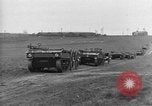
Live fire demonstrations at the British Army Royal School of Artillery, Larkhill, Salisbury, England
Artillery demonstrations at British Army Royal School of Artillery, Larkhill, on the south edge of Salisbury, England. Gun crews ride in Light Dragon MkII tractors towing 18 pounder field artillery pieces. They wheel about and set up a long battery of artillery that begins firing. Military spectators line the field to watch the demonstrations. Autogyro used for observation lands behind a smoke source. Troops begin firing trench mortars. Tanks race at hight speed through smoke on the demonstration field. Battery of 4.5 inch howitzers seen firing. As the demonstration concludes, MkII tractors tow 4.5 inch howitzers away as spectators disperse.
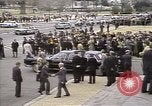
The Inaugural Parade moves past President Ronald Reagan's reviewing stand at the White House in Washington, D.C..
Presidential Inaugural Ceremonies held for Ronald Reagan on 20th January 1981in Washington DC. The Presidential motorcade leaves the U.S. Capitol grounds and proceeds down Pennsylvania Avenue towards the White House. President Ronald Reagan and his wife Nancy Reagan wave at the crowd. The Inaugural Parade is seen, along with people on the sidewalks. The Capitol can be seen in background. The White House lawn. South facade of the White House. The President and his wife arrive at the White House reviewing stand. The Parade moves past the reviewing stand. The President waves to the marching bands. Floats move past the reviewing stand. Balloons in sky. Men on horseback move past reviewing stand.
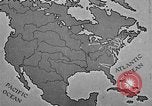
British film intended to acquaint British people with United States landscape, rail transportation, and farming history.
British World War 2 era film showing scenes in the United States from earlier in the 1900s. Film opens showing 19th Century animated map of the United States. It traces the development of the railroads in the U.S. It shows rail lines reaching the Missouri River by the year 1860. (Narrator states this took 250 years to happen.) But in another 10 years, the map shows the Union Pacific and other rail lines extending two the West Coast, and U.S. commerce shifting, from North-South movement, to East-West (with an animated steam locomotive moving across the map). Chicago is highlighted as the greatest railway junction in the world (the "Piccadilly Circus" as the British narrator describes it). View of a late 1800s model steam locomotive train pulling freight railroad cars on railroad tracks in a desert area of the Western United States. Point of view from camera on moving railroad train pointing straight down at railroad tracks moving by at high speed. Landscape and wide views of the arid Western parts of the U.S. Group of Native American Indians watching a railroad train pass. Construction supplies being offloaded from a train. A wind-driven water pump. Buffalo herds affected by the railroads. Wire fencing installed to control cattle on large Western ranches. Large team of horses pulling late 1800s wheat harvesting farm equipment as it harvests wheat in fields. Views of wheat grains being poured at high volume. Cattle roaming in the high country. Views of Chicago stock yards. A man marking in chalk on a Board of Trade chalk board, indicating the prices of farm commodities including wheat, corn, oats, and rye. Various views of steam locomotives pulling trains throughout the rail network, including some 20th century trains near the end of the film, and some close-up views of wheels turning fast on moving railroad trains.
German troops invade Russia and Joseph Goebbels announces it on radio during World War 2.
German invasion of Russia, Soviet Union (Operation Barbarossa). Early morning in Berlin with quiet street scenes during World War II. Hands of a clock in view. A man unloads milk cans from a truck. German radio broadcasting studios. A man operates controls. View of radio tower and buildings. Men enter an office. A sign announces broadcast in progress and requests quiet and no entry. Propaganda Minister Dr Joseph Goebbels enters the room and sits on a sofa. He announces Germany has launched an offensive on the Eastern Front as Germany's actions represent declaration of war against the Soviet Union. Officers stand in the background. Several men seated in cars, listen to radio broadcast. German Foreign Minister Joachim von Ribbentrop makes the announcement to journalists at a crowded news conference. Newspapers carry the story. Cameramen take photographs. Animated map depicts the Eastern front extending more than 5 thousand kilometers from Finland in the North to Romania in the South. This is Operation Barbarossa. German troops invade Russia. A ship underway and a bridge in view. Heavy German guns bombard targets. Smoke rises up. Street signs such as "Eydtkau" are shown as evidence of advances. German troops dismantle border barriers. German tanks and artillery advancing Eastward, encountering resistance. They blow up a building.
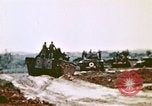
Transport through tanks, trucks and jeeps slowed down in Okinawa, Pacific Theater.
Okinawa Operations in Pacific Theater. United States Marine units and 24th Army Corps advance the island. Roads muddy due to water. Trucks, jeeps and tanks move along the water flooded roads with difficulty. Advancing troops and supplies slowed down. Tank and infantry units in fields. Phosphorous and small arms fired on camouflaged Japanese positions. Heavy smoke rises up. Fire and smoke. Tanks and soldiers advance. Army corps relieved by Marines in South Naha. (World War II period).
Joe E Brown entertains troops; Red Ruffing and Joseph DiMaggio participate in a baseball game in WW2
A United States aircraft in flight. Comedian Joseph Evans Brown (Joe E Brown) arrives in South Pacific and is seen on stage putting on a show to entertain U.S. Army soldiers and sailors. Joe E Brown organizes a baseball game fundraiser in Hollywood, California, raising money for recreational equipment for the troops during the war. It features active duty military members who were recent former professional baseball players playing the game. Charlie Stevens of the Saint Louis Browns warming up at bat. Froilan "Nanny" Fernandez, formerly of the Boston Braves, warms up at bat. Walt Judnich, former outfielder for the St Louis Browns, warming up at bat. Next Joe DiMaggio, formerly of the New York Yankees, is seen batting. He is followed by Max West, formerly of the Boston Braves, at bat; next seen is former catcher from the New York Giants, Harry Danning. Next seen is Dario Lodigiani, formerly of the Chicago White Sox; and finally Charles Herbert 'Red' Ruffing of the New York Yankees. Joe E Brown and baseball player Joe DiMaggio participate in a baseball game along with servicemen and other dignitaries, during World War 2. Fans seated in the spectator area. Baseball game in progress. Spectators and fans in the stands cheer. Joe E. Brown talks to Joe DiMaggio and Red Ruffing on the sidelines.
CRITICALPAST.COM: About Us | Contact Us | FAQs - How to Order | License Agreement | My Account | My Lightboxes | Shopping Cart | Advanced Search | Featured Collections | Website Terms & Conditions | Privacy Policy ©2026 CriticalPast LLC.
License Agreement |
Terms & Conditions |
Privacy Policy
©2026 CriticalPast LLC.