


 Francais
 Deutsch
 Italiano
Refine Your Search
Pleiku South Vietnam 1966 stock footage and images
- Showing 2359 to 2364 of 5965 results more
more Hide
Hide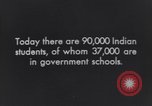
Various schools providing education to North American Native American Indian students in the United States.
U.S. Federal provisions for the education of the North American Indians in the United States during the Great Depression era. Native American Indian students come out of Chemawa Indian School boarding school in Oregon. An elementary school in Pine Ridge Reservation, South Dakota. Indian children on the grounds of Shiprock Reservation in New Mexico. Animated map depicts Indian schools in the United States. Cloth lines on the grounds of a school. A man walks out of a government school building.
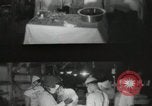
U.S. Marine Corps 1st Medical Battalion surgeons and assistants work on a patient in mobile Army surgical hospital at Inje.
U.S. Army MASH (Mobile Army Surgical Hospital) at K-51 Inje Airfield in South Korea during the Korean War. Interiors of MASH operating room in a hut. U.S. Marine Corps 1st Medical Battalion surgeons and assistants work on a patient. Men operate on the patient.
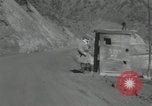
A U.S. Marine Corps 1st Medical Battalion ambulance reaches a mobile army surgical hospital in Inje, Korea.
U.S. Army MASH (Mobile Army Surgical Hospital) at K-51 Inje Airfield in South Korea during the Korean War. A vehicle approaches an MP (Military Police) sentry-box along a road. An MP talks to a driver and the ambulance is allowed to proceed. View from the ambulance as it proceeds along a road on the mountainside. Korean maintenance workers stand at the side of the road. Another ambulance and vehicles coming in the opposite direction. The ambulance comes to an area studded with tents. A litter jeep and an ambulance come down a road. The jeep pulls ahead and stops. Ambulances pull up behind. U.S. Marine Corps 1st Medical Battalion Major Arbin T. Henderson walks back to an ambulance and talks to its driver. The ambulance goes past the jeep and pulls into a muddy and flooded hospital yard.
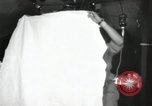
U.S. Marine Corps 1st Medical Battalion surgeons perform a surgery in a mobile army surgical hospital in Inje, Korea.
U.S. Army MASH (Mobile Army Surgical Hospital) at K-51 Inje Airfield in South Korea during the Korean War. Interiors of a surgical tent shows U.S. Marine Corps 1st Medical Battalion surgeons putting a mask over a wounded soldier's face to administer anesthesia, and work during a surgical operation. The doctors pass clamps and scissors during the surgery operation.
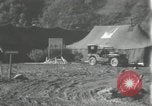
U.S. Marine Corps 1st Medical Battalion ambulances bring patients at a mobile army surgical hospital in Inje, Korea.
U.S. Army MASH (Mobile Army Surgical Hospital) at K-51 Inje Airfield in South Korea during the Korean War. Litter jeeps of U.S. Marine Corps 1st Medical Battalion come and stop near hospital tents. A sign reads 'United States Naval Medical Center'. One U.S. soldier buttons up his coat as he talks with another soldier. A sign at a medical center reads 'Medical D Co.' . Ambulances pull up. Litter bearers start to carry a man on a litter to a tent.
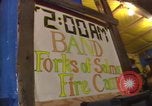
Firefighters take a break together at a firefighters camp in California, during battle against a forest fire in 1987.
Scene opens with music playing and a large sign displayed reading: "2:oo AM, Band, Forks of Salmon Fire Camp." (Forks of Salmon is an unincorporated community of Siskiyou County in northern California, USA.) A band (named 2:00 AM) is playing and several people are dancing. Announcer states that the band members lost their home in the (still uncontained) fire, last Monday (August 31, 1987). A firefighter member of a Rocky Mountain team from Colorado, Wyoming, and South Dakota, wearing yellow shirt and red cap, expresses appreciation for welcome by Californians.
CRITICALPAST.COM: About Us | Contact Us | FAQs - How to Order | License Agreement | My Account | My Lightboxes | Shopping Cart | Advanced Search | Featured Collections | Website Terms & Conditions | Privacy Policy ©2026 CriticalPast LLC.
License Agreement |
Terms & Conditions |
Privacy Policy
©2026 CriticalPast LLC.