


 Francais
 Deutsch
 Italiano
Refine Your Search
Pleiku South Vietnam 1966 stock footage and images
- Showing 2407 to 2412 of 5965 results more
more Hide
Hide
Dramatizaion shows David Livingstone and party finding Lake Ngami, Livingstone couple talk about their future
Dramatization. Dr. David Livingstone’s party finds Lake Ngami, a shallow lake north of the Kalahari Desert in present-day Botswana, Africa. A San Bushman points David Livingstone towards Lake Ngami. David Livingstone and his entourage rests by the Lake Ngami. Back in Kolobeng (in present-day Botswana), David Livingstone mulls over between further exploring and living a sedentary life with family. Mrs. Mary Moffat Livingstone holds her newborn baby. David Livingstone pulls out and unfolds a map showing southern Africa. David Livingstone sits beside his wife, Mary Moffat Livingstone. David Livingstone and Mary Moffat Livingstone talk about their future. David Livingstone cuddles his newborn baby.

Dramatization: Dr. David Livingstone and party trek through swamp, African attendant attempts to piggyback David Livingstone.
In dramatization, Dr. David Livingstone’s party, joined by bushmen, trek through Southern Africa to reach the Indian Ocean. African attendant attempts to piggyback David Livingstone as they wade through a swamp, but Livingstone falls. African attendants carry on their backs various supplies, including a painting. David Livingstone spots a leopard resting on the grass. David Livingstone orders his men to shoot the leopard, but the leopard runs away.
Doctor David Livingstone meeting Queen Victoria (dramatized), sharing his experience finding Victoria Falls and exploring Africa
Actors in dramatized scenes, together with actual footage of natural landmarks and wildlife in Africa. David Livingstone meets Queen Victoria in Windsor Castle. David Livingstone reports his discoveries in Africa, such as the Victoria Falls, which he named after the Queen. David Livingstone bows to Queen Victoria. Queen Victoria and her mother, Princess Victoria of Saxe-Coburg-Saalfeld (Duchess of Kent and Strathearn), listens to David Livingstone. Thundering waters of Victoria Falls. Herds of zebra, letchwe and wildebeeste grazing in Southern African Savannah. Egrets circling above buffaloes in the African Savannah. Elands, sable antelopes, roan antelopes, druikers in forest. A cheetah waits for prey in rocky hill. Pelicans fly over a lake.
General Douglas MacArthur inspects soldiers, waves at crowd during parade in Boston, Massachusetts.
Parade for General Douglas MacArthur in Boston, Massachusetts. Police hold back crowd as General Douglas MacArthur emerges from a building in Boston. General Douglas MacArthur inspects United States soldiers in formation on Summer St. as he walks from South Station after arriving in Boston. Sign for the Chester S. Brett Wool company on building in background. General Douglas MacArthur seated in the back of a convertible with policemen on motorcycles as security while parade proceeds beyond Kennedy's department store at 26-38 Summer St. and then down Winter St. past the Touraine gloves and hosiery store at the corner of Winter St. and Washington St. General Douglas MacArthur waves at crowd from convertible.
Cape Kennedy motels and cars, Apollo 11 astronauts and mission control prepare for launch
Flashback on preparation for the launch of NASA Apollo 11 Mission in Kennedy Space Center. Early 1970s cars driving on highway near the Kennedy Space Center in Florida. Cars pass by Kennedy Space Center Campground sign saying “Space Center Campground 2 MI ahead on 1”. Cars passing by the Satellite Motel along the Florida State Road A1A (South of the 520 Causeway, Ocean Highway A1A, Cocoa Beach, FL). Cars driving on the Florida State Road A1A pass by two billboards saying, “Welcome to Cape Kennedy Resort Area” and “In the beginning God… Apollo 8 Six Cents United States Gateway to the Stars”. View of a launch complex inside the Kennedy Space Center. Monitors inside a mission control center. Speaker in a stadium near the launch site. The prime crew members- Command Module Pilot Michael Collins, Lunar Module Pilot Edwin “Buzz” Aldrin Jr. and Commander Neil A. Armstrong, in ready room before entering the Saturn V SA-506. Buzz Aldrin yawns before the launch. Cars parked on the beach near the launch site. View of the Saturn V SA-506 in the Kennedy Space Center Launch Complex 39A. Neil Armstrong, Buzz Aldrin and Michael Collins depart for the launch pad. Astronauts going up on elevator in launch complex. The Saturn V SA-506 before launching. Launch controllers in the firing room of the Kennedy Space Center in Florida during the Apollo 11 mission.
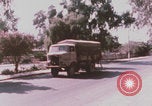
Iraqi soldiers cross Shatt al-Arab river during invasion of Iran
Iraqi soldiers move into Southern Iran during the Iraqi invasion of Iran. Iraqi tanks roll past civilians on bridge over the Shatt al-Arab river. A ship in the Shatt al-Arab river. Sign in English and Arabic says, “Welcome to Iran”. A desert dirt road in Iran. Iraqi military vehicles parked in a garage. Smiling Iraqi soldiers posing together, raising their hands with the “V” sign. (Iran-Iraq War period.)
CRITICALPAST.COM: About Us | Contact Us | FAQs - How to Order | License Agreement | My Account | My Lightboxes | Shopping Cart | Advanced Search | Featured Collections | Website Terms & Conditions | Privacy Policy ©2026 CriticalPast LLC.
License Agreement |
Terms & Conditions |
Privacy Policy
©2026 CriticalPast LLC.