


 Francais
 Deutsch
 Italiano
Refine Your Search
Pleiku South Vietnam 1966 stock footage and images
- Showing 4159 to 4164 of 5965 results more
more Hide
Hide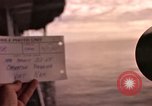
U.S. Marines board waiting LCVP (Landing Craft, Vehicle, Personnel) for transportation off the coast of Cap Batangan, Vietnam.
Operation Piranha at White Beach in Cap Batangan, Vietnam. United States Marine personnel moving down combination ladder of the USS Bayfield (APA-33) with their packs and rifles. Marines board a waiting LCVP (Landing Craft, Vehicle, Personnel) alongside. LCVP in water. (Vietnam War period).
ARVN soldiers take cover in ditch alongside road as they come under sniper fire, Vietnam.
Civilians search through rubble of their destroyed homes. Civilians walk past wrecked buildings. ARVN (Army of the Republic of Vietnam) soldiers pass by in jeep. Civilians in rubble walk past wrecked buildings. ARVN soldiers in ditch alongside road. Soldier walk on wooded road. ARVN bring in Vietcong prisoner. ARVN soldiers run for cover as they come under sniper fire. Soldiers in ditch alongside road. Civilians take cover. (Vietnam War period).
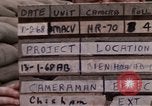
Barracks and other buildings wrecked by mortar attacks at Bien Hoa Air Force Base, Bien Hoa in Vietnam.
Buildings destroyed by Vietcong attack shows barracks and other buildings wrecked by mortar attacks at Bien Hoa Air Force Base, Vietnam. Signboard "Air Tactical Group" outside wrecked buildings. Wrecked and isolated building. Helicopters in sky. (Vietnam War period).
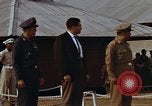
Flag raising ceremony at Udorn Air Force base in Thailand during Vietnam War
United States Air Force and Thai Air Force personnel at a parade as an official reviews the parade at Udorn Air Force base in Thailand. Base commander presented American flag. American and Thai flags raised at the ceremony.
Captain James S. Walbridge being interviewed in Thailand about his experiences during a mission in North Vietnam.
United States Air Force Major James Walbridge being interviewed at Korat air base in Thailand during Vietnam War. Major James S. Walbridge being interviewed by Captain Charles D. Pellow with a United States F-105D aircraft in the background. Major Walbridge narrates his experiences of a mission in North Vietnam during the Vietnam war. He talks about how while carrying 750 lb bombs to strike North Vietnam his aircraft caught fire. He jumped from the plane with a parachute and landed up on the trunk of a tree. He speaks about the rescue from the jungle. He stresses upon the importance of radio as he states how he called for help from his radio. Audio explains about Walbridge's rescue from the jungle. Walbridge emphasizes upon the importance of a survival kit.
Training of soldiers at Fort Riley, Kansas, before deployment to Vietnam.
U.S. Vietnam veteran Army Sergeants instruct troops prepaing for deployment to Vietnam. Live fire training at a firing range. "Quick Kill" weapon pointing technique is taught, using "BB" air powered gun and aluminum disks. M-16 training. Two-week refresher course, at Fort Riley, Kansas, for Non-commissioned officers, preparing to return to war in Vietnam. (Vietnam War period).
CRITICALPAST.COM: About Us | Contact Us | FAQs - How to Order | License Agreement | My Account | My Lightboxes | Shopping Cart | Advanced Search | Featured Collections | Website Terms & Conditions | Privacy Policy ©2026 CriticalPast LLC.
License Agreement |
Terms & Conditions |
Privacy Policy
©2026 CriticalPast LLC.