


 Francais
 Deutsch
 Italiano
Refine Your Search
Pleiku South Vietnam 1968 stock footage and images
- Showing 877 to 882 of 6036 results more
more Hide
Hide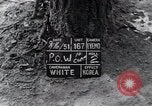
Sergeant Taniguchi interrogates a North Korean prisoner of war in South Korea
A North Korean prisoner of war points out enemy positions on a map and South Korean officer takes down notes. Sergeant George Taniguchi along with another South Korean officer continues to interrogate the prisoner as they sit around a table near a river in South Korea. (Korean War)
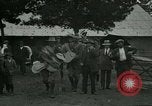
South African Cavalry assemble saddle and hay.
Activities of Cavalry soldiers in South Africa. South African cavalry with saddle and horses. Cavalry soldiers assemble saddles. Horses stand in the background. Cavalry soldiers pick hay bundles. (World War I; World War 1; WWI; WW1)
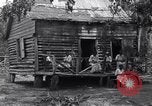
"Congo Baskets" being woven by African Americans in the Sea Islands of South Carolina
Film opens showing members of an African American family seated on the porch of their house in the Cooper River District of South Carolina. They are all engaged, including the father, in weaving, what in those days were called, "Congo Baskets." (The grass used by these basket makers is indigenous to the Cooper River District, and not found elsewhere. But the same type of baskets are made in various parts of Lowcountry Africana, associated with the Geechee-Gullah culture in the Sea Islands of South Carolina and Georgia.) As the basket makers work, a man, with a pig on a leash, walks slowly past the busy family. In the next scene, while others continue working on their baskets, the man deftly cuts Palmetto leaves into strips that are used to sew the baskets. Next, the camera focuses on individual workers showing their dexterity and skill as they work. In the final scene, the man examines and displays finished baskets of several different designs.
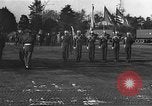
Archbishop Francis Cardinal Spellman greets U.S. soldiers in South Korea
Archbishop Francis Cardinal Spellman greets troops in South Korea. Snow covered hills in the background. United Sates soldiers holding American and South Korean flags, stand on field. Archbishop meets the troops. Photographers take pictures. A military officer stands with the archbishop. (World War II period).
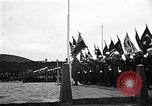
Representatives of United Nations who fought in Korean War, assemble in ceremony at U.N. Memorial Park in Pusan, South Korea
Representatives of United Nations who fought in the Korean War, gather for a ceremony at the UN Memorial Cemetery (93 UN pyeonghwa-ro, Nam-gu, Busan, South Korea) in Pusan (Busan), South Korea. The event is led by U.S. Lieutenant General Matthew Ridgway. Troops standing in attention with flags of various countries. Officials and officers of various countries, stand. A military band plays. Flags of United States, France, Britain, India and various countries are seen. Military personnel hoist the flag of United Nations and salute. Graves at the cemetery.
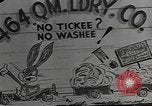
The U.S. Army Quartermaster Corps provides numerous support services to troops in the South Pacific in World War II
The U.S. Army Quartermaster Corps delivers laundry and myriad other services in the South Pacific during World War 2. Opening scene show a cartoon sign by the 464th Quartermaster Laundry Company featuring Bugs Bunny in a jeep pulling mobile laundry equipment in wagons. Next, U.S. troops are seen in jungles subject to rain and mud of the South Pacific. A soldier crouches in a riverbed and washes his clothes. A mobile laundry installed near a river. Soldiers using washers and dryers in the facility. Views of larger fixed installation Quartermaster laundry, such as in New Caledonia; Fiji; and the New Hebrides. Quartermaster salvage and repair workers operating sewing machines as they repair military clothing. A sign identifies "Island Quartermaster C&E Repair Shops" (Clothing and Equipage Repair Shops). Here workers sort, repair, and remark sizes on salvaged clothing. Two workers sit in a mound of garments that they cut into rags and toss into a heap behind them. Two workers repair broken shoes. Soldiers' feet seen walking through mud. A stack of army shoes needing repair. A team of army workers using modern machines to repair them. View of finished shoes, as good as if repaired in the U.S.A. Sign identifies Orthopedic Department where a man works on specially designed and fitted shoes prescribed for an injured soldier by a medical officer. A nurse and a doctor place the special shoe on a patient. A nurse assists the patient to walk. Typewriters needing repairs line shelves. Technicians are seen at work stations, repairing typewriters. The final sequence begins with a sign reading: "Tent Repair, Drive in here. All tents must be clean, dry, and folded properly." Quartermaster workers raise a tent inside a shelter and then identify and repair a hole in it by applying fabric glue and a patch.
CRITICALPAST.COM: About Us | Contact Us | FAQs - How to Order | License Agreement | My Account | My Lightboxes | Shopping Cart | Advanced Search | Featured Collections | Website Terms & Conditions | Privacy Policy ©2026 CriticalPast LLC.
License Agreement |
Terms & Conditions |
Privacy Policy
©2026 CriticalPast LLC.