


 Francais
 Deutsch
 Italiano
Refine Your Search
Pleiku South Vietnam 1968 stock footage and images
- Showing 2317 to 2322 of 6036 results more
more Hide
Hide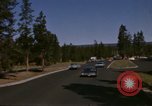
Cars move on a road, cross a small bridge and a lake at Yellowstone National Park in Wyoming, United States.
Yellowstone National Park in Wyoming, United States. View from moving vehicle in the park. Many 1960s cars and recreational vehicles (RV) drive past on a road. Trees on either side of the road. The cars stop at the South Entrance station and then move one after the other. They drive past a lake. Trees in the foreground. A car drives across a small bridge. The cars driving past. A dense forest on either side. The lake in the foreground. A road alongside the lake. Sign for West Thumb area.The car moves on the road. A village area and information center and cars parked at a parking lot. People walk on a pathway.
Supplies are dropped and First Allied Airborne Army troops arrives by parachutes and gliders in Operation Market Garden
Early days of Operation Market Garden in Nijmegen, Holland, Netherlands during World war II. Animated map of France, Belgium, and Netherlands. Allied transport and resupply aircraft in flight over clouds. Aerial view of Nijmegen Netherlands. Allied parachutes carrying supplies floating toward ground. The aircraft drop supplies in the south of Nijmegen. First Allied Airborne Army troops arrive by parachutes and gliders. The parachutists jump from the aircraft and descend towards the land. Unusual scene from camera strapped to the chest of a paratrooper. Shows view upon first jumping, and then view from paratrooper in sky descending and surrounded by other paratroopers with aircraft overhead and ground nearing below. U.S. aircraft parked on a field. The sky if filled with parachutists who are landing. German antiaircraft fire targets Allied planes. An Allied aircraft plunges toward the earth and crashes with a fireball. The Allied troops advance. Explosion in the foreground due to bombing. The aircraft drops bombs. Smoke raises in the foreground due to the bombardment. Gliders in flight. British 1st Airborne Division soldiers advance, engaging in Battle of Arnhem.
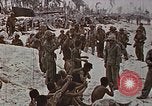
U.S. marines process Japanese prisoners on Betio, Tarawa, during World War II. Seabees begin restoring the airfield
U.S. 2nd Division Marines process about 10 Japanese soldiers taken prisoner on Betio, Tarawa atoll, during the battle there in World War 2. They cut away the prisoners' clothing to assure they don't carry weapons or explosives. (Narrator states they were later given replacement clothing from captured supplies.) Marines tend to a wounded Japanese prisoner. Japanese prisoners carrying their own wounded to a pier for evacuation. Marines cleaning up using water from captured Japanese steel barrels. Marines stand on fortifcations containing British Vickers BL 15 inch Mark I coastal defense guns captured by the Japanese in Singapore. These were knocked out by U.S. naval gunfire during the pre-assault bombardment. Closeup of one breech of a gun. A knocked out Japanese light tank at the South side of Japanese Rear Admiral Shibasaki's headquarters on Betio. (Shibasaki, commander of the Japanese forces there, was reportedly killed by U.S. Naval gunfire early in the assault.) Panning view of the remains of the reinforced concrete Japanese headquarters structure. U.S. Seabees using power shovel, dump trucks, graders, and heavy rollers, to restore the airfield for U.S. operations.
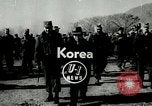
Syngman Rhee and General Taylor review Korean soldiers and Syngman Rhee pins up a medal on a U.S. soldier in Korea.
The President of South Korea Syngman Rhee and U.S. Army General Maxwell Davenport Taylor in Korea. A sign on a board reads '3rd Infantry Division review Field Organization Day'. The President puts a U.S. 3rd Infantry Division flag. A close up U.S. soldiers. He pins up a medal on a U.S. soldier. Korean soldiers parade and the General and the President review the parade.
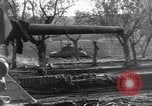
U.S. troops fire guns, advance on a field and drop bombs at a historic abbey in Italy during the Battle of Cassino.
A documentary television program depicts the role of U.S. soldiers in the Battle for Cassino which was a part of the Italian Campaign during World War II. U.S. 6th Armored Infantry Regiment troops advance on trucks. A barrel of a gun in the foreground. Fire by tanks and artillery. Mountains in the foreground. A town on the foot of Monastery Hill. A historic abbey which contains many medieval treasures. A German official at the abbey. A German soldier looks through binoculars. Troops around an artillery fire. A hand holding a leaflet. Leaflets are fired. A U.S. aircraft in flight over Monastery Hill and a pilot in the cockpit. Aircraft drop bombs over the abbey . Smoke rises due to an explosion. Soldiers fire guns. German troops at the abbey look through the binoculars. They fire guns. 5th Army troops on tanks advance. Aircraft in flight. Colonel William W. Quinn seated in a chair talks about the next story that is the invasion of Southern France.
A U.S. officer and an Italian officer exchange greetings after the Italians land their bomber at an Allied field (WW2)
Italian fliers land their aircraft at an Allied occupied air base (probably in Southern Italy) to join the Allies for the war against Nazi Germany during World War II. A three-engine Italian Savoia-Marchetti bomber in flight. The aircraft lands at the airfield. Other aircraft parked on the airfield. A hangar in the background. Italian fliers step from the aircraft. U.S. and Italian officer exchange greetings. Aircraft in formation. Italian fighter aircraft land and taxi at the air base. Officers and fliers. The fliers leave their aircraft. Italian fliers seated around a table eat American meal.
CRITICALPAST.COM: About Us | Contact Us | FAQs - How to Order | License Agreement | My Account | My Lightboxes | Shopping Cart | Advanced Search | Featured Collections | Website Terms & Conditions | Privacy Policy ©2026 CriticalPast LLC.
License Agreement |
Terms & Conditions |
Privacy Policy
©2026 CriticalPast LLC.