


 Francais
 Deutsch
 Italiano
Refine Your Search
Prison physical examination. stock footage and images
- Showing 2131 to 2136 of 3715 results more
more Hide
Hide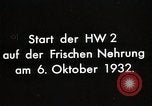
Johannes Winkler and test of liquid fuel HW-2 rocket on beach near Danzig
Dr.Johannes Winkler, rocket pioneer and his HW2 liquid fueled rocket. Winkler and his staff standing in front of the Hw2 rocket, conversing, at the Konigsberg fairgrounds in 1932. Dr. Winkler explaining his rocket to interested visitors at the fairgrounds. Closeup of Dr. Winkler as he speaks. View of the launch site where spectators are gathered at the Vistula Spit near Danzig (Gdansk) Poland, on the Baltic Sea. Winkler and his assistant on the sand beach,fueling the rocket with liquid methane. The rocket team checks meteorlogical conditions. Winkler being interviewed by a reporter. while Winkler continues the interview, his assistant, on a ladder, begins fueling the rocket with liquid oxygen. Winkler inspects it after fueling. The staff places the nose cone over the rocket. Technician in white coat checks ignition, as German naval officers and other officers and officials stand nearby. Winkler opens flush door in rocket and places something inside. German still camera men and a cinematographer, wearing army helmets, prepare to record the event. Another photographer takes refuge in a trench on the sands. At launch, the rocket lurches upward, and falls to the ground, where it burns. Winkler's staff throw sand on it to put out the fire. Winkler and staff examining the wreckage to determine the reason for the explosion (rather than smooth burning of fuel). Dr.Winkler making notes. Winkler and assistant examining fuel containers and ignition wires.
Inspection of crab for export in Inspection Office and Chemical Laboratory in Japan.
Inspection for export: Sign board 'Inspection Office of Japanese Canned Crab Association, Yokohama'. Technical expert comes out from the Inspection Office. Chemist and technical experts examine the crab in Chemical Laboratory at the Inspection Office. Chemical equipment in the laboratory. At the Inspection Office the crab is carefully examined for its texture, freshness, firmness, juiciness, color, weight and quantity. Cargo of crab can. Technical expert measures the crab tin at machine. He cuts the crab into pieces and measures at machine. Technical expert inspects the crab.
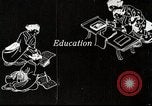
Heath and Education in Japan
A doctor examines children in Japan. Children and their parents wait in line as a doctor uses a stethoscope on one of the patients. Japanese babies sitting on a small bench. Young children playing with blocks while daycare teachers watch. Youth wearing kimonos enter and leave the school gates. Japanese children play in slides, swings in the playground. Children perform mass calisthenics outdoors in the morning. Male and female students wearing Japanese attire attend English lesson in classroom. A girl stands up and corrects the sentence written on the blackboard. Japanese boys study chemistry inside a school laboratory. They examine test tubes, write down notes, and raise their hands.
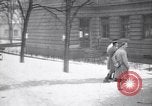
Patients, nurses and men at a clinic in Prague, Czechoslovakia.
Doctors examine patients at a clinic in Prague, Czechoslovakia. Snow covered road. People walk past clinic and enter the gate. An old man walks out of the gate. Patients lay on beds. A doctor examines a bedridden patient. Other patients sit on their beds. Nurse and other men stand past beds.
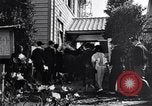
Work at Public Health Center and farm schools in Japan.
Activities of Japanese people in Japan. People go in Public Health Clinic. Women sit in line at clinic. Nurse places thermometer in a woman's mouth. A lady doctor examines a boy with stethoscope. Boys receive chest X-Rays. Little children weighed in baskets by nurses. Dentist examines little girl's teeth. Teacher lectures at a Nursing class and nurses under training take notes. Nurses check patients' blood pressure. Nurse brings tray of food to woman on bed. Farms on hill side. Men and women plow farms. Water besides the farm. United States freighter at port. Fertilizer sacks are lowered down to port. Farmers spread fertilizers in a farm. They use their feet to mix fertilizer with soil. Horse drawn thrasher in the farm. Men and women sow rice plants in water filled paddies. Laborers dig new hilly land for re plantation. Farmers trained in farming school for practical work. They plow and spray chemical.
Wilbur H. Durborough, America's famous Press photographer, goes to Germany during World war I
Closeup scenes show Wilbur H. Durborough-America's famous press photographer, seated behind the steering wheel of a 1911 Alto touring car parked on a street in Chicago, Illinois, getting ready to depart for Germany, during World War 1. Sitting behind him is his assistant cameraman, Irving G. Ries. Both have goggles pushed back on their foreheads. and both smoke cigars. Some spare tires are seen behind Mr. Ries. As camera moves back, they are seen surrounded by numerous friends and well-wishers as they prepare to depart from Chicago. Next, Durborough is seen standing on the bridge of the Holland-America steamship, S.S. Nieuw Amsterdam, with ship's Captain Jan Baron, who is on lookout for mines and submarines. Captain Baron passes his binoculars to Mr. Durborough. Captain Baron and Mr. Durborough stand on the deck looking at some documents. Lifeboats on davits behind them are ready for emergency. Durborough drives his car from the ship terminal onto a street in Rotterdam, with Captain Baron standing on a running board. The car is loaded down with luggage and equipment. He drives away as the Captain and others wave goodbye. Displaying an American flag on the hood, Durborough arrives at the German border. Dutch officials examine the car's contents, including a look into the engine compartment. Next, Durborough is stopped by German border guards, who examine his passport and greet him in a friendly manner. Durborough is seen in the offices of U.S.Ambassador James W.Gerard, as he describes his plans for visiting. He is honored by a visit from Prince of Reuss of German General Staff, Prince Max of Baden and Count Von Bernstorff- son of German Ambassador to the United States, who are seen chatting with him, before entering their car to depart.
CRITICALPAST.COM: About Us | Contact Us | FAQs - How to Order | License Agreement | My Account | My Lightboxes | Shopping Cart | Advanced Search | Featured Collections | Website Terms & Conditions | Privacy Policy ©2026 CriticalPast LLC.
License Agreement |
Terms & Conditions |
Privacy Policy
©2026 CriticalPast LLC.