


 Francais
 Deutsch
 Italiano
Refine Your Search
Prison physical examination. stock footage and images
- Showing 2239 to 2244 of 3715 results more
more Hide
Hide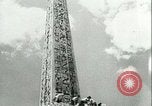
Adolf Hitler and Albert Speer visit various monuments after the fall of Paris during World War II.
German occupation in Paris France following Battle of France in World War II. French prisoners of war (POWs) remove protective coverings from the Obelisk at the Place de la Concorde. The POWs remove sandbags from around the Obelisk and Napoleon's Tomb. German Fuhrer Adolf Hitler and Nazi Minister of Armaments and War Production Albert Speer tour the city by car. Hitler and Speer arrive at the Church of Sainte-Marie Madeleine (Place de la Madeleine, 75008 Paris, France). French policemen salute as Hitler drives by. They visit the Place de la Concorde (75008 Paris, France) and Arc de Triomphe (Place Charles de Gaulle, 75008 Paris, France). Hitler, Speer and others view the Eiffel Tower(Champ de Mars, 5 Avenue Anatole France, 75007 Paris, France).
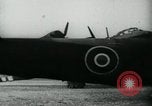
1st Allied Airborne Army troops land in Germany during Operation Varsity in World War II.
The successful airborne crossing of the Rhine river by the 1st Allied Airborne troops during World War II. Aircraft lined up at an airfield in England, United Kingdom. British 6th Airborne Division gliders, British Halifax bomber aircraft and British Sterling bomber aircraft, together with U.S. Army Air Forces C-47 and C-46 aircraft take off from an airfield in the UK. British aircraft taking off and British soldiers waving as they pass by on the airfield. British 6th Airborne Division troops in the field. Airborne troops who will be parachuting to targets are briefed by officers as they stand in a group. Soldiers synchronize their watches. Soldiers put on equipment as they prepare to take off. Airborne troops fully loaded with gear ascend stairs to board propeller aircraft. Narrator points out visible tape placed over sharp corners and protrusions on the aircraft to ensure that no parachutes or equipment are caught and damaged. Soldiers entering through doorways of C-46 aircraft. Personnel at the control tower order aircraft to take off. Aircraft and gliders take off. An aircraft taxis for take off but partially loses control, hits some wheeled carts to the side of the runway, and finally comes to a rest off the runway without severe crash damage. Aerial views of aircraft in flight. Narrator notes that the forces flying from the British airfields are merging south of Brussels with similar Allied forces taking off from bases in France. Troops aboard an airborne aircraft. Allied paratrooper soldiers jump from both doors of C-36 aircraft and their parachutes are seen descending. View of pilot in a towing aircraft as he pulls back lever to cut his towed glider loose. A glider coming to rest in a field on landing. An allied aircraft falling to the ground in flames after being hit by German antiaircraft flak fire. Another allied aircraft is seen exploding upon crashing (with farm barn buildings in foreground partially blocking the view.) Troops in prone position beside gliders after landing, as they secure areas and regroup. Allied British and American Army soldiers enter a village and take German prisoners. Lines of Allied soldiers and equipment advancing near the Rhine.

Humphrey Bogart hosts a fundraising film feature profiling the work of the Red Cross during World War 2
"Report from the Front" with Humphrey Bogart. Bogart emerges from a plane with his wife, Mayo Methot, and presents a film advertisement describing services of the American Red Cross to U.S. soldiers during World War II. He concludes by appealing to viewers in the theater to make a donation to the Red Cross. Clip shows scenes from the front during World War II. U.S. soldier firing a rifle. U.S. artillery firing. U.S. Army soldiers benefiting from services of the Red Cross during the war. Air crew on an airfield visits a Red Cross Club Mobile and receives coffee and donuts. Views of Red Cross rest clubs, care facilities, field offices including the exterior building and sign of the "American Red Cross Columbia Service Club", GIs in relaxation lounges, dances, dining rooms and views of food preparation, airmen in a reading room, African American soldiers gathered reading newspapers. Soldiers playing pool (billiards) and ping pong to relax. Men learning skills like basket making and weaving on a loom while recuperating from injuries. American prisoners of war with the hands up, being guarded by a Japanese soldier. Wounded U.S. Army soldier receiving blood in the field. Injured on stretchers being moved into tents.
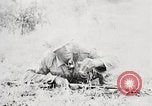
Team under Sergeant Bourden advances against enemy attack.
Part of the U.S. Army training film describes the role of Light Weapon Infantrymen. Team under Sergeant advances against enemy attack. The team advances using fire and movement method until it crosses the enemy's protected wire area. United States soldiers pass through the wire. Soldiers fire from bunker. The Squad leader assisted by his team leader consolidates position and organizes the squad. Prisoners evacuated. The Squad leader reports to his platoon leader on accomplishing the mission. Planning, leadership and teamwork accomplish the fire and movement method.
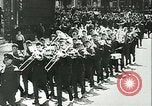
Legion Unit of France soldiers (LVF) march through streets of Versailles and board train bound for eastern front in World War II.
View of collaborationist French soldiers from the Legion of French Volunteers Against Bolshevism (Légion des volontaires français contre le bolchévisme, or, Légion des volontaires français, or LVF.) The LVF soldiers, made of of right-wing French and French prisoners, are marching through the streets of Versailles, in Vichy France, toward the Versailles Chantiers train station, to begin their trip to the Soviet Union where they will fight together with Germany against Soviet forces in World War 2. To the Germans they were known as Infantry Regiment, or Infanterieregiment 638. Led by a Band, the soldiers march through streets of Versailles and uphill toward the main arched entrance of the Versailles Chantiers station. Civilians line streets to bid farewell, and some women kiss soldiers goodbye. View of black locomotive leading the train. LVF board a train car with chalk inscription on the side "Paris - Moscow, LVF".

Erwin Johannes Eugen Rommel with German troops advance into Tobruk, Libya, in North Africa during World War II.
German General Erwin Rommel, nicknamed 'Desert Fox' in Tobruk, Libya, Africa during World War 2. Rommel in discussion with officers. A noticeable sore or cut is seen on Rommel's lower right lip. German tanks, armored cars and Infantry advance near Tobruk. German guns firing on battlefield. A group of British soldiers is hit and seen falling to the ground from German fire. German soldiers advance and breach a barbed wire area with motorized infantry and tanks entering into Tobruk. German troops in the city of Tobruk for siege of Tobruk. View from moving German vehicle advancing on streets of Tobruk and passing some groups of British prisoners, some in pith helmets. Aerial view from German airplane of Tobruk coastal areas. Erwin Rommel seated at a table. Rommel is not wearing a hat. Sore still visible on lower lip of Rommel.
CRITICALPAST.COM: About Us | Contact Us | FAQs - How to Order | License Agreement | My Account | My Lightboxes | Shopping Cart | Advanced Search | Featured Collections | Website Terms & Conditions | Privacy Policy ©2026 CriticalPast LLC.
License Agreement |
Terms & Conditions |
Privacy Policy
©2026 CriticalPast LLC.