


 Francais
 Deutsch
 Italiano
Refine Your Search
Prison physical examination. stock footage and images
- Showing 19 to 24 of 3715 results more
more Hide
Hide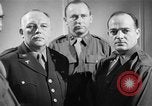
World War 2 Combat Exhaustion patients undergo personality tests, receive sleep therapy and various treatment in the U.S.
Treatment for combat exhaustion cases among U.S. soldiers following combat in World War II. U.S. officers talk about operation plan of a hospital and speak about three sections including admission, treatment and rehabilitation. A patient undergoes a physical examination. A dental survey and necessary laboratory studies. Doctors seated at table to perform an intelligence tests and mental examination. Psychiatric and other personality tests and intelligence test are administered including Rorschach test and Kohs block design test. The doctors check the psychiatric and physical report of the patient by looking at an X-ray. Patients receive sleep therapy: A nurse and an army doctor give narcosis therapy (continuous sleep treatment), by administering barbituates that keep a patient asleep for 18-20 hours per day for several days. Insulin is used on "loss of weight" cases: Combat exhausted soldiers lying on beds and receiving insulin before breakfast by nurses to stimulate their appetite. A nurse checks the weight of a patient during treatment. A nurse checks the diet which will be given to the patients in a kitchen. A patient receives an electric shock therapy treatment. A doctor injects a medicine into a patient. The patients go through physical exercises to maintain physical fitness. The patients are reeducated to know the causes of diseases. (Note: Clips deals with treatment for Combat Exhaustion, also later termed Post-traumatic Stress Disorder or PTSD.)
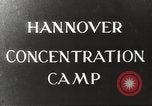
Red Cross officials rescue Polish prisoners of war and give them bread and soup at Harlen Concentration Camp in Germany (WW2)
Nazi concentration camps in Germany during their liberation in World War II. Harlen Concentration Camp near Hanover, Germany. United States Red Cross personnel care for Polish survivors. Prisoners of war being taken in army vehicles for medical treatment. Victims given hot soup and bread. Physically weak Polish prisoners on bed. Red Cross people remove dead bodies from the concentration camp. Official checks the list of inmates. Victims being photographed.
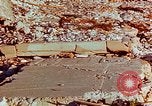
A collapsed wall of a prison and structures which withstood a blast in Nagasaki, Japan.
A survey of physical damage of bomb blasts in Nagasaki, Japan after World War II. A crumpled wall of the Nagasaki Prison. Remaining portion of the wall still standing. Collapsed cell block walls of the prison. Two round poured concrete wall casings which withstood the blast. The cell block in the foreground is completely demolished. A smoke stack of a boiler house and a concrete water tank.
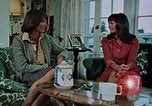
Jennie, a rape victim recounts how she was raped and underwent medical examination and CID inquiry.
U.S. Army training film about victims of rape in the United States. Victim works with police and CID special agents in the United States. Emmie, a victim of rape, talks to a lady named 'Monica', who helps women (Victims). Other women seated in a room. Jennie, one of them describes every thing about her and what she went through. Past events show Jennie as a soldier. She marches at a parade with other military personnel. Views of Jennie after her rape. She walks on a street in night. Police car arrives there and police men get her into the car and rape her. Nurse talks on phone about Dr. Marshall in hospital. Dr. Marshall talks to Jennie and asks her about undergoing physical examination. Nurse, Jennie and Dr. Marshall in a room at the hospital. Dr. Marshall tells Jennie to take samples for examinations. She signs on papers for undergoing an examination. Hospital staff members testify the samples in a laboratory. Jennie meets CID special agents and gives them information about the rapist. Jennie comes outside from church with officer and talks with him to apprehend and punish the rapist'. Emmie at a beach. A man flies kite at beach. Emmie keeps looking at the strange man. She walks on the beach.
Newly drafted American Army soldiers undergo medical examination in United States.
Draft and mobilization activities for U.S. Army soldiers during World War I in 1917-1918. American World War 1 military recruits take a shower and undergo medical examination. Recruits lined up as doctors with stethoscopes perform physical examination. Those who pass the examination are injected by doctors "with 6 million germs" and their finger prints taken. Men and women at Adjutant General's office maintain the records of the recruits. Recruits in new uniforms lined up as officers go through their records to make registration card, qualification card and various other documents. (World War I; World War 1; WWI; WW1)
Doctor examines a baby in a hospital in Iran
Infant receives medical care in Iran. An Iranian woman brings her baby into the hospital for physical examination. Iranian woman holds her baby while waiting outside a clinic. A nurse receptionist sits behind a desk in front of the woman. Posters are on display behind the woman. Nurse writing notes on her desk. Baby bottle on the nurse’s desk. Woman gives her baby a toy. The woman and her child are taken to a room. A nurse lays the baby down. Nurse puts infant on baby scale. Another nurse writes notes taken from baby’s measurements. The mother watches nurses measure her child. Nurse takes the mother and her child to a doctor. The nurse hands over patient record to the doctor. Nurse takes the baby to the examination table. The doctor examining baby. Doctor listens to baby’s heartbeat using stethoscope.
CRITICALPAST.COM: About Us | Contact Us | FAQs - How to Order | License Agreement | My Account | My Lightboxes | Shopping Cart | Advanced Search | Featured Collections | Website Terms & Conditions | Privacy Policy ©2026 CriticalPast LLC.
License Agreement |
Terms & Conditions |
Privacy Policy
©2026 CriticalPast LLC.