


 Francais
 Deutsch
 Italiano
Refine Your Search
Prison physical examination. stock footage and images
- Showing 2635 to 2640 of 3715 results more
more Hide
Hide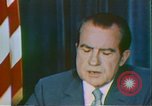
U.S. President Richard Nixon works for peaceful end of Vietnam War, improves domestic conditions and controls drug traffic.
U.S. President Richard Nixon speaks about aftermath of immediate withdrawal from the Vietnam War. U.S. military prisoners of war held by North Vietnam stand before press reporters in Vietnam. President confers with U.S. Secretary of State Dr. Henry Kissinger at his office. Vietnam War draftees being selected by traditional lottery system. Men stand in front of machines that churn out numbered balls for new draft lottery system. Nixon transforms budget expenditure on human needs. Criminals caught by police walk, some covering their faces from the media, as they are led away by police and investigators. Illegal drugs seized by efforts of Nixon administration. View of seized heroin manufacturing equipment. Nixon speaks about the opium farming in Turkey during one of his speeches and mentions agreement with the Turkish government in Ankara to cease all opium poppy production. Customs officers check illegal drug traffic on the border of Mexico and America. Drug enforcement officials search cargo hold of a ship for illegal drugs. Views of drug control officers finding illegal stashed hidden drugs in hiding places in cars and vehicles. Nixon speaks about increased budget to control illegal drug traffic and rehabilitation of drug abusers and drug addicts. He creates the office of Drug Abuse Enforcement and he speaks saying "We must wage what I have called Total War against public enemy number one in the United States: The problem of dangerous drugs." From a pro-Nixon "documentary" called "The Nixon Years: Change Without Chaos" covering President Richard Nixon's first four years in office. Released during his 1972 reelection campaign.
United States President Richard Nixon's address to the nation about ceasefire in Vietnam, for "Peace with honor."
President of United States Richard M Nixon's address to the nation from White House, Washington DC. He speaks about the cease fire agreement reached between North Vietnam and the United States. President Nixon delivers his "Peace with honor" speech about the cease fire in Vietnam. He speaks about the developments in Paris Peace Talks to end the Vietnam War. Nixon details the schedule of ceasefire and withdrawal of American Forces from Vietnam. Nixon admires the courage and sacrifice of the people of South Vietnam. He admires the U.S. soldiers, Prisoners of War and their relatives. (Vietnam War period).
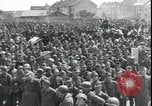
Hungarian Lieutenant General Vitéz Kassai Farkas László talks to a U.S. Army officer in Linz, Austria (WW2)
Hungarian Lieutenant General Vitéz Kassai Farkas László accompanied by his staff, talks to an officer of the U.S. Army in Linz, Austria towards the end of World War II. An American officer orders his sergeant (interpreter) to ask the Hungarian General for his correct name and rank. The sergeant translates the officer's question into Hungarian . He answers with his name, Vitéz Kassai Farkas László, and rank: Lieutenant General. The officer asks him more questions about his men and about the Nazi Germans. The sergeant translates the questions and their responses for both men. The General smokes a cigarette. The sergeant also smokes a cigarette. The officer states that the American Army will not take the General's men prisoner, and will help them to return back to their country. The General stands on the bonnet of a jeep for a thanks giving speech. He thanks the U.S. Army for their humane treatment. His men also join him and cheer the news from their General about the Americans' statement.
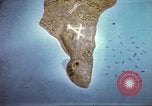
Explosions occur and wounded Marines are treated in Iwo Jima during World War II.
A film about Allied invasion of Iwo Jima, Japan (Operation Detachment) during World War II. Clip opens with view of simple model of the island. This is followed by battle scenes on Iwo Jima. Explosions occur and smoke rises. Intense battle scenes during Battle of Iwo Jima. A walking wounded Marine with his arm over another Marine is assisted to safety during fire fight. Wounded Japanese prisoner is carried to safety. Scenes of rocket launchers firing rockets at Japanese enemy positions. View behind a Marine as he fires a machine gun. A Marine fires a rifle at a Japanese soldier lying in a ditch. Fire and smoke rises as explosions occur. Another wounded marine in great pain is carried by two fellow Marines for medical care by Corpsman. Blood plasma being administered to a wounded Marine. Flame throwers direct fire on Japanese positions. Artillery fired at Mount Suribachi. United States Marines soldiers through cratered landscape.
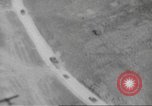
Allied soldiers advance towards Rome and wounded are treated in Italy during world War II.
Liberation of Rome by the Allies during World War II. Aerial views of Allied trucks and tanks as they advance along a road in Italy. Allied soldiers on a field. The Germans are taken as prisoners and are marched. Soldiers along a street. A wounded soldier is given blood plasma. The soldiers march. A sign reads '23 Roma'. Explosions occur as the soldiers fire. A wounded soldier is unloaded from an ambulance. Medics treat the wounded inside a room. Tanks and jeeps advance.
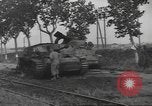
Dead and captured German soldiers in Italy during World War II.
Liberation of Rome by the Allies during World War II. Smashed up Allied trucks, jeep and other equipment along a road. Dead German soldiers on the ground. German prisoners march with hands behind their backs.
CRITICALPAST.COM: About Us | Contact Us | FAQs - How to Order | License Agreement | My Account | My Lightboxes | Shopping Cart | Advanced Search | Featured Collections | Website Terms & Conditions | Privacy Policy ©2026 CriticalPast LLC.
License Agreement |
Terms & Conditions |
Privacy Policy
©2026 CriticalPast LLC.