


 Francais
 Deutsch
 Italiano
Refine Your Search
Prison physical examination. stock footage and images
- Showing 3517 to 3522 of 3715 results more
more Hide
Hide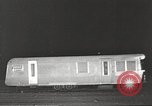
A test vehicle overturns due to a nuclear atomic test during Operation Cue conducted at Yucca Flat region in Nevada.
Operation Cue conducted at Yucca Flat region in Nevada, United States. The test conducted to examine the effects of atomic bomb explosion on buildings, houses and cars. A dummy or test bus vehicle (a recreational vehicle or motor home) parked at the atomic bomb blast test site. The vehicle overturns due to the nuclear bomb explosion blast wave. Smoke rises from the nuclear test explosion.
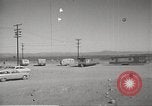
The impact on assorted vehicles due to a nuclear test during Operation Cue conducted at Yucca Flat region in Nevada.
Operation Cue conducted at Yucca Flat region in Nevada, United States. The test conducted to examine the effects of atomic explosion on buildings, houses and cars. Dummy vehicles including 1950s cars and motor homes parked at the test site. Nuclear bomb explodes at the site and vehicles are destroyed. Smoke rises from the atomic bomb explosion.
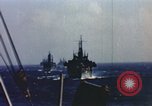
Navy sailors being briefed on enemy attack by officer aboard a U.S. ship in the Pacific Theater (WW2)
Fleet of United States ships underway. Chief Petty Officer camera man using motion picture camera on ship deck with tripod. Officer briefs sailors with a map in front of them. Lietutnant points out coastal areas on map. Sailors on deck performing welding. Sailor sharpens bolo knives aboard the ship using grinding wheel. Two photographers or camera men, one chief and one enlisted, in conversation on ship deck and examining a motion picture movie camera and a still camera. The officer smokes a pipe. Lieutenant turns on sound of the intercom. Coast Guard personnel below decks play card games like acey-deucey and write letters, as men listen to announcements on ship speaker.
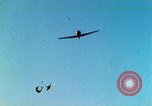
U.S. 1st Marine Division training on assault course, under fire, in Australia during World War II.
1st U.S. Marine Division undergoes training at Wagga Wagga Island in Australia during World War 2. Australian Wirraway trainer airplanes fly low over the training ground assault course. Marines advance on an open field. They approach bayonet training dummies, thrust and fire at the dummies. Explosion occurs, raising dust, as they exit the bayonet area. They jump over low barbed wire obstacles. A pair of Wirraway aircraft fly over at treetop level.More explosions occur in the field as Marines arrive at barbed wire obstacles that they must crawl under.They encounter more dummies to bayonet; climb over wooden walls; and rope ladders. A huge explosive charge is set off raising lots of earth near the trainees. Medical team examines someone injured.
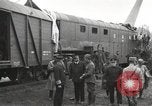
U.S. 4-star Admiral and French officers inspect a U.S. Navy railway gun in France, during World War I
Views of a gun battery comprising one camouflaged U.S. 14-inch fifty-caliber Naval gun, mounted on a railway carriage, accompanied by a train of rail cars containing everything needed for its operation and supply, in France, during World War 1. An American Army officer discusses the train and gun with an American 4-star Admiral, and Allied officers, including one British and several French officers. A U.S. Navy Captain accompanies the Admiral. A French officer climbs aboard one rail car to examine it. Next sequence shows the gun battery crewmen in a mess line being served in front of the train's mess car. Brief view of gunners going down into dugout beside the train. More views of gunners in mess line.
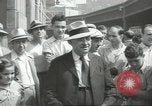
Italian Consul General Yanelli and German Journalists, M.Zapp and G. Tonn, of the Transocean News, are deported.
A. V. Yanelli, Italian consul general at Johnstown, Pennsylvania is being deported from the United States. A number of people surround Yanelli on the sidewalk, as he takes his leave. He puts his arm around a young boy and girl. His taxi and another carrying steamer trunks, arrive at the entrance to Pier 61 in New York City. Policemen, including one on horseback, and jounalists are present. Other taxi passengers entering the Pier include Dr. Manfred Zapp and Guenther Tonn of the Transocean News Service, a German propaganda organization. (The Department of Justice had prosecuted Zapp and Tonn for failing to register as foreign agents.) Reporters examine tags on the steamer trunks as one taxi enters the driveway to Pier 61.
CRITICALPAST.COM: About Us | Contact Us | FAQs - How to Order | License Agreement | My Account | My Lightboxes | Shopping Cart | Advanced Search | Featured Collections | Website Terms & Conditions | Privacy Policy ©2026 CriticalPast LLC.
License Agreement |
Terms & Conditions |
Privacy Policy
©2026 CriticalPast LLC.