


 Francais
 Deutsch
 Italiano
Refine Your Search
Prison physical examination. stock footage and images
- Showing 3541 to 3546 of 3715 results more
more Hide
Hide
U.S. soldiers are shown a training film on sex hygiene in the War Department Theater in the United States (WW2)
A World War II training film titled 'Sex Hygiene' on causes and prevention of venereal diseases among soldiers in the United States. Spread of venereal diseases among males because of the lack of proper sex education. Continence is the best preventive measure. Soldiers enjoying in a club. Some of the soldiers play pool (billiards). A soldier talks to another soldier. An officer seated at a desk. The soldier approaches the officer and talks to him. The officer informs the soldier about training film 'Sex Hygiene' which is to be shown in the War Department Theater. The soldiers march towards the theater. They are seated in the theater. An officer speaks to them about the importance of the film. The film starts. An officer in the film gives the introduction of the film and diseases which are caused because of lack of information. A doctor examines a patient and looks at germs under a microscope. The germs causing various diseases.
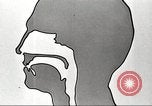
An officer speaks about probable diseases contracted by soldiers.
A training film on causes and prevention of venereal diseases among soldiers in the United States. A diagram of human respiratory system and body. Soldiers seated in a theater watch a film. A study of the male anatomy. A diagram of the human body. An officer explains parts of the body and their positions. Examination of the organs. The organs may be contracted due to diseases like syphilis (pox), gonorrhea (clap) and chancroid (soft chancre). A diagram showing the probability of acquiring syphilis. (World War II period).
U.S. soldiers gather for 9th Division memorial service in Sainte-Mère-Église, France during World War II.
U.S. 9th Division memorial service in Sainte-Mère-Église, France during World War II. Crosses in a cemetery. Troops stand in formation in the background. Commanding General 9th Division Major General Manton Sprague Eddy speaks to the soldiers. The soldiers fire guns in honor of the dead soldiers. A bugler blows a bugle. The soldiers examine grave markers in search of their buddies. A band plays.
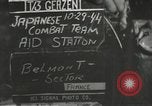
Wounded soldier of U.S. Army 442nd Regimental Combat Team is treated by unit medics in Belmont, France during World War II.
Second Battalion Aid station of Japanese-American 442nd Regimental combat team in Belmont, France during World War 2. A jeep bearing a red cross flag carries a wounded soldier to 2nd Battalion aid station. The wounded soldier is examined and his chest bandages are secured by medics, who then write up report.. The soldiers were engaged in battle to rescue the Lost Battalion in the Vosges Mountains.
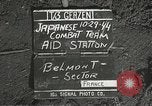
Medics remove a bandage from the head of a wounded soldier at a medical aid station in Belmont, France.
An aid station of the Japanese-American 442nd Regimental combat team in Belmont, France during World War II. Soldiers moving wounded on litters from a vehicle displaying red cross flags. Unit was fighting to rescue the Lost Battalion in the Vosges Mountains. A wounded soldier is carried on a litter to the aid station. Medics remove a bandage from the head of the soldier and examine him closely. He blinks his eyes and moves his lips.
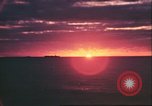
Flight operations on the U.S. escort Carrier, USS Manila Bay, in the Pacific during World War II
U.S. carrier operations in the Pacific Ocean during World War 2. A "jeep carrier" (Escort Carrier) on the horizon. The sun sets in the background. Aircraft being recovered on the Escort Carrier, USS Manila Bay (CVE-61) while underway in the Pacific during World War 2. FM-2 Wildcat fighter number 13, of U.S. Navy Composite Squadron 80 (VC-80) makes a routine landing on the flight deck. Another one approaching is waved off and goes around. FM-2, number 14, makes a routine landing. But it is next seen surrounded by deck crewmen, because it has sustained battle damage. The upper skin on its left wing is seen to be blown away,exposing the internal spars of the wing. The pilot steps from the cockpit and briefly examines the left side of his airplane for other damage.
CRITICALPAST.COM: About Us | Contact Us | FAQs - How to Order | License Agreement | My Account | My Lightboxes | Shopping Cart | Advanced Search | Featured Collections | Website Terms & Conditions | Privacy Policy ©2026 CriticalPast LLC.
License Agreement |
Terms & Conditions |
Privacy Policy
©2026 CriticalPast LLC.