


 Francais
 Deutsch
 Italiano
Refine Your Search
Prison physical examination. stock footage and images
- Showing 403 to 408 of 3715 results more
more Hide
Hide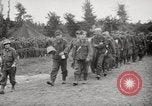
German prisoners are searched by officers at a prison camp and are severed food in Britain.
German prisoners of war in Britain during World War II. The prisoners are tagged and they enter a prison camp. A British Military policeman guards them. A military policeman on a guard tower watches the activities of the prisoners. Officers search the prisoners. An officer searches a prisoner. Food kept in huge containers. The prisoners are given spoons and mugs. They are severed with food. The prisoners sit on the ground and eat their food. Special letter form posted on a bulletin broad. A prisoner reads letters.
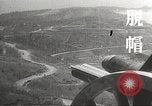
Japanese officials examine wrecked and captured U.S. Army equipment and ammunition on the Philippine Islands.
The invasion of the Philippine Islands by Japanese troops during World War II. Aerial view of vehicles passing on a road. Occupying Japanese officers and Princes Morihiro Higashi-Kuni and Takamatsu inspect wreckage. They inspect wrecked U.S. guns and equipment in Corregidor and at Fort Mills. Mountains in the foreground. Men carrying wooden boxes walk on a street. U.S. prisoners of war in a prison camp. Men bathing at sea. A sign board reads: 'Restricted Road'. Barricades outside the prison camp.
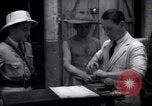
Activities at the Devil's Island prison including, prisoner identification, quarters and food inspection.
Man takes finger prints of a prisoner under supervision of a guard at the Devil's Island prison in Devil's Island, French Guiana. Accession racks arranged in alphabetical order. Photograph of the prisoner is taken. Prisoners move along a prison corridor. Prison cells are locked by guards. Food given to the prisoners inside the cells through compartments in the doors. Prisoners fill water container in an open compound.
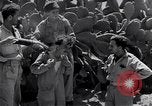
Arab prisoners at an Israeli military prison camp during Arab-Israeli war
Israeli Defense Forces soldier (IDF) stands beside cactus bush and sprays de-lousing agent on two men. Arab prisoners moving about inside a prison camp. Prisoners enter the camp under guard, each carrying possessions provided to them. Soldiers talk with prisoners. A barb wired fencing along the camp border. Views of the camp prisoners and prison life. Israeli soldiers dig trench and erect tent houses at their base. Israeli soldier talks to Arab prisoners. Arab prisoners appear to wear a uniform with a large dark diamond shape on front and back of uniform.
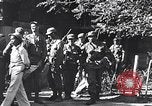
U.S. Rangers and Filipino guerrillas rescue Allied prisoners from Japanese prison camp in Philippines during World War II.
On January 30, 1945, 121 members of the 6th Ranger Battalion and 286 Filipino guerrillas are seen setting out on a 30 mile trek behind Japanese lines, to free Allied prisoners of war (POWs) and civilians from a Japanese camp near Cabanatuan City, in the Philippines, during World War 2. They stretch out in a long, informal column as they traverse low flat lands and ford a wide shallow river. The men carry weapons and supplies (some on their heads) as they move along, almost like a Safari. Scene shifts to rescued prisoner, Major Emil P. Reed, U.s. Army Medical Corps,26th Cavalry. He was the senior officer among prisoners at the Cabanatuan prison camp number 1. He recounts being told by the Japanese Commandant that commencing January 7th, they were free at their own risk, but also assured them they would not be molested by the Japanese if they stayed within their regular camp area. Sergeant Samuel E. Goldy, Signal Corps, also speaks a few words about that period when Japanese were departing. Next the camera records the Rangers and Filipino guerillas returning with the approximately 500 freed POWs. Some Filipino women and children watch them return. At one point, the cadre climb aboard army trucks and continue their journey in a convoy. The POWs climb down from their trucks at the 92nd Evacuation Hospital, in Guimba, Luzon. Some take pleasure is simply lying down on the grass at the site. Many gather around hospital staff handing out packages of treats, including cigarettes, candy and the like. A couple of them express pleasure as they smoke cigarettes. Two frail and injured are seen hobbling with canes. Some appear seriously malnourished. A group are seen trying on new clothes. A British prisoner, Sergeant Robert Bell, Manchester Regiment, British Army, speaks of his experience. He was taken prisoner in Singapore and sent to Thailand where he worked to build a railway for the Japanese. Many prisoners died there from disease and malnutrition. He was one of a small number who survived after being on a Japanese ship with other prisoners when it was sunk by American dive bombers. Sergeant Walter Ring, of San Roque, Luzon, is seated, relaxed on a chair, as he recounts his experiences. Two young Filipino boys sit on the grass at his feet. He reaches to one, whom he says is his son Louis and to the other, his son Sam. His captivity began on Bataan in 1942. Finally, after rest and rehabilitation, the former POWs are seen heading away from the battle fronts to be transported back to the U.S.A.
Evacuation to hospitals of American prisoners of war (POWs) liberated from Japanese prison camp near Cabanatuan City, in the Philippines, during World War II
Film opens with slate reading: "Evacuation to Hospitals." Next, on January 30, 1945, the day of the "Cabanatuan Raid" (Mission to rescue prisoners of war from the Japanese prison camp at Cabanatuan) rescuers are seen carrying a former POW from a building, on a litter. Local Filipinos and others are standing on the porch of the prison building. An ambulatory former prisoner comes down the steps unaided. Several rescued prisoners are seated on chairs, conversing. Closeups of some of them. Two weakened and bandaged former prisoners help each other up some steps. Slate states: "Man with Cane afflicted with Beri-Beri." A severely disabled former prisoner, with a cane, makes his way unaided across the grass. Rescuers and Filipinos are in the background, along with some carts used to evacuate disabled former prisoners back behind American lines.
CRITICALPAST.COM: About Us | Contact Us | FAQs - How to Order | License Agreement | My Account | My Lightboxes | Shopping Cart | Advanced Search | Featured Collections | Website Terms & Conditions | Privacy Policy ©2026 CriticalPast LLC.
License Agreement |
Terms & Conditions |
Privacy Policy
©2026 CriticalPast LLC.