


 Francais
 Deutsch
 Italiano

Refine Your Search
Puerto Princesa Island Philippines 1945 stock footage and images
- Showing 1315 to 1320 of 9932 results more
 Hide
Color Sound

American troops fight against the Germans as American aircraft bomb Germany during World War II.
Allied operations in Germany during World War II. A map of Germany. A headline in a newspaper reads 'Russians strike Berlin'. People stand on a bridge in Cologne. View of Cologne cathedral. Past events show Nazi troops during a parade in March, 1936, crossing the River Rhine during rearmament of Germany. U.S. soldiers in advance in Germany in 1945, in combat from house to house in a German town. The German soldiers being taken as prisoners of war. Scenes with Nazi German soldiers with their hands up in the air. A large group of German Prisoners of War being marched on a road under guard by American soldiers. Allied aircraft bombard German towns. P-38 aircraft taking off and gun camera footage while strafing a target. P-38 landing on a snow covered airfield. An American single-propeller fighter aircraft crash lands with difficulty and slides into another parked aircraft on the snow. Aerial views of B-24 and B-17 aircraft in formation flight. Bombs being dropped in night bombing raids and day bombing raids over Berlin, Germany. Smoke rises. Aircraft in flight as they leave behind vapor trails. United States soldiers on the ground in combat with enemy Germans in a German town. Infantrymen fire rifles and advance house to house. Wounded Americans being carried on litters for medical care. Germans fire at the wounded Americans.Sergeant Peter Di Guiseppi, from Pennsylvania, of 1st Armored Division, being interviewed. Private Pat Brady of Hollywood California narrates an incident where a gunner aboard a tank fired fiercely at the enemy. He talks about tanks getting caught in a fire and the following rescue efforts.

Bombed Berghof residence; German leaders surrender to Allies; stolen art collection retrieved after German defeat.
Ruins of Hitler's Berghof residence in Berchtesgaden after bombing by Allied forces near the end of World War 2 in Europe. Goering's stolen collection of paintings and art pieces taken from all over Europe. The stolen collection was hidden in air raid shelters and loaded on battle trains. View of U.S. soldiers retrieving the stolen works of art. Book 'Mein Kampf' written by Adolf Hitler in Landsberg prison. Portrait of Adolf Hitler with a Nazi symbol. German military officials including General Herman Gred Von Runstedt, Field Marshal Albert Kesselring, and Hermann Goering surrender to the American Army. Views of Hermann Göring after having been flown from Austria to U.S. Army headquarters in Augsburg, Germany on May 9, 1945, where he is seen handing over his handgun. Göring talking to U.S. 7th Army officials.
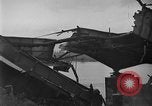
German civilians walk along the damaged Tangermünde Bridge after its destruction in WW2
Scenes following the April 1945 destruction of the Tangermünde Bridge over the River Elbe, by retreating German forces in World War 2. View of damaged Tangermunde Bridge. Defeated German soldiers and German civilians walk along the bridge, moving westward into American and British controlled areas, and fleeing advancing Soviet forces (fearing their retribution). Civilians climb the bridge carefully with their luggage, having to hold twisted steel girders with no flooring beneath. Wounded German walks carefully on the bridge. U.S. Army soldiers checking papers of German citizens crossing the bridge.

U.S. Maj Gen Emil F Reinhardt shakes hands with Russian officer Maj Gen Rusakov in Germany during World War II.
Russians and Americans meet in Germany during World War II. American Major-General Emil F. Reinhardt, Commanding General of the 69th Division shakes hands with his Russian counterpart Major-General Vladimir V. Rusakov Commanding Officer of the 58th Guards Division at a meeting of American and Russian troops near the Elbe River and the town of Torgau, Germany in late April, 1945. American and Russian troops stand in formation. US, Russian, and British flags on display.
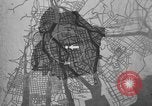
Damaged Hiroshima Castle, City Hall, and Yorozuya Bridge after atomic bomb attack during World War 2 in Hiroshima Japan.
Damage in Hiroshima, Japan after the atomic bomb attack in August 1945. A map shows the explosion range with in 1/6 miles. Buildings in Hiroshima after the atomic bomb strike. The wooden structure of Hiroshima Castle is demolished due to bombing. Less damaged Hiroshima City Hall. A soldier inspects the floor and railing of Yorozuya Bridge located 0.6 miles from the explosion zero point. Burn shadow marks from posts on the bridge indicate direction of the explosion. The soldier stands on a shadow area created by the stride of a pedestrian who had been crossing the bridge at the time of the explosion. The soldier marks in chalk the shoes prints from the shadow of the person who had been crossing the bridge at the moment of the blast.
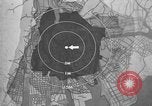
Damage in the range of 1 mile to 6 miles from impact in Hiroshima, following atomic bomb attack in Japan.
Damage in Hiroshima, Japan after the atomic bomb attack in August 1945. Views within 1 mile to 1.5 miles from center and 1.5 to 2 and 2 to 6 miles. Damaged wooden buildings in the 1.5 mile range. Damaged Hirosaki railway station. Damaged buildings. A steel beam twisted out of shape and a center wall stand undamaged. Building of a school with its north wall specially damaged. The school building is not damaged. A bent high school wall. Shattered glasses of a chapel on a hill 4 miles away from the center. (World War II period).
CRITICALPAST.COM: About Us | Contact Us | FAQs - How to Order | License Agreement | My Account | My Lightboxes | Shopping Cart | Advanced Search | Featured Collections | Website Terms & Conditions | Privacy Policy ©2026 CriticalPast LLC.
License Agreement |
Terms & Conditions |
Privacy Policy
©2026 CriticalPast LLC.