


 Francais
 Deutsch
 Italiano
Refine Your Search
Puerto Princesa Island Philippines 1945 stock footage and images
- Showing 217 to 222 of 9920 results more
more Hide
Hide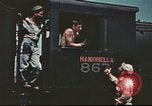
Locomotive engine moves on the railway track in the Philippines during World War II.
The sea voyage of the victory ship Hannibal Victory from San Francisco to the Philippine Islands during World War II. The locomotive on a railroad station. Men seated in the engine of the locomotive. A man standing near the locomotive and talking to them. The engine moves on the railroad station. A ship underway at sea.
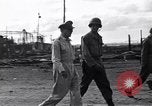
General Douglas MacArthur inspecting damaged buildings in Manila in Philippine Islands
General Douglas MacArthur walks through ruins of Manila. General MacArthur inspects several destroyed buildings. Army tanks seen in the background.
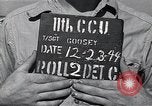
Officer paints nose art on B-29 bomber Deaner Boy of U.S. Army Air Force at their base on Tinian, Mariana Islands during World War II
United States Army Air Force crew at their base in the Tinian, Mariana Islands during World War II. A Army Air Force officer stands on a hoist near the cockpit of a B-29 bomber paints a picture on it. Picture of a baby wearing boxing gloves. Officer paints the baby's diaper with white paint. Soldier looks at nose art painting on the B-29 nose with written wording "Deaner Boy" on it. Another soldier walks up and looks at the nose art painting. (Note: Painter might be Lieutenant Dean C. Forburger, based on examination of image reflected back from aircraft body. Forburger was a B-29 pilot stationed at Tinian at the time, and images exist of him standing beneath this nose art. Forburger was not a member of the crew on Deaner Boy when it perished in a mid-air collision accident in February 1945. The Deaner Boy nose art was painted at least twice on this aircraft, as there are also other images of it in existence with a side-facing baby and cursive lettering for "Deaner Boy").
Events of World War 2, and creation of United Nations Organization following the surrender of Germany and Japan
Summary of World War II events and formation of the United Nations Organization. Soviet troops on Eastern Front of Europe fire artillery on German positions in 1944. Russian troops advance. German soldiers come out of buildings and surrender. Allied Forces land in France on D-Day. Allied troops and tanks fight Germans on streets in towns and villages of France. U.S. Army tanks fire at German positions. Various groups of German prisoners of war march along roads and are herded into prison camps operated by American and British forces. In 1945, the Allied leaders meet at Yalta on the Crimean Peninsula to discuss Allied military strategy in the final months of WWII. Leaders included British PM Winston Churchill, U.S. President Franklin D Roosevelt and Soviet Premier Joseph Stalin. The meeting of U.S. and Soviet Russian troops at the Elbe River. German Nazi Swastika symbol blown up in explosion atop Zeppelinfeld Nazi party rally grounds in Nuremberg. Aerial view of Berlin in ruins, as seen from low-flying aircraft flying directly over the Unter den Linden boulevard and the Brandenburg Gate. Wrecked and bombed German buildings seen everywhere. German officials signing surrender instrument at Rheims. U.S. President Harry S Truman, Winston Churchill and Joseph Stalin at Potsdam Conference. U.S. Marines battling on beaches of Pacific Islands. Iconic shot of U.S. Marines raising the American flag on Mount Suribachi at Iwo Jima. Aerial view of bombed and ruined city of Tokyo, Japan. The Japanese surrender to MacArthur aboard the battleship USS Missouri. General MacArthur speaks aboard Missouri. Victory celebrations all across the world, with some scenes from earlier V-E Day (Victory in Europe) day in May 1945, including crowds celebrating in Paris, France, and some scenes on V-J Day (Victory over Japan day) in August 1945. Crowds on streets celebrate. Happy crowds jam streets. Delegates of Nations, among them Andrei Gromyko and Vyascheslav Molotov meet in San Francisco and create a United Nations organization. Truman arrives at signing of UN charter. Various delegates sign charter. U.S. troops disembark troop carrier ships at U.S. ports and are discharged after completing military service in World War 2. Group of U.S. Army soldiers exits a church (the Chapel at Fort Dix, New Jersey), waving their discharge papers in hand.
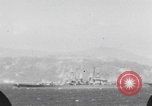
U.S. Naval and Air Forces bombard Corregidor during World War II
Battle of Corregidor in the Pacific Campaign of World War 2 in Philippines. U.S. Light Cruisers bombarding Corregidor Island. Smoke rising from numerous shell strikes. U.S. aircraft flying overhead toward the island. Bombs exploding in upper parts of hill on island. Smoke rising all along the shoreline. U.S. light cruisers bombarding the island, from close in. Closeup of St. Louis Class light cruiser firing on the island. A Cleveland Class light cruiser (with single stack) firing at the island.
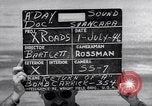
B-29 "Dave's Dream" returns to airfield in Marshall Islands after Test Able atomic bomb drop on Bikini Atoll
The B-29 "Dave's Dream" returns to airfield in Marshall Islands, after dropping atomic bomb on Bikini Atoll, in Test Able of Operation Crossroads, on July 1st, 1946, during U.S. nuclear testing. The B-29 lands and taxis to a parking place on the ramp. The area around the aircraft is cordoned off and the crew is confined therein as they deplane. Navy photographers take photos. An interviewer talks to crew members. The crew walks away from the aircraft along a cordoned pathway between numerous military personnel on hand to greet them on this historic occasion. The aircraft, number 44-27354, was actually participating in its second atomic mission. It also served as a photographic platform for the mission to Nagasaki on August 9, 1945, when it was named "Big Stink.". Pilot for the Bikini mission was Major Woodrow Swancutt of Wisconsin Rapids, WI. The aircraft was renamed "Dave's Dream" in honor of Captain David Semple, a bombardier killed during the crash of another B-29 on March 7, 1946, near Albuquerque, New Mexico. (World War II period).
CRITICALPAST.COM: About Us | Contact Us | FAQs - How to Order | License Agreement | My Account | My Lightboxes | Shopping Cart | Advanced Search | Featured Collections | Website Terms & Conditions | Privacy Policy ©2026 CriticalPast LLC.
License Agreement |
Terms & Conditions |
Privacy Policy
©2026 CriticalPast LLC.