


 Francais
 Deutsch
 Italiano
Refine Your Search
Puerto Princesa Island Philippines 1945 stock footage and images
- Showing 25 to 30 of 9920 results more
more Hide
Hide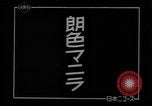
Scenes of Manila, Philippines, early during the Japanese occupation in World War II
Title card with title “Roaring color Manila” in Japanese. A street corner in Manila after the Japanese invasion and occupation in World War 2. Japanese flag in storefront as Filipinos walk pass store. Closeup of the statue of St. Anthony of Padua with a kneeling woman and child, in front of the Church of St. Francis (the former San Francisco Church, now site is occupied by Mapúa University), Church of Our Lady of Angels, Intramuros, Manila, Philippines. Camera pans down over the statue. View from above, at a short distance, of parishioners going in and out of the church. (This church was destroyed in the battle of Manila, 1945, but the statue survived.) A Japanese sign outside of a building. View inside the building, where many school children are seen walking through an exhibit of artwork and other displays of school projects. Closeup of one drawing on display, depicting a Spanish Toreador. Several displays of Japanese calligraphy. A model of two small structures. Closeup of several schoolboys interested in small objects on display. A group of schoolgirls at exhibits of clothing designs and patterns. A cartoon sign in the building, in Japanese but mostly in English. It shows two small girls and a boy in different exercise poses and two ducks walking past them near their feet. The sign announces in Japanese and English, "Radio Taisou Daily Calisthenics on the air." It also reads: "Health First" and "Mass exercise at Luneta Park." A man conducts calisthenics in the open in front of a rotunda. Jorge B. Vargas, chairman of the Japanese-sponsored Philippine Executive Commission, sits inside the rotunda observing a vast field filled with school children following the lead of the exercise director, as they perform calisthenics. The Rizal Monument (1225 Roxas Blvd, Ermita, Manila, 1000 Metro Manila) is seen far in the background. Some closeups of the children as they exercise. Wide view of the children organized in lines across the field. The French renaissance-style Luneta Hotel (414 Kalaw Ave, Ermita, Manila, 1045 Metro Manila, 1000 Metro Manila) is seen in the background.
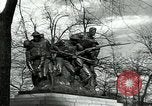
History and contributions of the U.S. Army infantryman to development of the United States of America
Memorial statue in Central Park, New York, to the 7th U.S. Army Regiment of World War I (World War 1, WWI, First World War). American infantrymen run with rifles from C-47 transport planes. U.S. soldiers in battlefield in Europe, and parading in tanks and marching,along the Champs Elysee,in Paris, France, with the Arc de Triomphe behind them. Soldiers march with flags. People watch. Korean War era U.S. soldiers march with rifles. West Point cadets march in New York City. Houses and buildings along the sides of the street. U.S. Army soldiers in various modes of operation: riflemen, artillerymen, paratroopers,ski troops, and Army engineers building bridges. One scene shows a woman soldier working as a mechanic. Soldiers training on an obstacle course, traversing a polar region with dog sleds. A gun emplacement in Hawaii and U.S.troops parading in the Philippines. A ship traversing the Panama Canal. View of U.S. Army tent Camp in Puerto Rico. A U.S. soldier sentry standing guard beside the ocean, in summer, in Iceland. An American soldier poses on a hill in New Jersey, silhouetted against backdrop of the Manhattan skyline with tall skyscrapers of New York City seen behind him. Sergeant James Mansfield talks about Colonel William Wilson Quinn. Colonel William Wilson Quinn on the show discusses the blue badge of the combat infantryman. The badge framed on a wall. He says that the badge has a blue background which is the color of the infantry. Copy of a rifle on the badge is surrounded by a circle with a star.
Lowland portions with mountains and sugar farms in Puerto Rico.
Lowland portions of the island in Puerto Rico. A coastal area with buildings and palms. Sugar farms with farmers at work. Hills at Manati. Trees bearing fruits. Women work in a refinery. Farms on mountains.
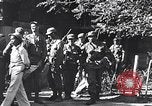
U.S. Rangers and Filipino guerrillas rescue Allied prisoners from Japanese prison camp in Philippines during World War II.
On January 30, 1945, 121 members of the 6th Ranger Battalion and 286 Filipino guerrillas are seen setting out on a 30 mile trek behind Japanese lines, to free Allied prisoners of war (POWs) and civilians from a Japanese camp near Cabanatuan City, in the Philippines, during World War 2. They stretch out in a long, informal column as they traverse low flat lands and ford a wide shallow river. The men carry weapons and supplies (some on their heads) as they move along, almost like a Safari. Scene shifts to rescued prisoner, Major Emil P. Reed, U.s. Army Medical Corps,26th Cavalry. He was the senior officer among prisoners at the Cabanatuan prison camp number 1. He recounts being told by the Japanese Commandant that commencing January 7th, they were free at their own risk, but also assured them they would not be molested by the Japanese if they stayed within their regular camp area. Sergeant Samuel E. Goldy, Signal Corps, also speaks a few words about that period when Japanese were departing. Next the camera records the Rangers and Filipino guerillas returning with the approximately 500 freed POWs. Some Filipino women and children watch them return. At one point, the cadre climb aboard army trucks and continue their journey in a convoy. The POWs climb down from their trucks at the 92nd Evacuation Hospital, in Guimba, Luzon. Some take pleasure is simply lying down on the grass at the site. Many gather around hospital staff handing out packages of treats, including cigarettes, candy and the like. A couple of them express pleasure as they smoke cigarettes. Two frail and injured are seen hobbling with canes. Some appear seriously malnourished. A group are seen trying on new clothes. A British prisoner, Sergeant Robert Bell, Manchester Regiment, British Army, speaks of his experience. He was taken prisoner in Singapore and sent to Thailand where he worked to build a railway for the Japanese. Many prisoners died there from disease and malnutrition. He was one of a small number who survived after being on a Japanese ship with other prisoners when it was sunk by American dive bombers. Sergeant Walter Ring, of San Roque, Luzon, is seated, relaxed on a chair, as he recounts his experiences. Two young Filipino boys sit on the grass at his feet. He reaches to one, whom he says is his son Louis and to the other, his son Sam. His captivity began on Bataan in 1942. Finally, after rest and rehabilitation, the former POWs are seen heading away from the battle fronts to be transported back to the U.S.A.
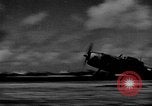
United States soldiers in combat with Japanese forces in towns and in city of Manila, Philippines (WW2)
Street fighting in Asia during World War II (Pacific Theater). Republic P-47 Thunderbolt fighter takes off from field. P-47 fighters dive bombing Japanese-occupied towns as American infantry squads advance in battle-scarred town. The U.S. soldiers employ rifles, bazookas, rifle grenades, hand grenades, and flame throwers (which destroy wood and other lightly constructed buildings). Americans advance under fire from Japanese snipers and return fire. United States soldiers use flamethrowers on wooden houses. A dead Japanese sniper in rubble of building. A Japanese soldier running to surrender, carrying a white flag. A staged exercise in a Burmese village, to demonstrate proper techniques for combating occupying enemy in such a setting. Huts and building in village. Soldier signals other soldiers. Two persons acting as Japanese soldiers inside a building. American soldiers wade through water. Acting Japanese soldier walks to the river side with an empty bucket. American soldier attacks the acting Japanese soldier from behind. Views of various Japanese cities, like Tokyo, Yokohama and Nagoya. Traffic with pedestrians on road. Smoke arising from U.S. artillery shelling of Manila. U.S. Army artillery battery firing field pieces at targets in Manila. Smoke in the streets during the 1945 Battle of Manila. U.S. Soldiers advance through burning Filipino buildings. They advance in groups. U.S. soldiers firing in streets and helping wounded soldier to cross street in front of the import-export business Levy & Blum Inc (345 Echague, Quiapo, Manila, Philippines). They take cover behind rubble. Soldiers engage in street fighting against the Japanese in front of boarded store in Ongpin street, Binondo (Manila Chinatown district). Troops pass by a wrecked building. U.S. soldiers gathered around a chart. They fire gun from hole in wall. Soldiers check houses for booby-traps. Soldier at window of building. Tanks and troops advance. Smoke screen in street. Soldier talks into radio. Captured Japanese march under guard.
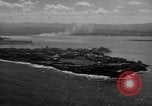
Aerial views of San Juan, Puerto Rico.
Aerial view of San Juan in Puerto Rico. Ships docked at harbor. View of the Capitol Building with seashore in the background. View of El Moro. Large single runway airstrip. Houses and beach area of the Island.
CRITICALPAST.COM: About Us | Contact Us | FAQs - How to Order | License Agreement | My Account | My Lightboxes | Shopping Cart | Advanced Search | Featured Collections | Website Terms & Conditions | Privacy Policy ©2026 CriticalPast LLC.
License Agreement |
Terms & Conditions |
Privacy Policy
©2026 CriticalPast LLC.