


 Francais
 Deutsch
 Italiano
Refine Your Search
Puerto Princesa Island Philippines 1945 stock footage and images
- Showing 325 to 330 of 9920 results more
more Hide
Hide
U.S. wartime propaganda film - Japanese people toil in industry and at warfare unified to help Japan win World War II.
United States anti-Japanese propaganda war film about Japan and its people, and its intentions in World War 2. A White actor narrator impersonates a Japanese man, enforcing negative stereotypes and mocking Americans. “You’ve learned that the Japanese do not show their feelings, nor do I have big teeth and thick glasses- how sad to disillusion you” the narrator mocked. Japanese people work to help Japan win war. Japanese people work on a farm. People row in boats on a lake facing Mount Fuji. Snow-capped Mount Fuji. Volcanic explosion. Japanese soldiers seize the United States flag. Japanese flag flying. Sacred fishes in a pool. Soldiers hold Japanese flags as they cheer Banzai in a victory celebration after battle. Modern buildings in a Japanese city. High altitude view of buildings in an area. Bombardment in a city. Destroyed houses, buildings, and rubble on the ground of Japanese cities. United States warplane aircraft fly in formation. Aerial view of a Japanese city. People walk on the street. Vehicles pass on street. Ship 'Argentina Maru' docked at a Japanese harbor. People sow rice seeds on the farm. Narrator (actor impersonating a Japanese person) mocks Americans as being soft. View in an American town of cars parked along the sides of a main street. American 1940's cars. Jockey's Ball banner. People queue at theater box office and in train stations. United States nightclubs, bars, and casinos. United States people at beach. Japanese industry and munitions factories. Ships underway at sea. United States Marines carry a dead soldier on stretcher. United States Marines coming ashore and Japanese soldiers fighting in Pacific islands such as Guadalcanal and Tarawa. Forces of both sides fire guns and artillery. Smoke from bombardment. Ragged Japanese forces surrendering to United States forces. Japan's best forces shown marching in formation and review. Young Japanese soldiers in training. Japanese children study in a school. Burning Japanese city following attack. Japanese citizen refugees flee, a woman crawls across a railroad track. Japanese girls and boys exercise simultaneously outdoors. Japanese soldiers execute two men (possibly in China?). Prisoners held by Japan in forced labor; others executed. Japanese soldier puts his hat on a little girl, other children playing. Remains of a newborn infant wrapped in cloth lying on the street. Forced laborers from Japanese-occupied countries are made to farm rice. Remains of victims of Japanese forces. Heads of decapitated victims lying on the field. United States prisoners emaciated and injured in the Philippines. A United States soldier wipes his tears after losing an arm. Remains of United States troops, Japanese soldiers, and Asia civilians. Japanese soldiers deploy for war at train station. Map showing Japan, China, Manchuria, and Mongolia. A Type 3 Chi-Nu tank rolling up a fortress in China. Soldiers marching on rice fields and climbing rocky cliffs. Japanese soldiers assume prone position, firing rifles.
Soldiers and correspondents move from the American flying boat PBY Catalina to a small boat in the Pacific Theater.
The soldiers and war correspondents aboard PBY Catalina of the 2d Emergency Rescue Squadron being transferred from Motorai Island in New Guinea to Mindanao in Philippines during World War II. Few vessels in the ocean. The PBY Catalina carrying the soldiers and war correspondents prepares to land on water. Several vessels in the ocean. A small boat carrying men approaches the flying boat after it has landed on water. Men with belongings transfer from the PBY Catalina to the small boat. The boat moves away.
Peacetime activities and contributions by the U.S. Army in the United States.
Scenes from Army Day on April 6, 1934. Secretary of War George Henry Dern, in broadcast to the nation about importance of the Army, in peacetime. Brief glimpses of the Yellowstone River lower falls and Old Faithful and Beehive geysers erupting in Yellowstone Park, Wyoming. View amongst log buildings in Reproduction of Army Fort Dearborn, at the 1933 Century of Progress Exposition in Chicago, Illinois. A pioneer wagon; Native American Indians in ceremonial regalia; antique locomotives and trains at the Exposition. Army General Leonard Wood being sworn in as the Governor General of the Philippines. Closeup of General of the Armies, John J. Pershing, America's highest ranking Military officer. Headquarters of Walter Reed Army hospital, in Washington, DC, named for U.S. Army Major Walter Reed, who confirmed that yellow fever is transmitted by mosquito. Acting on this, the U.S. was able to complete the Panama Canal. View of French dredging equipment sitting idle in the water after Yellow Fever prevented them from completing the Panama Canal. Closeup of U.S. Army General William C. Gorgas, who, in 1904, headed the Sanitary Department that controlled mosquitoes and eradicated Yellow Fever, so the Panama Canal could be finished. View of alligator in swamp near the Panama Canal. Photograph of George Washington Goethals, Chief Engineer credited with making the canal happen. Explosives employed in Panama Canal construction. Earth and rocks being loaded into open rail cars. A steamship transiting the Panama Canal. The Washington Monument; U.S. Library of Congress; and the Lincoln Memorial, cited as examples of accomplishments by U.S. Army engineers. The Wilson Dam, under construction by Army engineers, in Muscle Shoals, Alabama and system of levees being built to control the Mississippi River. The raging Mississippi River during 1927 flood. Flood victims being assisted by U.S. Army soldiers, at a tent camp, receiving food and clothing. An Army airplane flying over a forest fire. Army personnel supervising men in the Civilian Conservation Corps or CCC. Mail being loaded aboard an Army airplane, as airmail service is being opened between Washington DC and New York City. President Woodrow Wilson talking with Army pilot Major Reuben H. Fleet. Mail being loaded into the nose of an airplane. U.S. Army Douglas World Cruiser airplanes in flight, returning from their trip around the world in 1924. A pilot sitting in front seat of a Douglas O-38 airplane, pulls a fabric hood over his cockpit to practice "blind flying". View of the aircraft in flight, with instructor pilot in the open rear cockpit. Army aviators taking a camera and a rifle aboard their airplane as they prepare to leave on an aerial mapping flight. Aerial view of skyscrapers of Manhattan Island, New York City. Army Signal Corps personnel working on communications devices. A cable laying ship operating at sea, in support of the U.S. Army's Alaskan cable and telegraph system. Men loading chemicals into hoppers on Army crop dusting airplane. Several views of Army airplanes crop dusting. Glimpse of boll weevil, the target of their efforts. Closeup of Karl Connell, who as a major in the AEF, in World War I, invented a superior gas mask known as the “Connell” or “Victory” mask. A group of miners wearing gas masks enter a smoky mine entrance. The Army invented tear gas, which is shown being used to thwart a bank robbery, in a staged demonstration. Brigadier General Hugh Johnson, appointed by President Franklin Roosevelt, as head of the Great Depression era National Recovery Administration, or NRA, is seen about to give a speech. Narrator cites him as an example of U.S. Army officers who also serve the country in civilian life. Scene shifts to cadets on parade at the United States Military Academy, West Point, New York.
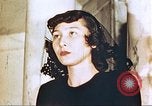
Funeral of Filipino President Manuel Luis Quezon at St. Matthew's Cathedral in Washington, D.C. (WW2)
Philippine Commonwealth President Manuel Luis Quezon passes away during his exile in the United States. A Filipino woman in mourning. President Quezon’s family, prominent United States and Filipino officials seated inside the cathedral. Funeral held at St. Matthew's Cathedral (1725 Rhode Island Ave NW, Washington, DC 20036, United States) in Washington, D.C. They pay tribute to the late President. Exterior of the cathedral. Casket containing the body of President Quezon is loaded into a hearse by pallbearers. Cars passing on the street. The casket is taken to Memorial Bridge. The casket is removed from the hearse and placed on a caisson. A band plays. Soldiers march holding rifles. The caisson moves across the Memorial Bridge into Arlington Cemetery. (World War II period).
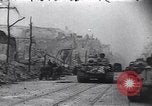
Contrasting views of Berlin, Germany from 1945 to 1943, to 1945 again, during World War II
Soviet Forces battling in Berlin during 1945, in World War 2, employ tanks and heavy machine guns. A Soviet soldier herds two German prisoners from a building. Groups of German soldier prisoners struggle through rubble as they are led from buildings, under guard. Soviet tanks firing as they pass a church building. A Soviet heavy gun being fired point blank on a Berlin street during Battle of Berlin. Buildings on fire. Soviet soldiers firing artillery field pieces. Views of destroyed and damaged German military aircraft on and in hangars of an airfield. Soviet Ilyushin II aircraft land on the airfield. Closeup of distressed German General rubbing his eyes. Flashback in time to 1943, in World War II. Field Marshal Hermann Goering is seen reviewing flyers of a German Luftwaffe (Air Force) unit. A Junkers Ju 52 trimotor aircraft lands and parks on an airfield. Italian leader Benito Mussolini steps from the aircraft after his rescue from imprisonment by the Italian Government at the Hotel Campo Imperatore. He is personally welcomed by Adolf Hitler, who had ordered the mission to rescue him. Change of time, again, to 1945, when Berlin, Germany is attacked by Forces of the Soviet Union. Closeup of a despairing German General. Scenes of utter destruction as Soviet troops batter Berlin, Germany with artillery. Soviet soldier steps down from his tank and gives a Soviet General a handgun, which he pockets and then leads a group of Soviet officers into a building
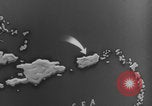
The production and export of cement in Puerto Rico
Arrow points to United States territory of Puerto Rico. Aerial view of a city in Puerto Rico. A cement factory in Puerto Rico. Factory silos with the words “Puerto Rico Cement” written on them. A man places a sack in the machine as a packed bag of cement rolls from the conveyor belt. Coconut trees outside a factory. Man walking inside a factory. Sacks of cement exported from Puerto Rico. Men loading sacks of cement into ships. Buildings and cars in downtown San Juan. Newspaper article titled “Puerto Rico cited in U.N. as a model”.
CRITICALPAST.COM: About Us | Contact Us | FAQs - How to Order | License Agreement | My Account | My Lightboxes | Shopping Cart | Advanced Search | Featured Collections | Website Terms & Conditions | Privacy Policy ©2026 CriticalPast LLC.
License Agreement |
Terms & Conditions |
Privacy Policy
©2026 CriticalPast LLC.