


 Francais
 Deutsch
 Italiano
Refine Your Search
Puerto Princesa Island Philippines 1945 stock footage and images
- Showing 517 to 522 of 9920 results more
more Hide
Hide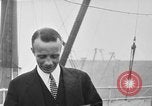
Colonel Theodore Roosevelt Jr., and his wife return from scientific expedition to Indo-China and Tibet
In San Francisco California, Colonel Theodore Roosevelt Jr. poses with his wife on dock after his return from scientific expedition to Indo-China and Tibet, San Francisco. The Colonel has recently been appointed as the Governor-General of Puerto Rico.
Damaged buildings and poor people in Harlem, and a community convention is held in New York to fight poverty.
A promotional documentary titled ' Change is Gonna come' about fight against poverty in East Harlem, New York City. The skyline of New York City. A damaged building with broken glasses of the windows. Three boys playing near a building. One boy jumps down from an awning roof to the ground. View of buildings from moving car and gradually the view shows more damaged and older buildings. African American children play around debris of a damaged building. The boys throw rocks at a partially demolished building wall. A young African American girl walks over the rubble with some difficulty. View of the boys throwing more rocks, and then hitting the wall of the mostly demolished bulding and knocking more bricks from it. Two boys play "sword fighting" with sticks. A sign reads ' under construction'. African American youth (older boys and girls) work at a construction site as they cut wooden planks to help build a playground for youth. A young African American boy plays and sits on a toy fire truck. African American and Hispanic children (possibly Puerto Rican) play in and around an abandoned, wrecked car in a street. The group of children stand and jump on the roof of the car and hit the car with their sticks. View of a totally smashed and abandoned car on the side of a street. The toy truck lying on a street and missing a front wheel. Next scene shows and auditorium holding a community convention to fight poverty in New York. Sign says "New York City Council Against Poverty. Lower West Side." A woman at a podium addresses audiences at the convention. Men and women seated around a table as they work on documents.
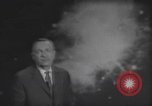
The Smithsonian Astrophysical Observatory facilities and activities in the United States
In the context of Unidentifed Flying Object (UFO) research: Narrator describes the sixteen cameras of the Smithsonian Astrophysical Observatory (SAO) as camera shows one, of atop a multistory building. A map shows several locations in the state of Nebraska. Next, in a closeup, Dr. Richard E. McCrosky, Director of SAO, shows a model of a small building housing aerial mapping cameras. He removes the roof of the model to show how the cameras are installed and turned on by light sensors. He shows a film of a bright object photographed by such a camera installation. Asked about other inputs, Dr. McCrosky mentions the satellite tracking network, and a map shows the 12 stations about the world. McClosky shows a model of a tracking camera contained in those installations. He shows a photograph of the Gemini rendezvous, when the NASA Gemini spacecraft numbers 6 and 7 came close to each other on December 15, 1965. Scene shifts to views of large radar installations and observatories, including equipment inside one. Animated view of Mariner space probe passing the planet Venus. Giant radar antennas rotating. Views of the milky way galaxy and our solar system. Photos of nebulae from the Mount Palomar Telescope. Radio telescope installations, including the one in Arecibo, Puerto Rico.
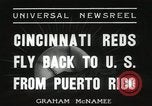
Cincinnati Reds baseball team members disembark from a Pan American flying boat, in Miami, Florida
The Cincinnati Reds baseball team disembarks from a Pan American Sikorsky S-40 flying boat in Miami, after a flight from Puerto Rico, March 1936. Players in Reds uniforms climb off boat. Sign on flying boat reads "Pan American Airways System." Players toss and lightly hit baseballs on a field near the shore. Close up of Reds pitcher Paul Derringer (#25). (NOTES: This was one of the first times a baseball team traveled by air. The Reds held part of their spring training in San Juan in 1936.)
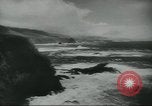
Soldiers board boats and advance during the Spanish American War in Cuba
Scenes of the Spanish American War, Cuban and Puerto Rican Campaigns, in the year 1898. U.S. troops coming ashore in small boats, assembling on the beach, and advancing inland, during the Spanish American War U.S. infantry capture the San Juan Blockhouse where the Spanish flag is lowered and the American flag is raised.
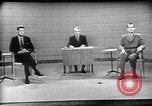
Senator John F. Kennedy and Vice President Richard Nixon face off in their first Presidential debate, in Chicago Illinois.
The first Kennedy-Nixon Presidential Debate in Chicago, Illinois. Moderator Howard K. Smith introduces the candidates-- Republican candidate U.S. Vice President Richard M. Nixon and Democratic candidate Senator John F. Kennedy. He talks about the opening and the closing statements to be given by the candidates. He talks about the questions which the panel of correspondents would ask the candidates. Senator Kennedy begins his statement. Kennedy talks about the direction of freedom for the Americans. He discusses domestic issues and the kind of society people live in. He talks about the strengths and the progress rate of the Americans. He urges people to make their country more powerful in every field. He feels disappointed about the unused steel-mill capacity, low rate of economic growth and poor educational system. He says he's not satisfied when he sees men like Jimmy Hoffa in charge of the largest union in the United States, and still free. He insists on overall infrastructural development and improvement of hydro power production where he says the Soviet Union has a lead. He states that every American should enjoy his full constitutional rights and they should meet their responsibilities. He says African American and Puerto Rican babies have much lower chances in education, work ,and advancement in the United States, and that this needs to change. He states that the government should provide effective programs and social security system for its citizens.
CRITICALPAST.COM: About Us | Contact Us | FAQs - How to Order | License Agreement | My Account | My Lightboxes | Shopping Cart | Advanced Search | Featured Collections | Website Terms & Conditions | Privacy Policy ©2026 CriticalPast LLC.
License Agreement |
Terms & Conditions |
Privacy Policy
©2026 CriticalPast LLC.