


 Francais
 Deutsch
 Italiano
Refine Your Search
Puerto Princesa Island Philippines 1945 stock footage and images
- Showing 565 to 570 of 9920 results more
more Hide
Hide
U.S. Army battles against fortified Japanese forces during World War II, in Manila, Philippines
Wartime news film entitled: "Manila Cleanup." View of the Pasig River, dividing North and South Manila. American tanks and tank destroyers on North bank, firing at Japanese positions on the South side of the river. Exploding shells on South side. U.S. troops fire 155mm howitzers at low elevation, blasting the walls of Intramuros and adjacent buildings. The 540th Field Artillery fire 240mm guns point blank against the ancient walls. Troops firing machine guns at the Colegio de San Juan de Letran and Manila Post Office buildings. Troops of the 3rd Battalion, 129th Infantry, 337th Division, crossing the river in small assault boats, under covering fire. Landing on the South Bank, troops fan out around and about the walled city. Japanese forces resist from fortified pill boxes and machine gun nests near the public buildings. U.S. troops breach a section of the wall and elements of the 37th Division enter Intramuros on February 23, 1945. U.S. soldiers sheltered behind wall as others employ flame throwers. U.S. Soldiers prepares a TNT charge to blow up walls and seal underground passageways. A destroyed Japanese pill box at base of wall with many dead Japanese soldiers are seen. U.S. artillerymen firing 155mm howitzers directly at Japanese troops holed up in the Legislative, agricultural and finance buildings. Troops of B Company, 148th Infantry Regiment, advance from the Manila City Hall, towards the Legislative building. They direct flame throwers at Japanese fortifications under the wall. Soldier with flame thrower passes through group of riflemen and fires into hole in wall. U.S. soldiers fighting room to room in the walled city. On February 24th U.S. troops defeat the last Japanese resistors of Manila in World War II.
Hospitalization of American prisoners of war (POWs) liberated from Japanese prison camp near Cabanatuan City, in the Philippines, during World War II.
Film opens with slate reading: "Cabanatuan Prisoners' Hospitalization at Time of Repatriation." Brief view of a tent-like field hospital where former POWs were being treated, behind American lines, with rescued American POWs in beds and several Army nurses attending them. After that is an extended view of several ambulatory patients engaged in conversations at a hospital behind American lines. At TC:01:35, the scene reverts to earlier time, and a patient is seen lying in the ruins of the prison camp on the day of the rescue raid (Jan 30, 1945). He is being tended to by another soldier, with whom he converses. Two former prisoners are seen in a straw-lined cart prepared for transport back to the American lines, by water buffalo. The remainder of the film shows the former POWs and their rescuers leaving the Cabanatuan prison, on their way back to the American lines. Some non-ambulatory former prisoners are seen lying on straw- covered ground.
Evacuation to hospitals of American prisoners of war (POWs) liberated from Japanese prison camp near Cabanatuan City, in the Philippines, during World War II
Film opens with slate reading: "Evacuation to Hospitals." Next, on January 30, 1945, the day of the "Cabanatuan Raid" (Mission to rescue prisoners of war from the Japanese prison camp at Cabanatuan) rescuers are seen carrying a former POW from a building, on a litter. Local Filipinos and others are standing on the porch of the prison building. An ambulatory former prisoner comes down the steps unaided. Several rescued prisoners are seated on chairs, conversing. Closeups of some of them. Two weakened and bandaged former prisoners help each other up some steps. Slate states: "Man with Cane afflicted with Beri-Beri." A severely disabled former prisoner, with a cane, makes his way unaided across the grass. Rescuers and Filipinos are in the background, along with some carts used to evacuate disabled former prisoners back behind American lines.
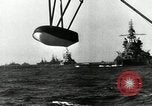
United States troops land and the Filipino guerrillas gather to greet them in Luzon, Philippines (WW2)
United States troops land on Luzon from Lingayen Gulf, Philippines during World War II. Battleships at sea. A map shows the target area of the ships. Troops land on the surface. Happy Filipino guerrillas and civilians gather to greet them. Soldiers in Jeeps. Filipino men hold the United States flags in hand. Filipino guerrillas are given clothes and arms. A United States soldier helps a Filipino guerrilla put on a new shirt. Filipino guerrillas receive new weapons. United Sates soldiers ride a cart pulled by a carabao. Men and children march with flags. Houses along the sides of the street. Trees in the background. Infantry advances rapidly through town. People watch the soldiers. Soldiers in a field during the war. Smoke arises from bombardment in the mountains of Luzon. Ground soldiers and sky soldiers work together. Airplanes drop bombs on the field. Soldiers discuss a map. They discuss plans for the operation.
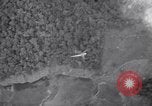
United State H-6 helicopter flies over and lands at Luzon,Philippines during World War 2
United States H-6 helicopter flies over wooden terrain in Luzon,Philippines during World War II. It approaches a clear area along a mountain road with a building as a number of locals stand there. H-6 lands and local children gather around the helicopter. Later it lifts off.
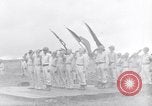
General Stilwell pins silver star on offices of 11th Airborne Division in Luzon, Philippines
General Joseph W Stilwell along General Joseph W. Swing and Lieutenant General O. W. Griswold salute during the playing of the national anthem in Luzon,Philippines. General Stilwell shakes hands with several of the officers of the United States 11th Airborne Division. He pins up silver star on a sergeant and other officers. Recipients of awards march past.
CRITICALPAST.COM: About Us | Contact Us | FAQs - How to Order | License Agreement | My Account | My Lightboxes | Shopping Cart | Advanced Search | Featured Collections | Website Terms & Conditions | Privacy Policy ©2026 CriticalPast LLC.
License Agreement |
Terms & Conditions |
Privacy Policy
©2026 CriticalPast LLC.