


 Francais
 Deutsch
 Italiano
Refine Your Search
Puerto Rico 1966 stock footage and images
- Showing 223 to 228 of 1088 results more
more Hide
Hide
Iraqi soldiers question suspects on a street after a revolt in Iraq; also Jordanian soldiers and Israeli soldiers.
The results of a revolt in Iraq. Soldiers in jeeps and other vehicles move about on the streets after riots in Iraq. Iraqi Officers and leaders on review stand. A soldier salutes. Houses damaged as a result of the riots. Soldiers stand near a tank. A soldier works on a jeep and he shows the bullet marks on the vehicle. An officer questions a suspect as he takes down notes. Another officer looks on. Jordanian soldier loads a rifle and mans an outpost. Group of Jordanian soldiers holding rifles and being inspected. Israeli Defense Forces soldiers (IDF) soldiers loaded into an open railroad car. Israeli soldiers traveling in an armored truck. They get off, holding rifles. IDF soldiers advance across a field. They check the papers of civilians and search them. A man puts up a poster on a wall. Civilians cheer as they demonstrate outside a building in Cairo, Egypt.
Hand sending method of International Morse code.
Hand sending method of International Morse code. A United States Army operator operates the hand key to write a coded message. Senior officer Young talks about rhythmic and uniform use of Dits and Dahs while the other officer operates the hand key. Operator demonstrates letters using only Dits and only Dahs on screen. Officer explains phonetic alphabet for the word Hotel. Dits sound of Hotel equates to the sound of a horse galloping.

Officer Young explains the use of Dits and Dahs for phonetic alphabets.
Officer Young explains the sound of three beat letters on screen. He explains the use of Morse Code Dits and Dahs for phonetic alphabets Seirra Oscar Seirra (SOS). He further talks about the use of Dits and Dahs for Phonetic alphabets India(I),Mike(M),Echo(E),Tango(T). An Army operator demonstrates use of Dits and Dahs for phonetic alphabet Yankee(Y),Charlie(C),Juliet(J),Romeo(R) through steps. Officer Young explains the pattern of phonetic alphabets Lima Oscor Water(LOW).
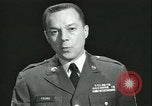
Officer Young explains proper spacing of Dits and Dahs in morse code words.
United States Army Officer Young explains proper spacing of Dits and Dahs in words. He explains about proper spacing in words and how the meaning can change with incorrect spacing with an example of two words 'Low' and 'Enemy' on screen. He states the importance of proper spacing of Dits and Dahs between words and groups by an example "We got here'.
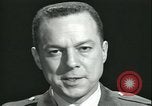
Officer Young explains the importance of word and letter spacing while sending a morse code message
Officer Young explains the importance of word spacing and letter spacing while sending a message. Depiction of Dits and Dahs on screen. He explains by examples that the message sent was 'We got here' but due to difference in spacing receiver will read 'We go there'. Another example shown on screen 'We train today' will become 'Wet rain today'.
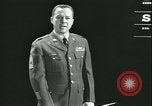
Officer Young explains the importance of smooth hand sending by morse code signal operator.
United States officer Young explains the importance of smooth hand sending by Operator. The Operator operates on hand key. 'Take 3 basic steps' with Dits and Dahs written on screen. The first step is to adjust key. Musician tuning drum. Pistol lying on piano. Woman tuning piano.