


 Francais
 Deutsch
 Italiano
Refine Your Search
Qui Nhon Vietnam 1970 stock footage and images
- Showing 79 to 84 of 4259 results more
more Hide
Hide
Origin of the U.S. Census and its development and refinement over time.
(Animated cartoons for majority of clip; actual office and early computer scenes near end of clip.) Accompanying narration about the origins of the United States census and establishment of the permanent Census office in 1902. Animation and cartoons illustrate the manner in which the census was taken over its history. A cartoon illustration of census worker, Henry Hollerith, developer of the punch card method of data recording and manipulation. (The 88 column punch cards shown in use in 1950, bear his name.) Equipment illustrated include: punch card sorting machinery; and early digital computer. Actual Images of 1970 era early computer and tape machines and related electronic computer keyboards. A worker mounting a tape on a machine in an office.
Preparation for America's Decennial Census. Training of census takers and conduct of the census.
Opening scene shows supplementary census workers (enumerators) in a training class. They ask questions that are answered by the instructor. Cartographers preparing detailed standard accurate maps of urbanized areas. Mapmakers at work,kneeling over huge sheets of paper. Postal worker assisting by providing address information to the Census Bureau. Mailmen delivering postal mail. A woman census enumerator carrying a briefcase, with "census" written on it, visits homes. Enumerators visiting remote homes, by car, donkey,and dogsled. A late 1960's or 1970 ambulance approaching the camera position at high speed. A prison compound are shown as narrator discusses census including hospitalized and imprisoned persons. Views of a young child walking on a Native American Indian Reservation; migrant labor camp; a U.S. Air Force Base, and a merchant ship, whom the census must reach. Views of hotel and motel neon signs indicating where census enumerators must also visit. Temporary housing places, such as mobile home parks and shelters for homeless are shown.

U.S. exports, imports and domestic commerce by land sea and air. Census Bureau reports on American industry
New cars being offloaded from a ship at a port. Seaman and dock workers watching over railing of freighter, The "Chesire" with home port of Liverpool England. Closeup of the ship, Tara Maru, with home port Osaka, Japan. A Greek freighter in port. Passengers in rapid transit train traveling beside super highway of many lanes in the United States. View of car and truck traffic on busy highway. A Boeing 727-100 airliner and other passenger aircraft around runways and on tarmac at a civilian airport. Glimpse of various late 1960s and early 1970s cars and trucks on crowded section of highway during heavy traffic. People boarding a bus. Logs, steel tubes, and bulk cargoes being moved. A truck full of lumber. Cargo being loaded on an airplane. A cargo ship passing under the Golden Gate Bridge in San Francisco California. Bureau of Census workers compiling data using early computers, with views of keyboards and tape drives. Bureau reports being placed in envelopes and mailed. Factory workers carrying lunch boxes. Men in business suits carrying brief cases. Entry gate of a prison, with view of permiter fencing and guard tower visible. View upward from inside the prison wall, with barbed wire atop the fence. A court building.

Dramatization depicts: Angry mob outside school waiting to attack African American children in Lamar, South Carolina USA
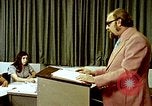
Excerpt from a film based on the 1970 Lamar High School Bus Attack. African-American students chatting inside a school bus. School bus passing on a road. A gathering of militant white American parents in front of Lamar High School in Lamar, South Carolina (216 N Darlington Ave, Lamar, SC 29069). One African-American student looking agitated inside the school bus. The crowd angrily talk about how letting African-Americans study in the school impedes their rights. “not here, not now, not ever!” said a woman with disgust. A sign saying “Welcome to Lamar” prompts boy to say, "do you think they mean welcome?" “He ain’t gonna be in my grandson’s class!” a man says, pertaining to the possibility of African-American students studying alongside White students. African-American students become agitated as they approach Lamar. Woman wearing a headscarf and sunglasses talks about the arrival of the African-American students with indignation. Man menacingly holds a bat and say “They’ll gonna wish they was never born”. Lamar High School with state troopers guarding the front of the school. The school bus approach. Angry mob member holding baton behind his back, another mob member holding a brick. Angry mob crowd the school bus. African American students, scared, get down on the floor to avoid being hit with projectiles and broken glass from angry mob. The angry mob breaks the school bus windows. Image of state troopers outside Lamar High School. Title sequence of “The Color of Justice” with the overturned school bus in Lamar as the background.
Dramatization depicts: African-American students on their way to school and aftermath of Lamar High School Bus attack in South Carolina
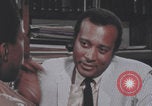
African-American lawyer, Frank Jackson, talks to “Cliff”, one of the victims of the Lamar High School Bus Attack in 1970. African-American children lining up in school. Dramatization depicts a mob of angry white residents, one holding a stick in his hand as a club. White woman, wearing headscarf and shades, brandishes a frying pan. Dramatization shows Lamar High School with state troopers guarding the front of the school (216 N Darlington Ave, Lamar, SC 29069). Dramatization shows some of the mob being apprehended by state troopers. African-American students laugh inside the bus. Image of Robert Evander McNair, the Governor of South Carolina from 1965-1971. Attorney Jackson speaks to Cliff about Governor McNair’s dedication to protect African-American children’s rights to go to any school. Images of Governor McNair and Chief Justice Roger B. Taney. “ Only when the rights of the constitution are surely in the hands of poor men, as well as rich men, black, brown, red, and yellow men, as well as white men, can the constitution promise justice to share its equal place in law and order,” Attorney Frank Jackson says. Closing Credits.
The Selective Service System (SSS) holds a draft lottery to induct men into the Vietnam War.
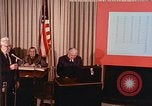
The December 1, 1969 Draft Lottery for the year 1970 is held at the United States Selective Service headquarters in Washington, D.C. The draft lottery is led by General Lewis B. Hershey, Selective Service Director. The ceremony begins with a benediction, and then an official pours slips of paper containing birth dates into a glass bowl. Congressman Alexander Pirnie of New York draws the first birth date. He declares the date, September 14, and another man pastes the birth date next to a number on a board. Members of the Selective Service Youth Advisory Committee draw additional birth dates and the board is filled out with the draft sequence.