


 Francais
 Deutsch
 Italiano

Refine Your Search
Qui Nhon Vietnam 1970 stock footage and images
- Showing 97 to 102 of 4260 results more
 Hide

The Golden Gate Bridge in San Francisco under construction.
A 1970 television program hosted by Lee Marvin regarding construction of the Golden Gate Bridge in San Francisco beginning in 1933 and completing in 1937. View of the Verrazzano Narrows Bridge in New York, and the Royal Gorge Bridge in Colorado. View of the Golden Gate Bridge in San Francisco built by Joseph Strauss. Newspaper headlines during debate about whether to construct the bridge, such as 'Jobs Loom' and 'Span for Vote', and "The Golden Gate is One of Nature's Perfect Pictures -- Let's Not Disfigure It". View of the north and south tower of the Golden Gate Bridge. Boat passes under the bridge during its construction. Stages of Golden Gate Bridge under construction and discussion on the difficulties of setting the towers in the bed of the bay. A blimp passes over the bridge. Engineers work under bad weather conditions. Two men walk on cables connecting the bridge towers. Walter Cathey, construction supervisor, talks about the difficulties during construction and an incident where two bridge builders died during construction. Seagulls on shore. Painting of the bridge using the color known as International Orange. Boat in San Francisco Bay passes under the bridge. Opening ceremonies for the Golden Gate Bridge in May 1937 and traffic crossing the bridge for the first time.
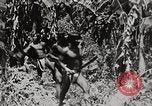
Construction of the Panama Canal
Construction of the Panama Canal connecting the Caribbean Ocean with the Pacific Ocean. Views of abandoned and failed first attempt by French team led by Ferdinand de Lesseps, with scenes of Panama natives cutting vegetation with machetes. Scene of abandoned canal work area. Scenes of United States work to build the canal beginning in 1903. Steam shovels digging and moving earth. Laborers construct railroad for use in canal building. General Glen Edgerton talks about the construction difficulties from malaria, and the worker prescription of quinine three times daily. Views of British and French workers on the site working and arriving by rail to work. Dynamite explosion removes rumble for railroad construction. View of locks under construction 1000 feet long and 110 feet wide. Excerpt from interview with former Canal Zone Governor and Congressman Maurice Thatcher, who characterizes the project as the greatest liberty that man had ever taken with nature. (Thatcher was honored when the first bridge connecting both sides of the Panama Canal was named after him as "Thatcher Ferry Bridge". In 1979 the name was officially changed to the Bridge of the Americas.) Clip next shows 1970's aerial view of the Panama Canal. Ships moving through the Panama Canal.
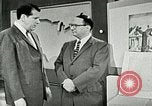
Dr Philip Hauser briefs George Stone on development of various aspects of U.S. census from 1790 to 1900 in United States,1960.
George Stone and Dr Philip Hauser at the presentation of U.S. census. Map of U.S. with an area marked on it appears. Figures of population of 1970 appear on the marked area. On its side 6 questions required for census are seen. A slide with Census 1900 appears on the screen. An official with a gun is seen riding a horse in a forest. He meets a Native American Indian and writes his family details for the census.

Casinos - the major attractions in Las Vegas; neon lights advertising casinos and hotels.
Nighttime views of neon light illuminated attractions, Casinos in Las Vegas: Golden Nugget Gambling Hall, Binion's Horseshoe Casino, Four Queens and Fremont Casino. Visitors walking the sidewalks of the town during the mid 1970s.
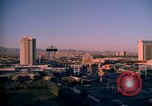
Wide, elevated view of casinos and hotels in Las Vegas.
View from high building in the early morning, and then again at evening, of attractions in Las Vegas: Views of Dunes, Holiday Casino, Flamingo, Aladdin (theater for performing arts, with Bing Crosby featured), MGM Grand Hotel, Tropicana (Folies Bergere 76), Paradise Hotel and Casino. Neon signs of various hotels and casinos in the mid 1970s.
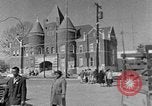
Mayor Carl Burton Stokes elected as Mayor of Cleveland in 1967; citizens of Cleveland and its City Council; Stokes meeting with President Nixon
Mayor Carl Burton Stokes, African American political leader in Cleveland, at the time of his election as Mayor of Cleveland on November 7, 1967. Mayor Stokes and his wife emerge from a building (possibly a polling place) into lightly falling snow in winter, as reporters and media gather nearby. Views of his campaign headquarters and posters in it that read 'Stokes For Progress'. Men and women wearing Stokes hats. The crowd cheers at his mayoral victory. Newly elected Mayor Stokes addresses the crowd from microphone and receives constant applause and cheering. Audio of new Mayor Stokes speaking to supporters in his victory speech while scenes are shown of African American and white men and women citizens of Cleveland walking on streets of the city in typical late 1960's and early 1970's fashions. Scene includes pedestrians young and old walking and boarding a city bus. Mayor Stokes seen exiting a building and walking in Cleveland. Meeting in progress in Cleveland City Council chamber. Views of various City Council members including a number of African American council members. Mayor Stokes seated with U.S. President Richard Nixon and other big city mayors discussing the urban crisis.