


 Francais
 Deutsch
 Italiano
Refine Your Search
Rio de Janeiro Brazil 1946 stock footage and images
- Showing 943 to 948 of 2633 results more
more Hide
Hide
A funeral procession in Nagasaki in which a woman carries a box in which are the bones of the departed.
A funeral procession in Nagasaki, Japan. The funeral procession moves ahead. A woman carries a small box wrapped in a white cloth in which are the bones of the departed.
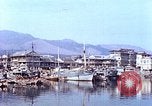
Japanese workmen load a truck with kindling wood which was unloaded from one of the ships at a wharf in Beppu, Japan.
Dock activities in Beppu, Japan. A wharf in the inner harbor along the main street of Beppu. The wharf shows many fishing crafts docked in. Huge mountains surrounding Beppu in the background. Japanese workmen load wooden buckets on one of the several vessels docked at the wharf. A ship docked at the wharf. Japanese workmen load a truck with kindling wood which was unloaded from one of the ships. A hot spring pond in Yawata, Kyoto which has been reinforced with concrete and decorated by placing a devil in the center and one of the Buddha gods to one side of the pond. Sulpfur water boils and steam rises. A country road in the foothills above Beppu shows a Japanese woman pounding rice on a straw mat to remove husk from the kernels.
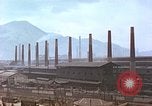
Burned out sections of Japan Iron and Steel Works at Kitakyushu, Kyushu, Japan
Iron and Steel Works at Yawata in Japan (Yawata Steel Works). A view at the end of the Japan Iron and Steel Works. Open hearth, rolling mills and coke ovens. Southern sections of the plant as seen from the roof of the Muwata Grade School. Burned out sections of Yawata as seen from the roof of the school. This area lies between a post office and the south end of the plant. It includes the areas Higaichi, Machi, Okadamachi and Hishimachi. This view shows the results of incendiary attack of August 8, 1945. The coke plant and by-products installations of Japan Iron and Steel Works. The southwest corner of the plant. Views of Tobata Power Plant. Aircraft revetments around the Japanese Naval Air Base in Omura. (World War II period).

Japanese women archers bow to the target in an archery contest in Japan.
Japanese women archers in an archery contest in Japan. The target, a painted bull's eye. The archers enter the field, take positions and bow to the target.
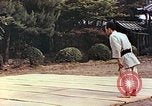
Japanese men practice the art of self defense, Judo, every day in schools in Japan.
Men practice Judo, the art of self defense, in Japan. Men demonstrate the methods used in a Judo exercise. Several views of the same.
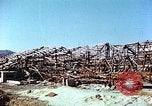
Structural collapse of the Mitsubishi-Urakami Ordnance Plant after the atomic bombings of World War 2
The Mitsubishi-Urakami Ordnance Plant shows the effects of atomic blasts of World War II on its light steel frame structure in Nagasaki. While the structurally stronger east wall and the center section of the building withstood the blast comparatively well, the entire section has been displaced. The wall of the building was afforded some protection by the boiler house. Structural collapse of the light steel frame building.
CRITICALPAST.COM: About Us | Contact Us | FAQs - How to Order | License Agreement | My Account | My Lightboxes | Shopping Cart | Advanced Search | Featured Collections | Website Terms & Conditions | Privacy Policy ©2026 CriticalPast LLC.
License Agreement |
Terms & Conditions |
Privacy Policy
©2026 CriticalPast LLC.