


 Francais
 Deutsch
 Italiano
Refine Your Search
Rio de Janeiro Brazil 1946 stock footage and images
- Showing 283 to 288 of 2632 results more
more Hide
Hide
Japanese people carry belongings and board ships as they leave for Japan from Korea.
Repatriation of Japanese soldiers and civilians to Japan from Korea after conclusion of World War 2. Wide elevated view of buildings in Seoul, Korea. A long bridge spanning over a river. Electrified street car moving on street in Seoul. People walk on a road in a busy market place area. People buy from shops. Various shops in the market. Japanese people are being processed and checked for contraband before returning to Japan. Soldiers use DDT (Dichloro-Diphenyl-Trichloroethane ) to spray on people, including a young child, as a de-lousing measure. People wait at the port of Busan. People organizing luggage and belongings at port while awaiting travel. U.S. Army soldier inspecting baggage of Japanese civilians. Japanese men, women, and children carrying their belongings walk in a line to board ships. A man gives tickets to Japanese people boarding the ships. Japanese people crowded on the deck of a ship as it prepares to leave port.
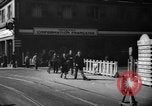
A meeting of French officers is presided over by French General Marie-Pierre Koenig at Hotel Brenner in Baden-Baden, Germany.
A meeting of French officers at Hotel Brenner in Baden-Baden, Germany. A sign on a building. People and vehicles move on the road in front of the building. Views of Hotel Brenner where the officers of the French Commander-in-Chief are. Two soldiers stands guard at entrance of the building. An officer enters the building. French Government in Germany: French officers seated at a conference table. The meeting is presided over by General Marie-Pierre Koenig, French Commander-in-Chief. On his right is Administrator General Emile Laffon, who is in charge of the civilian administration of the French Zone. On his left is his political counselor Jacques Tarbe de Saint -Hardouin. On the left of Saint-Hardouin is Koenig's deputy General Henri Navarre.
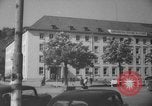
Buildings of French Military Government of Sarre, Rhenanie, Hesse and Nassau in Baden-Baden, Germany.
Buildings of French Government in Baden-Baden, Germany. The building of the military government of Sarre. Vehicles and people move on a road in front of the building. A sign:'Gouvernement Militaire de la Sarre'. People at the entrance of the building. Views of the road in front of the building. General Emile Liffon, who is in charge of the civilian administration of the French Zone, in his office. He talks over a phone and works. The flag of France on a building. Sign " Gouvernement Militaire Rhenanie Hesse Nassau" on the building.
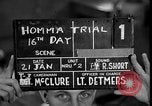
Major Tisdell recalls events of April 8, 1942 in Bataan, Philippines during the Homma trial in Manila, Philippines.
U.S. Army Major Achille C. Tisdell testifies before a military tribunal in Manila, Philippines during the trail of Japanese Army General Masaharu Homma for World War II crimes. Major Tisdell takes an oath on the 16th day of the Homma trial. He says that he was aide-de-camp to Major General E.P. King, Commanding General of the American forces in Luzon in April, 1942. Major Tisdell recalls that Japanese forces had pushed back the American forces in Bataan to a point that it was difficult for the Americans to reorganize. He also talks about the lack of ration for the American forces. Major Tisdell says that U.S. reserves were released for the forces. He says that on 9th April, 1942 General King was unable to make contact with Japanese commander and Colonel Edward C. Williams volunteered to make contact with the Japanese.
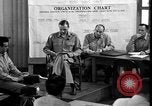
Major Tisdell talks about American surrender to the Japanese in 1942 during trial of General Hommal in Manila, Phillipines.
U.S. Army Major Achille C. Tisdell testifies before a military tribunal in Manila, Philippines during the trial of Japanese Army General Masaharu Homma for World War II crimes. Major Tisdell, aide-de-camp to Commanding General of the American forces in Luzon Major General Edward King, says that Colonel William and Major Marshall went in a jeep to contact the Japanese forces. They met the forces at a bridge. Japanese infantry elements led them to head quarters. Tisdell says that a Japanese Major General kept Colonel Williams as a hostage allowing Major Marshal to return to the American headquarters. After his return on April 9, 1942 General Edward King assembled some officers.
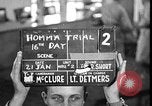
Major Tisdell talks about American surrender to the Japanese in 1942 during the trial of General Homma in Manila, Phillipines.
U.S. Army Major Achille C. Tisdell testifies before a military tribunal in Manila, Phillipines during the trial of Japanese Army General Masaharu Homma for World War II crimes. Major Tisdell, aide-de-camp to Commanding General of the American forces in Luzon Major General Edward King, speaks about the American unconditional surrender in Bataan before the Japanese forces. He recalls that an interpreter told American Commanding General Edward King to get U.S. Army General Jonathan Wainwright. General King expressed that there were no means to contact General Wainwright. He says that General King presented four conditions of surrender to the Japanese that included his return to the headquarters to notify the surrender and a 12 hour armistice. But Japanese declared that the surrender must be unconditional. General King asked if U.S. troops would be well treated. The Japanese replied that they were not barbarians.
CRITICALPAST.COM: About Us | Contact Us | FAQs - How to Order | License Agreement | My Account | My Lightboxes | Shopping Cart | Advanced Search | Featured Collections | Website Terms & Conditions | Privacy Policy ©2026 CriticalPast LLC.
License Agreement |
Terms & Conditions |
Privacy Policy
©2026 CriticalPast LLC.