


 Francais
 Deutsch
 Italiano
Refine Your Search
Romorantin France 1918 stock footage and images
- Showing 667 to 672 of 6001 results more
more Hide
Hide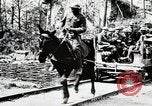
369th Infantry, 93rd Division United States Army African American soldiers occupy trenches and fire at Maffrecourt, France.
369th Infantry Regiment, 93rd Division United States Army African American soldiers occupy trenches near Maffrecourt, France during World War 1. They were also nicknamed the Harlem Hellfighters. Troops fire from trenches. Though American, the 369th Infantry soldiers are wearing French helmets because the U.S. Army (American Expeditionary Forces) did not permit African Soldiers in combat, so the unit was assigned to the French Army during the war. In one scene the African American soldiers are seen putting on gas masks during a gas attack drill. Soldier shows a document to Colonel. He ties a message to the carrier pigeon and releases it. African American soldiers rush from a trench toward the front with their rifles.
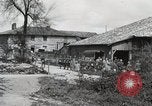
369th Infantry 93rd Division United States Army troops load provisions onto carts at Maffrecourt, France.
African American soldiers of the 369th Infantry Regiment, 93rd Division, United States Army, load provisions onto horse carts at a village near Maffrecourt, France during World War 1. African American soldiers carry a large milk vessel. African American soldiers on horseback and driving horse drawn carriages in the village. The division was also sometimes called the "Harlem Hellfighters."
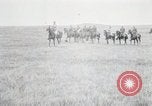
African American soldiers of U.S. Army 369th Regiment, 93rd Division, march in review near Maffrecourt, France, during World War I
African American soldiers of United States Army 369th Infantry Regiment, 93rd Division, Colored (sometimes called the "Harlem Hellfighters") on parade across an open field near Maffrecourt,France, during World War 1. They are led by their Commander, Colonel William Hayward, on horseback, followed by 8 other mounted officers. Several soldiers are walking bicycles behind them. Next is seen the famous 369th Regimental marching band, led by Bandmaster, Lieutenant James Reese Europe. Troops of the Regiment march with shouldered arms in formations of 30-man fronts. At the end of the film, the troops execute a right flank maneuver. A three-man color guard poses for the camera with the American flag. No other colors are displayed during the review.
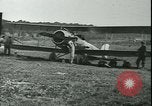
Mechanics of the 99th Aero Squadron on Salmson 2 A.2 aircraft in Dogneville, France in World War I.
World War 1 mechanics of the U.S. Army Air Service 99th Aero Squadron sitting and standing beside parked Salmson 2 A.2 aircraft in Dogneville, France. Lt. G C Khale wears his flying helmet. Lt. G C Khale and Lt. F A Hill climb into cockpit of Salmson 2 A.2 aircraft. Lt. Hill puts ammunition canister on twin machine gun in rear cockpit. Ground crewman hands an aerial camera to Lt. F A Hill. Salmson 2 A.2 aircraft taxiing and taking off.
U.S. Air Service ground crewmen push a damaged Salmson 2 A.2 aircraft at Dogneville in France.
U.S. Air Service Lt. M C Markham and Lt. L S Powell view the paper iron crosses pasted over bullet holes of Salmson 2 A.2 aircraft.Ground crewmen push a damaged Salmson 2 A.2 aircraft at Dogneville in France. (World War i; World War 1; WWI; WW1)
Herbert Hoover's visit with Andre Citroen at the Citroen Munitions Factory Plant in Paris, France during World War 1.
Herbert Hoover, head of United States Food Administration (during World War I) visits the Citroen Munitions Factory Plant in Paris, France. He along with Andre Citroen and other dignitaries and workers dine in the Munition Plant mess. Left to right with the dignitaries are: Madame La Gen. Debuyer, Mr. H.C. Hoover, Mr. Loucheur (French Minister of Armament who presided at the dinner), Mr. Andre Citroen of Andre Citroen Ammunition Factory. Men and women dignitaries with Hoover rise during the playing the United States National Anthem (to honor Mr. Hoover) and then sit along with the rest of the workers to eat the meal. Workers and the dignitaries converse with each other during the meal. After the meal, in the Club attached to the canteen, Herbert Hoover with other dignitaries drinks coffee and some smoke cigars. Dignitaries left to right are: Mr. Victor Boret, French Food Minister; Mr. Ernest Vilgrain, French State Secretary of Food; Mr. H.C. Hoover, American Food Commissioner; Mr. Andre Citroen, Owner of Ammunition Factory; Mr. Andre Tardieu, French High Minister in America for French government. Exterior view of the Munitions manufacturing plant grounds and buildings.
CRITICALPAST.COM: About Us | Contact Us | FAQs - How to Order | License Agreement | My Account | My Lightboxes | Shopping Cart | Advanced Search | Featured Collections | Website Terms & Conditions | Privacy Policy ©2026 CriticalPast LLC.
License Agreement |
Terms & Conditions |
Privacy Policy
©2026 CriticalPast LLC.