


 Francais
 Deutsch
 Italiano
Refine Your Search
Romorantin France 1918 stock footage and images
- Showing 85 to 90 of 6001 results more
more Hide
Hide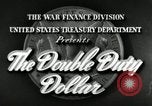
World War 2 film promoting public investment in War Bonds and stamps to aid the war effort and temper inflation
World War 2 era film that also includes some World War 1 scenes. Show girls or chorus girls in follies-like show, costumed as U.S. silver dollars and marching to tune and lyrics alluding to dramatic increase of currency in circulation, over the years. Animation with stacks of coins shows increase in national income from $46 billion,in 1933, to $71 billion, in 1939, and $142 billion in 1943. Back to the "follies dollars," a boy asks why, and then scenes of the Japanese attack on Pearl Harbor,are shown, with U.S. battleships being sunk. Wartime arms plants are shown. An M2A3 Light Tank rolls off a production line. Ships being constructed in a shipyard. B-24 Liberator bombers being built in a factory. Artillery shells being produced. Defense workers receiving their pay. The "follies dollars" group themselves to illustrate the fractions of income devoted to taxes and savings. But other spending is curtailed by wartime shortages. A woman talking with clerk in a drug store. U.S. Army troops crossing a pontoon bridge in open trucks, towing 75mm M1A1 howitzers. Infantry on the march. Animation showing industrial production devoted to war materiel and lots of dollars chasing few civilian goods. A grocery clerk offers to sell a woman customer butter for more than the established price, and she agrees. The "follies" performers then introduce the idea of an "inflationary dollar," and some history of past U.S. inflations. Animated examples of price inflation are shown. Glimpses of World War I scenes are seen, circa 1917 -1918, including: a 12-inch railway gun firing; a huge explosion from shell bursting near the camera; various scenes of United States infantry soldiers and French soldiers in battle action, running to bomb craters for cover and emerging from trenches to go up "over the top" into no-mans land during combat. Meanwhile, singing narration refers to the home front inflation due to competition for limited civilian goods. Map shows Europe and singing narration cites rising prices for food in occupied France and other countries suffering ravages of World War II. Montage of scenes showing needy civilians obtaining food in those countries. Animation shows increases, by 1944, in cost of U.S. civilian goods since the Pearl Harbor attack. "Follies" character called "Double-duty dollar," appears explaining he serves the war and curtails inflation on the home front by being saved through investments in War Bonds and stamps.
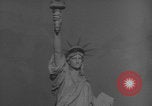
United States Army and Red Cross volunteers prepare Camp Kilmer in New Jersey for arrival of Hungarian refugees from the Hungarian Revolution
View of the Statue of Liberty. View of New York City and the Statue of Liberty. Sign saying “Camp Kilmer named in honor of Sgt. Joyce Kilmer Soldier Poet. Born December 6, 1886, New Brunswick, N.J. Killed in action World War I in France June 30, 1918”. A United States military jeep approaches the entrance of Camp Kilmer. Soldier at Camp Kilmer entrance allows Jeep to enter. Soldiers march and then sprint inside Camp Kilmer. Using crane attached to truck, soldiers unload crates containing furniture for incoming Hungarian refugees who will stay in Camp Kilmer. Soldiers carry mattresses into the barracks. Two soldiers carry a crate to a barrack. Soldiers carry a cabinet to the barracks. Inside the Camp Kilmer paint shop, soldiers prepare signs in Hungarian such as “Varás és asztalos munka (sic.)” (“Sewing and Carpentry”) and “fö üzlet” (“main shop”). Camp Kilmer dentists disinfect clinic. Camp Kilmer pharmacists prepare medicine for incoming refugees. An army pharmacist pour medicine into a bottle using a funnel. An army pharmacist grounds with using mortar and pestle. Pharmacists stack medicine such as aspirin in shelves. Army nurse making hospital bed with freshly laundered white bed sheets. Red cross volunteers filling comfort bags containing toiletries for refugees. Soldiers unload piles of second-hand clothes donated by Americans through the Red Cross. Red Cross volunteers organize second-hand clothes by type and size. African American woman Camp Kilmer staff enter the Recreation Center, with sign in English and Hungarian. African American staff at Camp Kilmer hang paintings and arrange furniture in the Recreation Center.
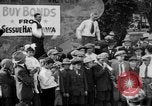
Hollywood movie stars Sessue Hayakawa and Mary Pickford promote Liberty bonds in Hollywood, California, on October 5 and September 29, 1918.
Clip includes scenes from two different events, one week apart. First scenes are from October 5, 1918. Large crowd gathered in Los Angeles California a stage with a mock tank in Central Park, during the Fourth Liberty Loan Drive in World War I. A banner reads "Buy bonds from Sessue Hayakawa" on a podium. Two little girls dressed in traditional Japanese attire kimono, seen on the podium. Japanese American movie star Sessue Hayakawa speaks through a megaphone to sell Liberty bonds during World War I. The next scene, from one week earlier on September 29, 1918, shows Hollywood actress Mary Pickford working the crowd and selling war bonds as she addresses the large gathering through a megaphone during the Fourth Liberty Loan campaign opening event in Los Angeles. Next Mary Pickford is seen seated on the stage. Shots of the crowd are seen. Next scene returns to the event on October 5, 1918. Sessue Hayakawa is speaking to the crowd, and the two Japanese girls on the stage are joined by another little girl, Hollywood child actor Mary Jane Irving. A man asks Mary Jane Irving to speak to the crowd, and she does. Sessue Hayakawa speaks again. Hollywood star Louise Fazenda stands in front a sales report board with a note pad writing down pledges. (Additional information from the Los Angeles Times, October 6, 1918: "Yesterday afternoon a big crowd turned out to greet Sessue Hayakawa and members of his company, including two bright little Japanese girls who shouted through megaphones, "Please buy a bond." Mary Jane Irving, an American sister in art, was on deck with the same message, which appealed mightily to the folks on the ground. Hayakawa made a stirring appeal for the sale of bonds. He said that although his color is different, and his features not the same as ours, he was 100 per cent American and then to prove it he bought $10,000 worth of bonds.")
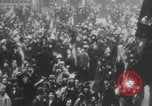
Crowds celebrating Armistice Day 11 November 1918, WW1
People worldwide celebrate Armistice Day on 11 November 1918, then end of WWI. Crowds cheerfully wave with their hats in the streets. Some British flags seen. A truck with soldiers and American flags slowly drives in the middle of a crowded road. People cheerfully wave USA flags and hats to celebrate the November 11, 1918 Armistice, which ended fighting on land, sea and air in World War I between the Allies and Germany, the last remaining Central Power opponent.
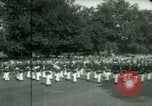
President Woodrow Wilson leads the Army Day parade of 1918 in Washington DC.
President Woodrow Wilson leads the Army Day parade of 1918 in Washington DC. Troops march on the streets of Washington DC. A military band leads the troops. A large crowd on the side lines gathered to view the event. The President, in a top hat, accompanies officials in the parade along Pennsylvania Avenue. They are seen walking past the "New Capital Hotel," at 3rd & Pennsylvania Avenue.. Military officers in parade. The parade passes shopping areas and buildings. Men wearing white hats. A ceremony during the parade. Officers on horses. Troops in carriages. Banner reads: 'Ready for Duty' . Decorated float on a carriage. Officers march. Sailors hold banner that reads: 'Navy'. (World War I; World War 1; WWI; WW1)
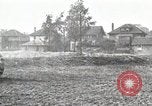
United States military officials test Ford 3-ton M1918 tanks built by Ford Motor on an open field in Michigan.
Testing of 3-ton M1918 tanks built by Ford run an obstacle course lay out on an open field behind residential area. Military and civilian officials observe as tanks cross gullies and climb earth banks. One of the tanks overturns in gully and another one fails to scale a mound of mud. Military officials gather to observe the overturned tank. (World War i; World War 1; WWI; WW1)
CRITICALPAST.COM: About Us | Contact Us | FAQs - How to Order | License Agreement | My Account | My Lightboxes | Shopping Cart | Advanced Search | Featured Collections | Website Terms & Conditions | Privacy Policy ©2026 CriticalPast LLC.
License Agreement |
Terms & Conditions |
Privacy Policy
©2026 CriticalPast LLC.