


 Francais
 Deutsch
 Italiano

Refine Your Search
Romorantin France 1918 stock footage and images
- Showing 4663 to 4668 of 6011 results more
 Hide
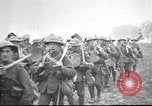
British Royal Engineers work on on the Western Front. German prisoners. Cavalry headed toward the front
British Royal Engineers troops march to a project site, carrying picks and shovels. Next, they are seen digging a straight ditch following a course laid out by taut string. Sections of pipe are laid on the ground next to them. A large Army truck and an ambulance with red cross markings is seen near a large group of the soldiers. At least one injured is being carried shoulder-high by litter bearers. Several officers appear to be checking plans for the project. As the soldiers mill about, they look up towards the sky, as if noting airplanes above (unseen). The troops continue work on the project, which now appears to involve setting up fortifications. One soldier leaves walking a bicycle. Another view shows the area to be quite rocky, and a large pile of rocks has been used as part of the fortifications. Several ambulatory wounded German prisoners are seen walking toward the rear, as they are passed by a contingent of mounted cavalry headed toward the front (World War I; World War 1; WWI; WW1)
Allied French and American soldiers dance and celebrate armistice as Germany surrenders at the end of World War I.
American and French soldiers return to camp after armistice brings end to fighting in World War I. Soldiers return to camps from the battle field. Soldiers gather and cheer. American and French forces hug and shake hands at the end of the war. U.S. Army troops exchange caps with the French soldiers. Soldiers hold each other in celebration. Soldiers smile and dance together. Soldiers play music and dance at the celebration.
Activities at a French airbase during World War I. DH-4 and Spad XIII aircraft.
Camera pans along a road and railroad, show a truck convoy moving on the road past camouflaged barracks and hangars of a French airbase in World War 1. De Havilland DH-4s and other aircraft are parked on the field. An American and a French officer walk together across the field. Mechanics and helpers work to restrain a Spad XIII moving with engine running. Several of them hold it back by pulling on wing struts. Finally the pilot (or mechanic) in the cockpit stops the plane, and several other men catch up with it.
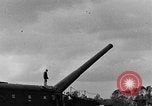
The barrel of a railroad gun is lowered during World War I.
U.S. soldier stands on top of a railroad car as another on a platform operates controls to lower the barrel of a 14 inch railway gun.
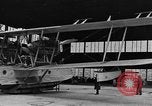
U.S. Seaplanes in operation during World War I
U.S.Seaplane operations during World War 1. Curtiss F-5L seaplane being moved out of a hangar. Several Curtiss HS-2L seaplanes being launched from the shore by teams of sailors who use long lines to retrieve rolling dollies after the seaplanes float. Crew starts engines on a flying boat which then taxis out in the water. The seaplane has three propellers (one a pusher) and a triple box tail (similar to later Curtiss NC series seaplanes). View from above of the flying boat in flight with gunner visible in front cockpit. View from below of a Curtiss HS-2L seaplane dropping a bomb. (World War I; World War 1; WWI; WW1)
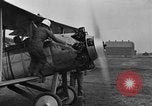
Radial engine is started on Biplane. De Havilland DH-4 maneuvers in air
A Biplane with radial engine and cowling that exposes part of the cylinders. Propeller has partial spinner on it. (Niewport airplane?) Man starts the engine with exterior crank. A person already seated in cockpit. Front view of airplane with engine running. Change of scene shows a De Havilland DH-4 maneuvering in the air. (World War I; World War 1; WWI; WW1)
CRITICALPAST.COM: About Us | Contact Us | FAQs - How to Order | License Agreement | My Account | My Lightboxes | Shopping Cart | Advanced Search | Featured Collections | Website Terms & Conditions | Privacy Policy ©2026 CriticalPast LLC.
License Agreement |
Terms & Conditions |
Privacy Policy
©2026 CriticalPast LLC.