


 Francais
 Deutsch
 Italiano
Refine Your Search
Romorantin France 1918 stock footage and images
- Showing 5215 to 5220 of 6011 results more
more Hide
Hide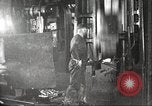
Rifle bars, stocks and trigger guards being manufactured at a factory in the United States.
Manufacture of ordnance material in the United States during World War 1. Rifle bars, stocks and trigger guards are made. Workers work on machinery inside the factory. Trigger guards being made on machinery. Gun barrels placed on machinery. Workers look through a periscope.
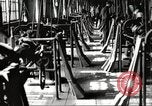
Parts of the Browning machine guns are cut, trimmed, filed and assembled at a factory in the United States.
Manufacture of machine guns in the United States as part of the World War 1 effort. Rifle bars, stocks and trigger guards are made. Number of unfinished rifles placed next to a machinery. Bayonets and browning machine gun barrels being forged. Parts of the Browning gun are cut, trimmed, filed and assembled.
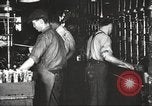
Workers at machinery manufacture rifles in a factory in the United States during World War 1.
Manufacture of rifles in the United States for World War 1. Rifle bars, stocks and trigger guards are made. Bayonets and browning machine gun barrels are forged. Parts of the browning gun are cut, trimmed, filed and assembled. Workers inside the factory as they work on machinery.
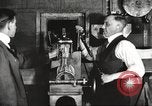
Workers fire at targets to check the accuracy at a rifle manufactured in a factory in the United States during World War 1
Manufacture and testing of guns in the United States during World War 1. Rifle bars, stocks and trigger guards being made. Workers place rifle on a stand in the factory. Group of people look through periscope of the rifle for its accuracy. They fire from a window at targets placed outside on the ground, to test the rifles.
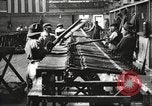
Manufacturing of U.S. Army rifles in an American war plant during World War I
Manufacturing of Army rifles in the United States during World War 1. Workers at a small arms plant in the U.S. examine wooden rifle stocks during World War 1. Men wheeling numerous dollies of rifle stocks to another part of the factory. Fully assembled rifles (appear to be either 1914 or M1917),loaded on a tray are lowered by African American workers using a manual pulley hoist to place them into a bath of hot cosmoline grease (for preservation). Then they are raised and moved to above a draining table, where they are removed and placed on a dolly. Men clean up the drippings. Next scene shows an African American worker placing the new rifles in wooden boxes for shipment. Closeup of an open wooden box of rifles ready for closing and shipping. Workers stacking 10 wooden shipping boxes of rifles in a hand dolly and moving it to shipping dock.
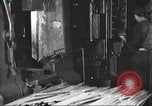
Men work at machinery in a rifle manufacturing factory in the United States during World War 1.
Manufacturing of rifles in the United States during World War 1. Workers at machinery in a rifle manufacturing factory. They place parts of rifles on various equipment.
CRITICALPAST.COM: About Us | Contact Us | FAQs - How to Order | License Agreement | My Account | My Lightboxes | Shopping Cart | Advanced Search | Featured Collections | Website Terms & Conditions | Privacy Policy ©2026 CriticalPast LLC.
License Agreement |
Terms & Conditions |
Privacy Policy
©2026 CriticalPast LLC.