


 Francais
 Deutsch
 Italiano
Refine Your Search
Rouen Normandy France 1944 stock footage and images
- Showing 631 to 636 of 9958 results more
more Hide
Hide
A number of casualties in the year 1944 during World War 2
A large number of casualties as a result of World War II. War continues with artillery fired in Belgium, a ship underway in Atlantic, a wounded in Pacific Theater and a graveyard.
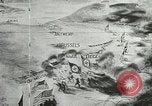
The Battle of the Bulge in Ardennes, Belgium, 1944 (WW2)
Animated map showing disposition of Allied and opposing German forces in Belgium during World War II. Highlighted places include the River Meuse, Bastogne, and Liege. Brief glimpse of German Field Marshal Gerd von Rundstedt, commander of the German Army Command in the West. German troops riding through forest over light snow on a King Tiger II tank. The tank churning up dirt and snow at high speed in another scene. German infantry moving through the forest at dusk. Illustrated map shows national flags delineating battle fronts and the German breakout (Bulge in the line) aiming toward Antwerp Harbor through Liege. Next are series of rapidly changing battle scenes showing American troops in house-to-house combat near houses and stores of towns, moving through smoke and mist, one throwing a hand grenade into an apartment building, helping one another move through buildings, setting off explosives, communicating on a field telephone, moving through burning rubble, and running across snow around industrial buildings. Dramatic camera shakes are seen during some of the nearby explosions. Two U.S. soldiers silhouetted against the snow as place a wounded buddy in a sheltered spot. One places a bandage around the neck of the injured soldier. American medics carrying wounded on litters, across a snowy field containing a several fallen soldiers. One soldier calls for a medic. Corpsmen moving on to a new battlefield. U.S. troops firing machine guns from atop Sherman tanks in a city as infantrymen crouch behind the tanks. Glimpse from inside, of a German soldier firing an Mg34 model machine gun out a building window. Embattled American troops and trucks moving past burning buildings. Closeups of American GIs dashing from building to building and firing from improvised shelter. A bazooka fired out a building window strikes a tank, which is seen burning. Individual soldiers running for shelter as Medical Corpsmen carry the wounded on litter the opposite way. Scene shifts to British forces moving in from further North, through the snow. Glimpse of women and children and aged folks, in Belgium, frightened by the goings on. An old woman holds a small girl who is crying. British infantry advancing into action across a snowy field. A British machine gunner firing from a protected position. U.S. troops entrenched in deep snow. December 24th, clearing weather allowed some Allied air support to aid the troops. Glimpse of aircraft contrails. Formations of Allied aircraft overhead. Aerial view of a formation of British Hawker Typhoon fighter bombers in flight. View from a Boeing B-17 Flying Fortress in flight with others creating thick contrails at high altitude. Pilot and copilot in cockpit of a bomber in flight. American soldiers on the ground watching with binoculars. U.S. Army Air Forces Republic P-47 Thunderbolt overhead, break out of formation and dive to attack German ground targets. American GIs on the ground cheer as they watch. A huge explosion takes place near an American crew manning a heavy gun pointing point blank with zero elevation. American soldiers load rockets into a truck-mounted launcher. Several truck-mounted launchers firing their rocket barrages. U.S. infantry advancing atop tanks, in armored personnel carriers, and on foot. They carry axes, shovels, and similar tools along with their weapons. Army trucks entering a town. The infantry moving through a forest. More troops on vehicles of all kinds moving into a town.
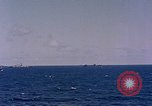
U.S. Navy fleet fueling support for Task Force 58 in Operation Forager, June-Nov. 1944, in World War 2
Viewed in the distance, on the horizon, USS Minneapolis, CA-36, with the USS North Carolina, BB-55 in the background, tankers maneuver to fuel the fleet. A battleship and light carrier on the horizon, another battleship being fueled. The aircraft carrier USS Lexington, CV-16, being fueled. The fleet oiler USS Guadalupe, AO-32, fuels the destroyer USS Maury (DD-401) and an unknown warship.
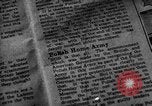
Warsaw bombed by Germans in retaliation to 1944 uprising, various scenes of Warsaw before WW2
Newspapers around the world reporting on the bombing of Warsaw by Nazi Germany as retaliation for the Warsaw Uprising during World War 2. Newspaper headlines read, "Poles Fighting Inside Warsaw," and "Warsaw Being Razed by Hitler's Order," and "Warsaw's Plight" and "Warsaw Poles Fight Tanks in Streets." Scenes of Warsaw in flames as buildings are being bombed by German forces. Montage depicting Warsaw on fire. Scenes of Warsaw before WWII, including scenes such as the Warsaw Old Town Market Square (rynek Starego Miasta, 00-279 Warszawa, Poland), the column of Sigismund III Vasa (plac Zamkowy, 00-001 Warszawa, Poland), the Royal Palace (plac Zamkowy 4, 00-277 Warszawa, Poland) and the Lazienki Park, before World War 2. Statue of King Jan III Sobieski in Lazienki Park. Men strolling near a palace. Baroque gates in park.

Newly naturalized Americans recite the Pledge of Allegiance during the 1944 “I Am An American Day” (WWII)
More than a million people attend the “I Am An American Day” citizenship ceremony in Central Park in New York City, during World War 2. Over 150,000 people attended the ceremony as newly naturalized American citizens. Native American Indians in traditional dress and women and men in military uniform attend the ceremony. Flags of various nations are flown. Wounded Army soldiers and wounded Navy sailors arrive as guests of honor. New York City Mayor Fiorello LaGuardia shakes hands with servicemen, giving tribute to their heroism during World War II. Immigrants stand up to recite the Pledge of Allegiance to the United States of America as part of the naturalization ceremony. Speaker recites the Pledge of Allegiance, which predates the inclusion of "under God" which was added later in the 1950s.
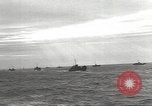
Allied naval ships bombard coast of Normandy during D-Day invasion in World War II.
Recap ot the Allied invasion at Normandy, in World War II. Convoy reaches Normandy on D-Day. Allied fleet heads for Normandy beach. Blinker signals being given from ships. Naval ships start to fire broadsides and bombard coasts. Allied troops board landing crafts alongside ships. U.S. P-51 fighters and B-26s strafe flak towers, railroads, and canals in Normandy. Troops offload onto assault boats and landing craft. Rockets being fired from ships toward coastal positions of the enemy. Bombs being dropped over ground targets from Allied bombers. Smoke billows up from bomb explosions. Naval guns bombard a coast. From edited film produced in 1947.
CRITICALPAST.COM: About Us | Contact Us | FAQs - How to Order | License Agreement | My Account | My Lightboxes | Shopping Cart | Advanced Search | Featured Collections | Website Terms & Conditions | Privacy Policy ©2026 CriticalPast LLC.
License Agreement |
Terms & Conditions |
Privacy Policy
©2026 CriticalPast LLC.