


 Francais
 Deutsch
 Italiano
Refine Your Search
Rouen Normandy France 1944 stock footage and images
- Showing 1243 to 1248 of 9958 results more
more Hide
Hide
U.S. task force underway for Peleliu (Palau) Invasion during World War II.
Opening slate reads LST 554, and date 8-13. Views of U.S. invasion task force vessels underway toward Peleliu Island (Palau), during World War 2. A 110 foot wooden Subchaser, number SC 633 is seen close, to starboard of camera boat (LST-554) and refueling lines are stretched between the LST and the Subchaser. Ensign Maynard K. Ross of Philadelphia, PA, directs the take-up of slack in the refueling lines while a Navy Commander on the LST bridge oversees the operation. (Note: SC 633 ended up running aground during the invasion.) Break in sequence and scene shifts to glimpse of slate reading August 20, 1944, and then view aft on LST 554. On the bridge, 21-year-old Ensign Charles Kahler, of Schenectady New York, uses a sextant to shoot sun lines. Another officer is seen taking relative bearings with a pelorus. Sailors are resting on deck. A series of splashes are created in the water by gunners testing their weapons. LST 557 is cruising to starboard. Puffs of black FLAK smoke appear overhead as antiaircraft weapons are tested.
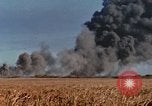
Accidental fire destroys LSTs at Pearl Harbor, Hawaii during World War II.
An accident at the West Loch ammo pier in Pearl Harbor destroyed six LSTs on May 21, 1944, during World War 2. Immense smoke arises from the burning ships. Men file on muddy roads. A pile of shrapnel on the ground. A partly sunk Landing Ship Tank (LST) burning in the water and a DUKW sails out of its bow doors. Two LSTs burning fiercely give outdoor immense clouds of smoke. A fireboat approaches and sprays water on them. Sailors rush to put out fire at the harbor.
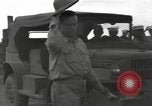
Bob Hope and his USO Troupe visit a U.S. Navy base on Mios Woendi island, Schouten Islands, Papua New Guinea, during World War II.
Bob Hope and members of his USO troupe ride on a PT boat during visit to entertain U.S. Navy personnel during World War 2. In opening scene, Bob Hope doffs his pith helmet as he strolls past the camera to climb aboard a PT boat (PT-331) of U.S. Navy Motor Torpedo Boat Squadron 21, where several naval officers greet him. Members of Hope's USO troupe, Patty Thomas, and Francis Langford, step from jeeps to board the PT boat. Next, the two are seen in the cockpit of the boat next to its captain, Lieutenant Kermit W. Montz, USNR, as the boat speeds along in the water. Among sailors occasionally glimpsed behind them is Radioman 1st Class bill Thielen. In change of scene, Bob Hope climbs out a hatch, holding onto his pith helmet to keep it from blowing off. The boat's number, 331 is clearly displayed on superstructure behind him. Various Navy sailors on deck. (Note: Squadron 21 received a Presidential Unit Citation for outstanding performance during the Huon Peninsula Campaign against Japanese forces from October 1943 to March 1944.)

Governor Dewey being elected as the Presidential candidate at Republican party convention in Chicago, Illinois.
Republican national convention of 1944 in Chicago, Illinois. A banner in support of Governor Bricker of Ohio as a Republican Vice Presidential candidate. Pictures of Governor Thomas Dewey for the Presidential nomination. Representative Joseph Martin, Chairman of the Convention. Statesmen eat and discuss around a table before the convention. Wendell Willkie at desk. Cars outside the convention hall as people arrive. Delegates from various states across United States arrive at the convention. Newsmen at typewriters as they send out news about the convention. Cameramen record the proceedings at the convention. National Chairman Harrison E. Spangler opens the convention and invites Governor Earl Warren of California for delivering a keynote. Governor Thomas E. Dewey of New York at desk as he is elected as the Republican Presidential candidate.
President Roosevelt signs the Servicemen's Readjustment Act as a center serves war veterans to return to a civilian lifestyle (WW2)
United States President Franklin D. Roosevelt signs the Servicemen's Readjustment Act of 1944 at the White House in Washington D.C. during World War II. President Roosevelt at desk as he signs the Servicemen's Readjustment Act. Officials stand in the background. President being greeted by the officials after he signs the bill. The act ensures free education, federal loans, job insurance for war veterans and soldiers. American soldiers enter a center helping the soldiers to adjust to civilian lifestyle. Soldiers getting a massage, read books in a library, draw sketches and work at a farm.

Re-enactment of British forces occupying the town of Monte Cassino, Italy, in World War II
Montage of scenes recorded after the Battle of Monte Cassino in World War 2. Opening scene shows New Zealand 19th RHQ tank in Mignano Montelungo, as the 24th New Zealand Battalion re-enacts its entry into the ruins of Monte Cassino, on March 26, 1944. In this restaging, 24th Battalion infantrymen are shown moving through rubble of destroyed town, firing small arms and one throwing a hand grenade. Narrator identifies "Hangman's Hill," (which was held by the 1st battalion 9th Gurkha Rifles) at Monte Cassino. In this restaging , New Zealanders, scramble over rubble, and dig out a "wounded" comrade, while explosions occur in background. Medics "attend" to him. Other NZ troops fire small arms from behind rubble barriers. A huge explosion occurs in background. A British artillery piece (obscured by debris) fires rounds. Infantrymen fire small arms. A camouflaged British tank fires its gun. In change of scene, other British troops advance cautiously near a damaged building and take several German soldiers prisoner. View of the destroyed Monte Cassino monastery and castle on Castle Heights. Ruins of building adjacent to the "Hotel Excelsior,"below the castle. Several medics with Red Cross flag in distant rubble. Views from destroyed Monastery atop the mountain. (World War II; WW II; World War 2; World War Two)
CRITICALPAST.COM: About Us | Contact Us | FAQs - How to Order | License Agreement | My Account | My Lightboxes | Shopping Cart | Advanced Search | Featured Collections | Website Terms & Conditions | Privacy Policy ©2026 CriticalPast LLC.
License Agreement |
Terms & Conditions |
Privacy Policy
©2026 CriticalPast LLC.