


 Francais
 Deutsch
 Italiano
Refine Your Search
Rouen Normandy France 1944 stock footage and images
- Showing 5053 to 5058 of 9989 results more
more Hide
Hide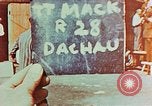
Freed prisoners with Allied flags, banners and poster at the Concentration Camp in Dachau, Germany.
The Concentration Camp in Dachau, Germany. Liberated prisoners stand in a group. They hold flags of America, Great Britain, France, Russia and other allied flags. Freed prisoners with posters and banners in their hands. Freed prisoners with flags stand in a squad. Freed prisoners on stairs and roof stand and talk. (World War II period).
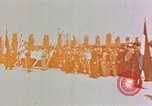
Dignitaries, civilians during a ceremony and prisoners hold flags and banners in Dachau, Germany.
Liberated prisoners during a ceremony at Dachau Concentration Camp in Germany. Freed prisoners, dignitaries and civilians during the ceremony. Prisoners hold flags, banners and a sketch of a dignitary. Women hold flags of their own countries. Prisoner sits on the roof of a house. American officer on stage holds the American flag. Prisoners stand with flags of America, Germany, France, Great Britain, Russia and other allied flags. Civilians, dignitaries and prisoners stand at the back. Prisoners standing and sitting on the roof watch the ceremony. An American officer on a stage holds flag of America. (World War II period).
French Air Force in World War I. Germany Army occupies Paris in World War II
Opening scene shows French Nieuport biplanes in aerial combat with German airplanes in World War 1. Many are engaged in a massive dogfight. One aircraft is seen hit and falling toward the ground. Next, two French aircraft are seen returning to their base. They fly over a hangar where a crashed airplane sits with tail in the air. Near the hanger are several airplanes in various stages of maintenance. Mechanics are moving one. An airplane taxis in front of the hangar. Scene shifts to closeup of a Lafayette Escadrille Indian logo painted on a metal structure. Scene shifts to a formal award ceremony for some pilots and crews. Their squadron members are lined up behind them in front of a line of aircraft. The view is from behind a formation of French soldiers with rifles, rendering salutes. Next, French soldiers parade on the airdrome, led by a military band. At this point the scene phases out as a fireball is superimposed on a map of Europe, signifying World War 2. Adolf Hitler is seen in closeup near the Eiffel Tower, when he visits Paris, France following its occupation by German forces in 1940. Several views of German troops marching along the Avenue des Champs-Élysées and through the Arc de Triomphe. Closeups of some German soldiers in the ranks. Scene shifts to North Africa, in 1942, as American troops make an unopposed amphibious landing on the coast, in Operation Torch. Several landing craft are seen and troops ashore. A Dodge 3/4 ton WC-51 army truck, with half of its hood open, makes its way through the surf as it leaves a landing craft.
America enters World War I against Germany
A ship blows up at sea (presumably torpedoed by a German submarine). Newspaper of April 2, 1917 announces the United States and Germany at War. U.S. Secretary of War, Newton D. Baker, speaking on a public platform, outdoors.. General John J. Pershing, Commander of American Expeditionary Forces in World War 1, is seen seated behind Secretary Newton. Scene shifts to U.S. President Woodrow Wilson signing papers his his desk at the White House, Washington, DC. Next, Red Cross women are seen serving coffee into the mess of American soldiers about to embark for Europe. Another Red Cross woman carries a basket of baked goods. The soldiers are checked off by officers at the pier, and then embark on a troop ship. View of the troop ship in camouflage paint, moving away from the pier Scene shifts to glimpse of a town in France, where an American officer and some soldiers are seen walking past French inhabitants on a street corner Other American soldiers stand near a large canvas covered army truck. They salute as the American officer passes them.
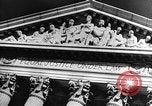
The Nuremberg Trials of Major War Criminals conducted by the International Tribunal in Germany (WW2)
The Nuremberg Trials of Major War Criminals in Germany after World War II. The three trials conducted by the International Tribunal includes National Traitor Trial, Local Minor Trial and U.S. Military Trial. Officials march on the streets. People at either side of the street. Officials at a desk speak about the Master plan of World Domination. To help the prosecution U.S. President Harry S. Truman appoints Chief of Council Robert H. Jackson. United States Attorney General assisted by William Joseph Donovan and his staff to support America's outstanding legal talent who will join with Great Britain, France and Soviet Union. Officials at a desk. Prisoners and guards seen. Various officials of the United Nations at a desk. They speak about peaceful relations, harmony and the crime of war. A graveyard seen.
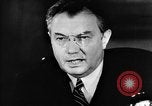
An acceptance speech by Robert H. Jackson and signing of the International Military Tribunal Charter in Germany (WW2)
Robert H. Jackson and the International Military Tribunal Charter in Germany. Robert H. Jackson, United States Attorney General and the U.S. prosecutor in the Nuremberg Trials gives a speech accepting his appointment. The Chief of Council, Great Britain, France and United States sign the International Military Tribunal Charter establishing the laws of crime against war, war crime and crime against humanity committed in World War II. Names of the indicted Major War Criminals at the Nuremberg prison.
CRITICALPAST.COM: About Us | Contact Us | FAQs - How to Order | License Agreement | My Account | My Lightboxes | Shopping Cart | Advanced Search | Featured Collections | Website Terms & Conditions | Privacy Policy ©2026 CriticalPast LLC.
License Agreement |
Terms & Conditions |
Privacy Policy
©2026 CriticalPast LLC.