


 Francais
 Deutsch
 Italiano
Refine Your Search
Russia 1953 stock footage and images
- Showing 751 to 756 of 1877 results more
more Hide
Hide
City views of San Francisco; United Nations Conference on International Organization held in San Francisco, California (WW2)
A documentary on The United Nations Conference on International Organization that continued from April 25, 1945 to June 26, 1945 in San Francisco. A plane in flight and ships are seen in San Francisco Bay. 1940s San Francisco city views: Aerial views of Golden Gate Bridge. People on streets on San Francisco, with streetcars, buildings, pedestrians, and mid 1940's cars seen. Aircraft parked at a USAF Base as delegates from 50 countries arrive. Delegates like Jan Christian Smuts from South Africa, Vyacheslav Molotov from Russia, U.S. secretary of State Edward Stettinius arrive in San Francisco. Delegates register for the conference. United States flag on a building. Interior of the War Memorial Opera House serving as the initial meeting hall. Delegates seated. U.S. President Harry S. Truman addressing the general assembly remotely, as delegates listen through radio speakers in the opera house. Narrator recalls words of Franklin Roosevelt and recorded audio of Roosevelt is heard where he urges continuation of the work first begun by the defunct League of Nations. View of various working committees and smaller groups of the organization meeting during the Spring of 1945. Representatives debate and review concepts initiated at the Dumbarton Oaks conference in Washington DC in 1944 during World War II. Delegates addressing those assembled and signing documents that create the United Nations.

UN Charter signed in San Francisco Conference; President Harry S. Truman addressing General Assembly; Franklin Roosevelt speech about peace
Delegates arrive in San Francisco for United Nations Conference for World Organization in San Francisco, California. U.S. President Truman arrives by airplane at the conference and is met by representatives from U.S. delegation including Stettinius. Delegates from other countries are also present and greet the President including Jan Smuts of South Africa and William Lloyd Mackenzie King of Canada. Views of presidential motorcade traveling through streets of San Francisco in a parade-like environment, with crowds lining the sidewalks and cheering. Delegates sign the United Nations Charter during the conference. First to sign is Dr. Wellington Koo from China, signing with a traditional Chinese brush. Also shown signing is Gromyko from the Soviet Union, Lord Halifax from Great Britain, and the delegation from France led by acting delegation chairman Joseph Paul-Boncour. Next is Edward Stettinius and Senator Tom Connally, Senator Arthur Vandenberg, Commander Harold Stassen, from the United States. U.S. President Harry S. Truman addresses the general assembly. Representatives of different nations like Lord Halifax of Great Britain, Mackenzie King of Canada, Jan Christian Smuts of South Africa, Andrei Gromyko of Russia and Pandit Jawahar Lal Nehru of India can be seen. Flashback to President Franklin D Roosevelt, shortly before his death, addressing Congress about the coming San Francisco Conference. Roosevelt speaks, expressing his hope that Congress and the American People would "accept the results of this conference as the beginning of a permanent structure of peace, upon which we can begin to build, under God, that better world in which our children and grandchildren -- yours and mine - children and grandchildren of the whole world -- must live and can live."
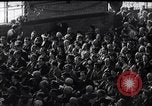
Churchill expresses admiration for the Russian people while addressing people at the Westminster College in Fulton, Missouri.
Winston Churchill, the Prime Minister of United Kingdom, addresses people at the Westminster College in Fulton, Missouri. President Harry S. Truman and other dignitaries sit behind him on the stage. He expresses admiration for the Russian people and welcomes Russia to her rightful place among the leading nations of the world.
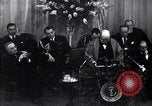
Churchill addresses people at the Westminster College in Fulton, Missouri and talks about the situation in Europe.
Prime Minister of United Kingdom Winston Churchill delivers a speech at the Westminster College in Fulton, Missouri (501 Westminster Ave, Fulton, MO 65251, United States). US President Harry S. Truman and other officials sit behind him on the stage. Churchill talks about the need to develop understanding with Russia and the situation in Europe. This is an excerpt from his speech entitled “The Sinews of Peace” (popularly known as the ‘Iron Curtain Speech’) and contains that reference. Churchill said “From Stettin in the Baltic to Trieste in the Adriatic, an iron curtain has descended across the Continent. Behind that line lie all the capitals of the ancient states of Central and Eastern Europe. Warsaw, Berlin, Prague, Vienna, Budapest, Belgrade, Bucharest and Sofia, all these famous cities and the populations around them lie in what I must call the Soviet sphere, and all are subject in one form or another, not only to Soviet influence but to a very high and, in many cases, increasing measure of control from Moscow.”
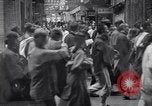
Fighting in China as Japan tries to conquer China during World War II.
Japanese aggression in China during the Second Sino-Japanese War and World War II. People in the streets of China. Animated pictures show one Chinese out of every 5 people in the world. A page showing Chinese writing. A mariners' compass. A Chinese man at an observatory. A porcelain cutlery set on a table. A Chinese man places porcelain into a furnace. A man puts gun powder in a bowl from a mortar. Explosion in the bowl. Firecrackers burst. Chinese people celebrating a festival. A book titled 'Analects of Confucius'. A saying of Confucius reads “What you do not want done to yourself, do not do to others”. Statues and pagodas in China. Scenes of fighting. Japanese artillery fires and cavalry advances. U.S. flag flutters beside the Chines flag. Chinese troops on horses. Animated map of China. A book titled 'The Tanaka Memorial Japan's dream of World Empire'. Japanese Foreign Minister Baron Nishi Tanaka. Excerpted line of the book. Japanese military officers. An animated map of Asia showing regions which Japan wanted to conquer. Animated map shows Germany and Russia. Animated map showing Japan and China contrasts Japanese unity with Chinese disunity. Animated map shows China breaking into pieces. A scene of the Japanese Army.
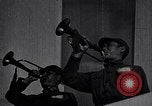
Chinese youth join the Army as Japan advances further in land and isolates China; Colonel Chennault and Flying Tigers.
Japanese invasion of China. Chinese soldiers blow the trumpet. Young men march in a field. Young men register in the Army. Millions of young people answer the call to fight for China. Volunteers from south, north, east and west China to form the people's army. Men and women with their children leave to join the forces. Drumming sound. New recruits train and perform a drill to drum beats. Soldiers practice martial arts, rifle handling, and shooting. Others train to care for the sick and wounded. Women soldiers in uniform. They learn to fire a gun. Pilots crowd around an officer. Planes in the background. Men from other countries prepare to fight for China. U.S. Colonel Claire Chennault of the American Volunteer Group Flying Tigers, talks to his men. The Curtiss P-40 Warhawks with the shark face emblems take off. Chinese soldiers march. Japan: Japanese officials in a meeting. Japanese troops penetrate China along the rivers. They rebuild destroyed rail roads using slave labor. A map depicts the Japanese strategy of cutting off Chinese supply lines. Japanese warships blockade the coast with the aim to isolate China. Japanese occupied ports in China. Japanese warships and boats in a Chinese port. Gas plants, gun factories and planes. Indochina map: The narrow gauge railway from sea to Kunming and a truck road to Chungking. The camel trail from Russia across the Gobi Desert. The railroad from Rangoon to Lashio in Burma. (World War II period).