


 Francais
 Deutsch
 Italiano
Refine Your Search
Russia 1953 stock footage and images
- Showing 805 to 810 of 1877 results more
more Hide
Hide
Syngman Rhee, General Hodge, General Shitkov, and other officials meet at Duck Soo Kong in Seoul, after World War II.
Early North Korean Propaganda film depicts post-World War 2 events in Korea. including the partition of North and South at the 38th parallel. Korean village and country side.Seagulls fly at seaside. Duck Soo Kong building in Nam Dai Moon in Seoul. Officers stand around a table as General Hodge ( United States), General Shitkov (Russia), Syngman Rhee of South Korea meet. Rhee addresses the meeting, Koreans enter YMCA building in Seoul. Shows Japanese flag and states that Syngman Rhee has traded one Imperial overlord for United States. Animated map of Korea shows division at 38th parallel and depicts Southern part being covered by the entangling web of American interference. Len Han Sa building in Seoul and the city as a whole. South Korean police depicted treating a man badly and taking his food away to highlight Syngman Rhee's strongman tactics.
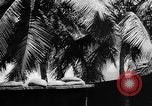
Protective measures taken by Americans in Hawaii, after the Japanese attack on Pearl Harbor.
Aftermath of Pearl Harbor attack. People in Oahu, Hawaii, prepare to deal with more air attacks by Japanese. Armed U.S. soldier in sandbagged position, in Hawaii. The territorial governor of Hawaii, Joseph Poindexter, signing a declaration of Martial Law. Four thousand members of Oahu's Civil Defense Committee, dressed in dark bottoms and white tops, wearing steel helmets with "W" on them, standing at attention in formation on grounds of a stadium. Windows in all downtown shops taped to prevent flying glass. Sand bags surrounding a power substation. Huge quantities of barbed wire in a storage yard and strung along the beaches, along highways, around schools, and public buildings of Oahu. A man pushing a lawn mower between sandbagged defense positions in a residential neighborhood. Construction machinery digging defensive trenches. Bomb shelters being constructed of precast concrete. Air raid sirens installed and school children leaving their building and sheltering in deep trenches during a test. Very small children taking shelter in zig-zag trenches and donning gas masks. Huge assemblies of children, and of grownups, all donning gas masks. Little children being dressed in capsule-like "bunny mask" protective gear.One of them crying inside the covering. Crowds of women and children lined up on a veranda waiting to receive these "bunny masks." Military personnel, civilians, and school children, all carrying personal gas masks with them at all times. Innumerable old rubber tires saved in an open yard. Japanese-Americans donating blood to the American Red Cross and lined up to buy war bonds. Soldiers arresting a Japanese resident known to be an enemy agent. Boarded up shops of Japanese-Americans, who had been interned. Japanese-Americans removing all Japanese language signs from their areas. Language school buildings with closed signs. An empty and boarded-up Shinto temple. One Japanese-American replacing his cafe sign with one reading: "Keep 'Em Flying Cafe." U.S. Army troops posted on roadways. The Aloha Tower in camouflage paint. A Lurline steamship leaving port, and being replaced by warships. Prewar view of people enjoying Waikakee beach, and current view of two boys playing in sand near barbed wire barriers. City streets deserted at twilight, as blackout procedures take effect at dusk. Views of darkened homes and palm trees silhouetted against sky at dusk. The "ghost" of a sailor killed in World War II, stands in front of Arlington cemetery, Washington, DC, and converses with the ghost of a soldier killed in World War I. They discuss idealistic notions about ending wars for good. Displays of flags is seen, including: Australia; Belgium; Brazil; Canada; China; Costa Rica; Cuba; Czechoslovakia; Dominican Republic; England; Ethopia; Greece; Guatemala; Haiti; Honduras; India; Yugoslavia; Luxembourg; Mexico; The Netherlands; New Zealand; Nicaragua; Norway; Panama; The Philippines; Poland; Russia; El Salvador; South Africa; and the U.S.A. "V" created in the sky by a skywriting airplane.
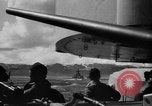
German Kriegsmarine warships operating from Norway during World War II
Several German warships, from Norway, moving through protected waters near shoreline, en route to interdict Allied shipping destined for Murmansk, Russia, during World War 2. A destroyer in camouflage paint passes by the camera ship. Flight crew in Arado 196 float plane and view of it airborne after catapulting from warship. Bow wave view of destroyers at high speed. Port silhouette view of the Bismarck-class battleship, Tirpitz, in camouflage paint. A German Cruiser in camouflage. A land-based Junkers Ju-88 bomber flying low over the water.
Roman Rudenko presents counts against convicted Nazi criminals during Nuremberg Trials; flashback scenes during war.
Portion of the Nuremberg Trials held at the Palace of Justice in Nuremberg, Germany. Flashback scenes to a variety of Nazi crimes against humanity during World War II. Chief prosecutor from Russia, Roman A Rudenko, presents Counts 3 and 4 against the convicted Nazi criminals; charging commitment of war crimes in Germany and countries which Germany occupied; including abuse, starvation, and execution of prisoners of war. Faces of convicts in the courtroom are shown, including Hermann Goering, Rudolf Hess (or Heß), Joachim von Ribbentrop, Wilhelm Keitel, Karl Donitz, Erich Raeder, Baldur von Schirach and Fritz Sauckel. Flashback scenes shows German soldiers serving on screening teams, searching and separating eastern front prisoners of war. Group of Russian soldier prisoners being force run marched, following behind a German tank beside a prison camp. Aerial view through German bomber window of large numbers of Russian soldier prisoners assembled. Ground level views of overcrowded prison grounds filled with prisoners. German General Erwin von Lahousen on the witness stand during Nuremberg trials giving testimony about his attendance at conferences where crimes against populations were plotted. View of Wilhelm Canaris, Goering and Hitler in meeting room in discussion with German officers. Next scene shows a farmhouse and farm buildings. A car is parked beside a farm building with metal pipes extending from the automobile exhaust system, through the exterior wall of the farm building (to gas occupants with carbon monoxide). Starved, emaciated Polish prisoners from Nazi concentration camps arrive riding on the back of a horse cart. German staff in white coats made to look like medical staff assist naked and emaciated men and child prisoners climbing down from the horse cart. They put robes over some holocaust victims. They lead them to the door of the farm building. Next scene shows atrocity evidence as the car is seen running poison gas into the building. Scene of homes in a village burning in flames as German soldiers watch.
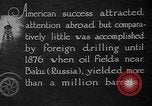
Oil production in the United States is compared with that in the other countries.
The world struggle for oil is depicted. Relative production in 1876 by different countries is shown. A political map of the United States. A map shows Russia, Germany, Italy and other countries. A + sign in Italy shows the oil production being less than 1 % of the world's production. A dot in Galicia and Roumania depicts oil production being 1 % of the world's production. A box on the map shows Japan with a + sign.
Oil production of the U.S. and other countries is compared and evolution of internal combustion engine is depicted.
The world struggle for oil is depicted. Oil production of the United States is compared with that of other countries. Relative production in 1900 is shown. A political map of the United States. A dot in some states represents 1 % of the world's production whereas a cross in other states represents less than 1 % of the world production. A map shows Russia, Germany, Italy, Galicia, Roumania and other neighboring countries. A box on the map shows Japan with a cross. Another map shows India, Tibet, Afghanistan and their neighboring countries. Still another map shows countries of South America. Evolution of internal combustion engines, whereby gasoline is used, is shown using diagrams.